


Luxury fabric types for suits are defined by fiber rarity, micron count, and finishing quality. Only 0.05% of global merino wool production meets the 13.0–13.8 micron threshold required for ultra-lightweight luxury suiting. That scarcity is what separates a genuinely premium suit from one that merely looks expensive. The industry term for this quality tier is “superfine suiting,” and it covers a range of high-end fabric choices including cashmere blends, silk blends, velvet, and rare animal fibers. Understanding what makes each material exceptional helps you invest in the right fabric for your wardrobe, your climate, and your career.
1. Superfine merino wool: the benchmark for luxury suits
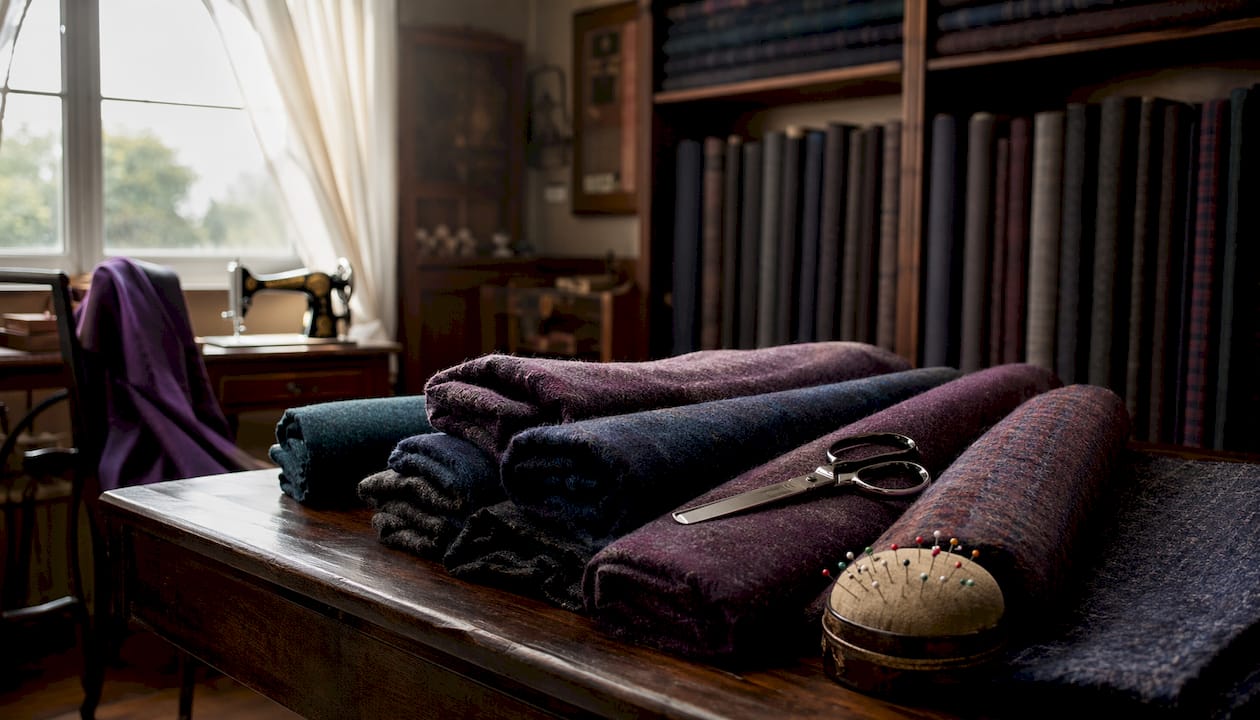
Superfine merino wool is the most widely recognized standard in premium suit fabrics. The Super number system measures fiber fineness: Super 110s–130s suits balance softness with everyday durability, while Super 150s and above deliver an ultra-premium hand feel that requires careful handling. That distinction matters because many professionals need a suit that holds up through long workdays, not just photoshoots.
Merino wool fibers under 14 microns are exceedingly rare and command premium prices. The finer the fiber, the softer the fabric against skin, and the more refined the drape. For most professionals, a Super 120s–130s merino wool suit hits the sweet spot between luxury feel and long-term wearability.
- Best for: Year-round business wear, boardroom settings
- Climate: Temperate to cool
- Watch out for: Super 150s+ wrinkles more easily and pills faster under heavy use
2. Cashmere blends: softness with structure
Pure cashmere is too soft and too delicate for a full suit. The best cashmere suits blend cashmere with fine wool, typically at a 10–30% cashmere ratio, to preserve the signature softness while adding the structure needed for tailoring. The result is a fabric that feels noticeably warmer and more supple than standard wool.
Cashmere blends work best in fall and winter suits. The fiber traps warmth without adding bulk, which keeps the silhouette clean. If you wear suits in cold office environments or attend formal winter events, a cashmere-wool blend is one of the most luxurious suit materials available at a practical price point.
- Best for: Winter business suits, formal dinners
- Climate: Cool to cold
- Watch out for: Dry-clean only; pilling occurs faster than pure wool
3. Silk and merino wool blends: luster meets performance
The combination of Mulberry silk and superfine merino wool produces a velvet-like, lightweight fabric with a unique luster and softness. Silk adds a natural sheen that catches light without looking flashy, while merino wool provides the body and drape that a suit requires. This blend is one of the most technically demanding fabrics to produce, which is reflected in its price.
Silk-wool blends suit warmer months and high-stakes occasions where visual impact matters. The fabric photographs exceptionally well and holds color depth better than plain wool. For professionals who attend client events, galas, or media appearances, a silk-blend suit signals attention to detail.
- Best for: Spring and summer formal events, client-facing roles
- Climate: Warm to temperate
- Watch out for: Requires careful storage to avoid snags from silk fibers
Pro Tip: When comparing silk vs wool for suits, look at the silk percentage. Blends above 20% silk tend to lose structure. The 10–15% silk range gives you luster without sacrificing the suit’s shape.
4. Wool-linen-silk blends: the hot-climate solution
Wool-linen-silk blends are the best fabrics for tailored suits worn in hot climates. Each fiber contributes something specific: wool provides structure, linen adds breathability, and silk delivers a refined surface texture. The combination produces a suit that holds its shape in heat without trapping body warmth.
This blend is the go-to choice for tropical weddings, outdoor ceremonies, and business travel in warm regions. The fabric wrinkles more than pure wool, but the trade-off is genuine comfort in temperatures where a standard wool suit becomes unbearable.
- Best for: Destination weddings, summer business travel, outdoor events
- Climate: Hot and humid
- Watch out for: Wrinkle resistance is lower; steam regularly
5. Pure linen: breathable and relaxed
Pure linen is the most breathable fabric in suiting. Its open weave allows air to circulate freely, making it the top choice for warm climates and outdoor events. Linen suits carry a relaxed, textured aesthetic that reads as intentional rather than casual when tailored correctly.
The fabric’s main limitation is wrinkling. Linen creases within hours of wear, which some professionals find impractical for long business days. For resort events, garden parties, or tropical settings, that relaxed texture is part of the appeal rather than a flaw.
- Best for: Beach weddings, resort events, warm-weather outdoor occasions
- Climate: Hot and humid
- Watch out for: Wrinkles heavily; not ideal for all-day corporate wear
6. Velvet: the evening fabric
Velvet suits provide drama and depth that no other suiting fabric matches. The dense pile absorbs light rather than reflecting it, creating a rich, matte color effect that photographs as deep and luxurious. Velvet is the definitive choice for black-tie events, holiday galas, and evening occasions where standing out is the point.
Velvet is not a daily wear fabric. Its pile crushes under pressure and requires careful storage. Wear it for the right occasion and it delivers an impact that a standard wool suit simply cannot.
- Best for: Black-tie events, holiday parties, evening galas
- Climate: Cool to cold indoor settings
- Watch out for: Pile crushes easily; store flat or hanging with care
7. Vicuña: the rarest luxury fiber
Vicuña fiber is the rarest suiting material in commercial production. The vicuña, a South American camelid, produces fiber so fine and so limited in quantity that a single vicuña suit can cost tens of thousands of dollars. The fiber is softer than cashmere and warmer than merino wool at a fraction of the weight.
Vicuña suits are collector-level investments rather than everyday wardrobe pieces. They represent the absolute ceiling of elegant fabric options in suiting. For professionals who view clothing as a long-term asset, a vicuña suit holds its value and its story in a way that no synthetic blend can replicate.
- Best for: Special occasions, investment wardrobe pieces
- Climate: Cool to cold
- Watch out for: Extremely limited availability; requires specialist care
8. How luxury fabric finishing techniques impact suit quality
Finishing is what separates a fabric that looks expensive from one that actually is. Advanced finishing processes like tumbling, brushing, and shaving create the unique handle, drape, and color depth that define elite suiting fabrics. Each stage of finishing changes how the fabric behaves under light and how it feels against the hand.
Elite fabric mills also employ yarn double-twisting and multiple finishing stages to achieve their signature feel and sheen. That level of production complexity is why two suits made from nominally similar wool can feel completely different when you put them on.
“The finishing process is where a fabric earns its character. A brushed finish creates warmth and softness. A shaved finish reveals the fiber’s natural luster. Tumbling relaxes the weave and improves drape. Each choice is deliberate, and each one changes what the suit communicates.”
Key finishing techniques and their effects:
- Tumbling: Relaxes the weave, improves drape, and softens hand feel
- Brushing: Raises the fiber surface for warmth and a matte texture
- Shaving: Removes surface fibers to reveal luster and create a cleaner face
- Double-twisting: Increases yarn strength and adds a subtle visual depth to the weave
9. Performance fiber blends in luxury suits
Natural fibers alone do not always deliver the best results for professional wardrobes. Performance fiber blends enhance natural luxury fabrics by improving longevity, stretch, and maintenance. A small percentage of elastane in a wool suit, for example, adds recovery after sitting without changing the fabric’s appearance.
The misconception that natural-only fabrics are always superior ignores how modern professionals actually wear suits. A wool-elastane blend holds its shape through a 12-hour workday better than pure wool. A wool-polyamide blend resists abrasion at the elbows and seat, which are the first areas to show wear on any suit. For a polished professional wardrobe, performance blends are often the smarter choice.
Common performance blends and their benefits:
- Wool + elastane (2–5%): Adds stretch and shape recovery for active professionals
- Wool + polyamide: Increases abrasion resistance and extends suit life
- Wool + silk + synthetic: Combines luster and drape with improved durability
- Cashmere + wool + nylon: Preserves softness while reducing pilling
Pro Tip: When you buy luxury suit fabric with a performance blend, check that the synthetic content stays below 10%. Above that threshold, the fabric starts to lose the breathability and drape that make natural fibers worth the investment. You can learn more about how performance fabric technology applies across different garment types.
10. Choosing the right fabric for your climate and occasion
Fabric choice depends on occasion and climate for optimal style and comfort. A fabric that performs brilliantly in a London boardroom in october will make you miserable at a Miami wedding in july. Matching fabric to context is the single most practical decision you can make when building a suit wardrobe.
The table below summarizes the best fabrics for tailored suits across common climates and occasions.
| Climate / Occasion | Best Fabric Choice | Key Benefit |
|---|---|---|
| Hot and humid (tropical) | Wool-linen-silk blend, pure linen | Maximum breathability and structure |
| Temperate (four seasons) | Superfine merino wool (Super 120s–130s) | Year-round versatility and comfort |
| Cold climate | Cashmere-wool blend, vicuña | Warmth without bulk |
| Black-tie / evening events | Velvet, silk-wool blend | Visual drama and refined luster |
| Business / daily professional | Performance wool blend | Durability, shape retention, easy care |
| Outdoor / destination events | Pure linen, wool-linen blend | Breathability and relaxed elegance |
Pairing the right fabric with the right suit fit amplifies both. A perfectly cut suit in the wrong fabric still underperforms. A well-chosen fabric in a poor fit wastes the material’s qualities entirely.
Key takeaways
The best luxury fabric types for suits combine fiber rarity, finishing quality, and occasion-appropriate performance to deliver lasting value and professional impact.
| Point | Details |
|---|---|
| Fiber rarity defines true luxury | Only 0.05% of merino wool meets the superfine threshold; rarity drives both quality and price. |
| Finishing separates elite from standard | Tumbling, brushing, and double-twisting create the feel and drape that distinguish top-tier fabrics. |
| Performance blends extend suit life | Keeping synthetic content below 10% preserves breathability while adding stretch and durability. |
| Climate drives fabric selection | Hot climates call for linen or wool-linen-silk blends; cold climates favor cashmere and vicuña. |
| Occasion determines the right texture | Velvet for evening events, superfine merino for business, silk-wool blends for high-stakes occasions. |
What I’ve learned after years of watching fabric choices play out
Most professionals make their fabric decision based on how a suit looks on a rack. That is the wrong starting point. Fabric reveals itself over time, through repeated wear, through how it holds a crease at 6 PM, through whether it still looks intentional after a transatlantic flight.
The suits I have seen age best are almost never the ones made from the most delicate fibers. A Super 150s suit is a beautiful object. But a Super 120s merino in a well-executed finishing process, worn consistently over three years, develops a character that a fragile ultra-fine fabric never gets the chance to build. The finishing matters as much as the fiber count.
I am also skeptical of the idea that natural-only fabrics are always the mark of quality. A 3% elastane addition to a fine wool does not cheapen it. It makes the suit wearable in the real world, which is the whole point. The professionals I respect most treat their wardrobe as a working tool, not a display case. They choose fabrics that perform across long days, varied climates, and repeated dry-cleaning cycles without losing their integrity.
The fabric you choose communicates something before you say a word. Choose it with the same care you give to everything else that represents you professionally.
— Giuseppe
What Moreciandco offers for the serious suit buyer
Moreciandco was built on one principle: you should get exactly what you pay for. That means fabrics with documented fiber quality, finishing processes that hold up over years of wear, and a selection that does not cut corners where it counts.
The Complesso Collection brings together luxury clothing pieces that reflect that standard, from premium blends to refined finishing. For professionals who want to build a wardrobe that performs as well as it looks, Moreciandco’s full range is available at moreciandco.com. Every piece is selected with the same question in mind: does this fabric earn its place over the long term?
FAQ
What is the best fabric for a luxury suit?
Superfine merino wool in the Super 120s–130s range is the best all-around fabric for a luxury suit, balancing softness, durability, and year-round wearability. For evening events, velvet or a silk-wool blend delivers greater visual impact.
What does the Super number mean on a suit?
The Super number measures wool fiber fineness. Super 110s–130s suits balance softness with everyday durability, while Super 150s and above are ultra-premium but more delicate and prone to wrinkling.
Is silk or wool better for a suit?
Wool is better for structure and everyday wear, while silk adds luster and a refined surface texture. Silk-wool blends at 10–15% silk content give you both qualities without sacrificing the suit’s shape.
What fabric works best in hot climates?
Wool-linen-silk blends and pure linen are the top choices for hot climates. Linen is highly breathable and ideal for warm, humid environments, while the wool-linen-silk blend adds structure for more formal occasions.
Are performance fiber blends worth it in a luxury suit?
Yes. Performance blends with synthetic content below 10% improve stretch, shape retention, and abrasion resistance without sacrificing the breathability or drape of natural fibers. They are the practical choice for professionals who wear suits daily.