


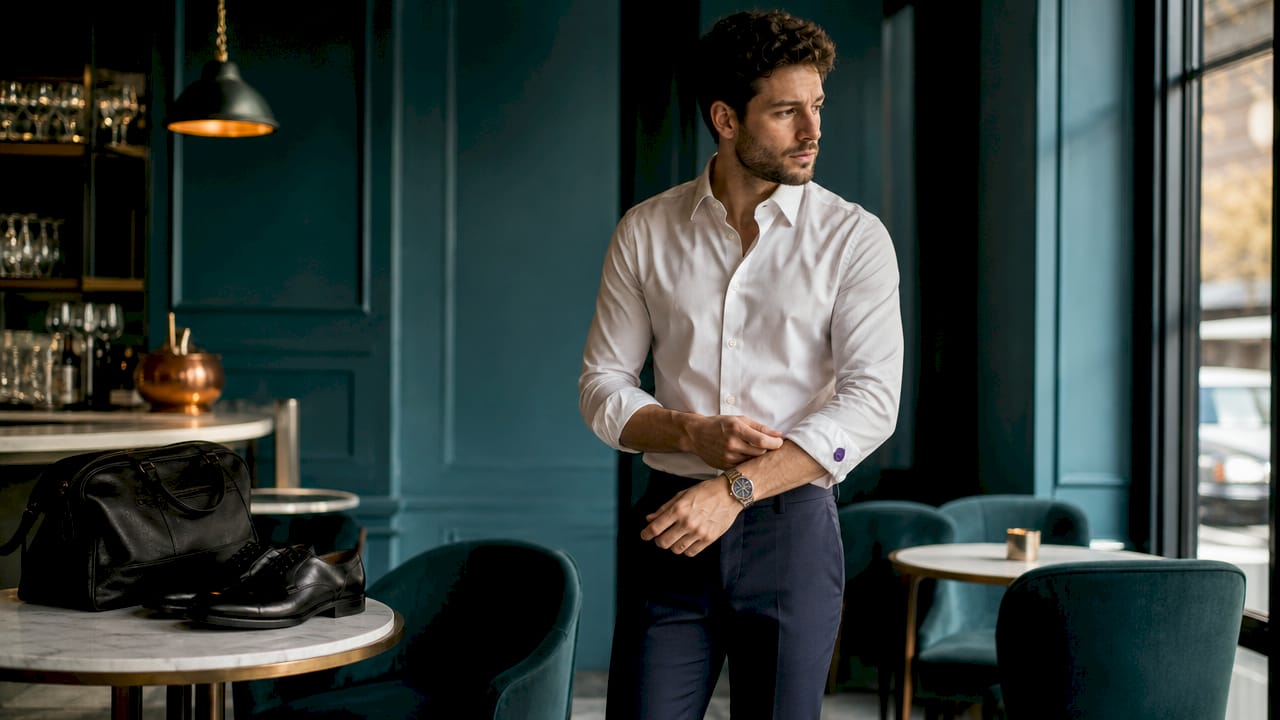
Business casual wardrobe essentials are the core pieces that let you walk into any office looking polished, put-together, and completely at ease. These are not trend pieces. They are the structured, versatile staples that form the backbone of professional casual wear and carry you through every meeting, presentation, and Friday afternoon without a second thought. Modern work uniform philosophy has shifted away from rigid dress codes toward a personalized system that reflects individuality while staying office-appropriate. This article breaks down exactly which pieces belong in that system and how to use them.
1. Business casual wardrobe essentials: the foundational categories
Every strong office wardrobe is built on six clothing categories. Knowing these categories before you shop prevents impulse buys and gaps in your rotation.
- Blazers and sport coats. A well-fitted blazer is the single most transformative piece in any professional wardrobe. It converts a simple shirt and trousers into a complete, polished outfit within seconds.
- Trousers and chinos. Tailored trousers in neutral tones like navy, charcoal, and camel anchor every outfit. Chinos offer a slightly more relaxed silhouette without sacrificing structure.
- Shirts and blouses. Button-down shirts for men and blouses for women form the middle layer of most business casual outfits. Fabric matters here. Cotton and linen breathe well; polyester blends hold their shape.
- Skirts and dresses. Midi skirts and structured sheath dresses are workplace wardrobe staples for women. They require minimal styling and read as professional in almost every office environment.
- Sweaters and knitwear. A fine-gauge merino crewneck or V-neck sweater layers cleanly over a collared shirt and replaces a blazer on lower-key days.
- Quality tees and polo shirts. A fitted, premium cotton tee or polo works in relaxed business casual offices. A men’s polo shirt in a solid color reads far more professional than a graphic tee and requires no ironing.
Fabric choice and fit determine whether a piece reads as polished or sloppy. A perfectly fitted chino in a stiff, shiny fabric looks worse than a slightly relaxed trouser in quality wool blend. Prioritize natural fibers and clean silhouettes above all else.
2. The nine-piece starter wardrobe for men
Experts at Jos. A. Bank recommend a nine-piece business casual starter wardrobe for men that covers a full week with at least nine distinct outfit combinations. That system includes one sport coat or blazer, two pairs of trousers or chinos, and three to five shirts. This is the most efficient structure for men building from scratch.
- One navy or charcoal blazer. This is your workhorse. It pairs with every trouser and shirt combination you own.
- Two pairs of tailored trousers. One in gray, one in khaki or navy. These two neutrals cover every scenario from client meetings to casual Fridays.
- One pair of dark chinos. Slightly more relaxed than dress trousers but still sharp when paired with a blazer.
- Two button-down Oxford shirts. One white, one light blue. These are the most versatile shirts in existence.
- One fine-knit sweater. A merino V-neck in camel or burgundy layers over a collared shirt and replaces a blazer on warmer days.
- One polo shirt. A solid-color polo in navy or forest green works for relaxed offices and casual Fridays.
- One pair of leather dress shoes. Derby or Oxford styles in brown or black. The best entry-level investment sits between $60 and $150 and pays for itself in outfit credibility.
- One leather belt. Match it to your shoes. This single detail separates a put-together look from a careless one.
- One structured bag or briefcase. A leather or canvas tote with clean lines keeps your accessories professional without effort.
Pro Tip: Buy two of your best-fitting white Oxford shirt. Rotate them constantly and replace them every 18 months. A crisp white shirt is the single highest-return investment in any man’s office wardrobe.
3. The essential pieces for women in business casual attire
Women’s business casual attire ideas center on the same principles of structure and versatility, with more flexibility in silhouette and color.
- One tailored blazer. A wrinkle-free women’s blazer that travels well and holds its shape through a full workday is worth every dollar. Opt for a neutral like black, camel, or navy.
- Two pairs of tailored pants. Wide-leg trousers in black and a second pair in a neutral tone like stone or gray cover the full week.
- One midi skirt. A pleated or A-line midi skirt in a solid color or subtle print reads as polished in virtually every office.
- Two blouses. One silk or silk-look blouse for formal days, one cotton or linen blouse for everyday wear.
- One sheath dress. A structured sheath dress in a solid color functions as a complete outfit with zero layering required.
- One fine-knit cardigan. A fitted cardigan in a neutral tone layers over blouses and dresses without adding bulk.
- Structured flats or low block heels. Comfort matters for a full workday. A pointed-toe flat or a two-inch block heel in leather or suede finishes any outfit cleanly.
- One quality tote bag. Large enough for a laptop, structured enough to look intentional.
- Simple, quality accessories. A classic watch, a pair of small gold or silver earrings, and a leather belt where appropriate.
Structure and comfort are not opposites in a well-built wardrobe. The right fabric does both jobs simultaneously.
4. How to mix and match for maximum outfit variety
A business casual capsule wardrobe is a system, not a collection of individual outfits. The goal is to own fewer pieces that work together in more combinations, reducing daily outfit stress and trend fatigue.
The core principle is tonal harmony. Pair darker bottoms with lighter tops, or keep the entire outfit in one tonal family. Texture contrast adds visual interest without requiring color risk. A smooth cotton shirt against a textured wool trouser reads as intentional and sophisticated.
| Piece | Pairs with | Best for |
|---|---|---|
| Navy blazer | Gray trousers, white shirt | Client meetings, presentations |
| Tailored chinos | Oxford shirt, merino sweater | Everyday office, casual Fridays |
| Midi skirt | Silk blouse, structured flat | Meetings, creative offices |
| Sheath dress | Blazer, pointed-toe flat | Full-day professional events |
| Fine-knit sweater | Collared shirt underneath, dark trousers | Cooler months, open-plan offices |
Layering is the most underused tool in business casual style. A blazer over a sweater over a collared shirt sounds like too much, but in cooler months it reads as considered and put-together. Remove the blazer for a more relaxed look in the afternoon.
Pro Tip: Build outfits around your trousers, not your shirts. Trousers are the hardest pieces to replace and the most visible signal of fit and quality. When a trouser fits perfectly, every shirt you own looks better with it.
5. Footwear and accessories that complete the look
Quality footwear is the most frequently neglected element of business casual attire, and the most immediately noticed. A polished outfit with worn-down or mismatched shoes reads as unfinished. The right shoes finish the look; the wrong ones undermine it.
- Loafers. The most versatile business casual shoe for both men and women. A leather penny loafer or tassel loafer works with trousers, chinos, and even dark jeans in relaxed offices.
- Oxford and Derby shoes. The formal end of the business casual spectrum. Brown leather Oxfords with gray trousers is one of the most reliable outfit formulas in professional dressing.
- Structured flats. For women, a pointed-toe flat in leather or suede is the equivalent of a men’s loafer. It works with everything and requires no break-in period.
- Block heels. A two-inch block heel adds height without sacrificing comfort across a full workday. Avoid stilettos in most office environments.
- Clean white sneakers. In genuinely relaxed business casual offices, a clean leather sneaker like an Adidas Stan Smith or a Nike Air Force 1 works with chinos and a blazer. Read your office culture before committing.
Beyond shoes, three accessories define a business casual look: a quality watch, a structured bag, and a leather belt. A watch signals attention to detail. A structured bag keeps your professional image intact from the moment you walk in. A belt that matches your shoes closes the loop on the entire outfit.
Pro Tip: Invest in shoe trees for every leather shoe you own. They extend the life of the shoe by years and maintain the shape that makes the shoe look expensive. A $20 cedar shoe tree on a $100 shoe is the best value in professional dressing.
6. Adapting your wardrobe for different offices and seasons
A capsule wardrobe works across seasons by swapping fabrics and layering while keeping the same core categories in place. The structure stays constant; the materials change.
- Spring and summer. Swap wool trousers for linen or cotton blends. Replace heavy blazers with unstructured linen jackets. Lighter colors work well in warmer months without sacrificing professionalism.
- Fall and winter. Reintroduce wool trousers, heavier knitwear, and structured blazers in deeper tones. Layering becomes both functional and stylish.
- Relaxed office cultures. Mixing casual weekend staples like a chunky knit or dark jeans with structured garments keeps the look professional without feeling stiff. Dark, well-fitted jeans with a blazer and leather loafers read as business casual in most modern offices.
- Formal business casual environments. Stick to tailored trousers, structured blazers, and leather shoes. Avoid denim entirely and keep accessories minimal and classic.
- Client-facing roles. Default to the more structured end of your wardrobe on days with external meetings. A blazer always signals readiness and respect for the other person’s time.
The key is reading your specific office culture and adjusting one variable at a time. Swap the fabric before you swap the silhouette. Swap the color before you swap the category.
Key takeaways
A business casual wardrobe built on six core categories, nine to twelve versatile pieces, and quality footwear gives you more outfit combinations than a closet twice its size.
| Point | Details |
|---|---|
| Six core categories | Blazers, trousers, shirts, skirts, knitwear, and quality tees form the complete system. |
| Nine-piece men’s starter | One blazer, two trousers, one chino, two shirts, one sweater, one polo, and quality leather shoes. |
| Footwear is non-negotiable | Quality shoes in loafer, Oxford, or structured flat styles finish every outfit and signal professionalism. |
| Mix by tonal harmony | Pair darker bottoms with lighter tops and use texture contrast to add interest without color risk. |
| Seasonal adaptation | Swap fabrics, not categories. Linen in summer, wool in winter, same core silhouettes year-round. |
Why I stopped chasing trends and started dressing with intention
Giuseppe here. I spent years buying pieces that looked good on a hanger and felt wrong by 10 a.m. The problem was not the clothes. It was the system. I was building outfits, not a wardrobe.
The shift happened when I stopped asking “what looks good?” and started asking “what works with everything I already own?” That question changes your entire shopping behavior. You buy a navy blazer instead of a printed one. You buy a second pair of gray trousers instead of a statement piece you will wear twice. You invest in a pair of leather loafers that go with every bottom you own instead of three pairs of shoes that each require a specific outfit.
The professionals I have observed who dress best are not the ones with the most clothes. They are the ones who have figured out their personal work uniform and refined it over time. GQ calls this the authentic work uniform approach, and it is the most practical style philosophy I have encountered. You stop thinking about what to wear and start thinking about what to buy next to make the system better.
Maintenance matters as much as selection. Cedar shoe trees, proper hangers, and occasional dry cleaning extend the life of quality pieces by years. A $200 blazer maintained well outlasts a $400 blazer neglected. Buy less, care more, and your wardrobe will reward you every single morning.
— Giuseppe
Discover curated business casual pieces at Moreciandco
Moreciandco was built on one idea: you should get exactly what you pay for, every time. That means quality you can feel, pieces that hold their shape after a hundred wears, and an experience that respects your time and your money.
The Complesso Collection brings together luxury tailored and casual wardrobe pieces designed specifically for professionals who want to look polished without overthinking it. From structured blazers to premium knitwear, every piece is selected to work within a capsule wardrobe system. Explore the full range of clothing and accessories at Moreciandco and build a wardrobe that actually earns its place in your closet.
FAQ
What are the must-have business casual wardrobe essentials?
The core pieces are a tailored blazer, two pairs of trousers or chinos, two button-down shirts or blouses, a fine-knit sweater, and quality leather footwear. These nine to twelve items generate enough combinations to cover a full professional week.
Can women wear jeans in a business casual office?
Dark, well-fitted jeans with a blazer and structured flats read as business casual in most modern offices. Avoid distressed, light-wash, or wide-leg denim in client-facing or more formal environments.
How much should I spend on business casual footwear?
The best entry-level investment for leather dress shoes sits between $60 and $150 for Derby or Oxford styles. Quality footwear at this price point, maintained with shoe trees and regular polishing, lasts for years.
How do I adapt my business casual wardrobe for summer?
Swap wool and heavy cotton for linen and cotton blends while keeping the same core silhouettes. An unstructured linen blazer over a light cotton shirt and tailored chinos works in summer without losing the professional structure of the outfit.
What is the difference between business casual and smart casual?
Business casual leans toward structured, office-appropriate pieces like tailored trousers, blazers, and leather shoes. Smart casual allows more relaxed elements like clean sneakers, premium denim, and casual knitwear, and is generally more appropriate for social or creative settings than formal office environments.