


Men’s tank top styles for training are defined by three non-negotiable factors: moisture-wicking fabric, athletic cut, and construction built to handle repeated movement. The training tank has evolved far beyond its undershirt origins into a performance garment that works as hard as you do. Choosing the wrong one means soaked cotton clinging to your torso by rep three. This guide breaks down every style, fabric, and fit detail you need to make the right call in 2026.
1. Top men’s tank top styles for performance training
The style you pick directly affects how you move, breathe, and recover between sets. Each cut serves a different training purpose, and knowing the difference saves you from buying the wrong tank twice.
Muscle tanks feature high armholes that free up the shoulder joint for pressing, pulling, and overhead movements. The wider coverage keeps the torso protected during barbell work while still showing enough to stay cool. These are the most versatile option for gym training.
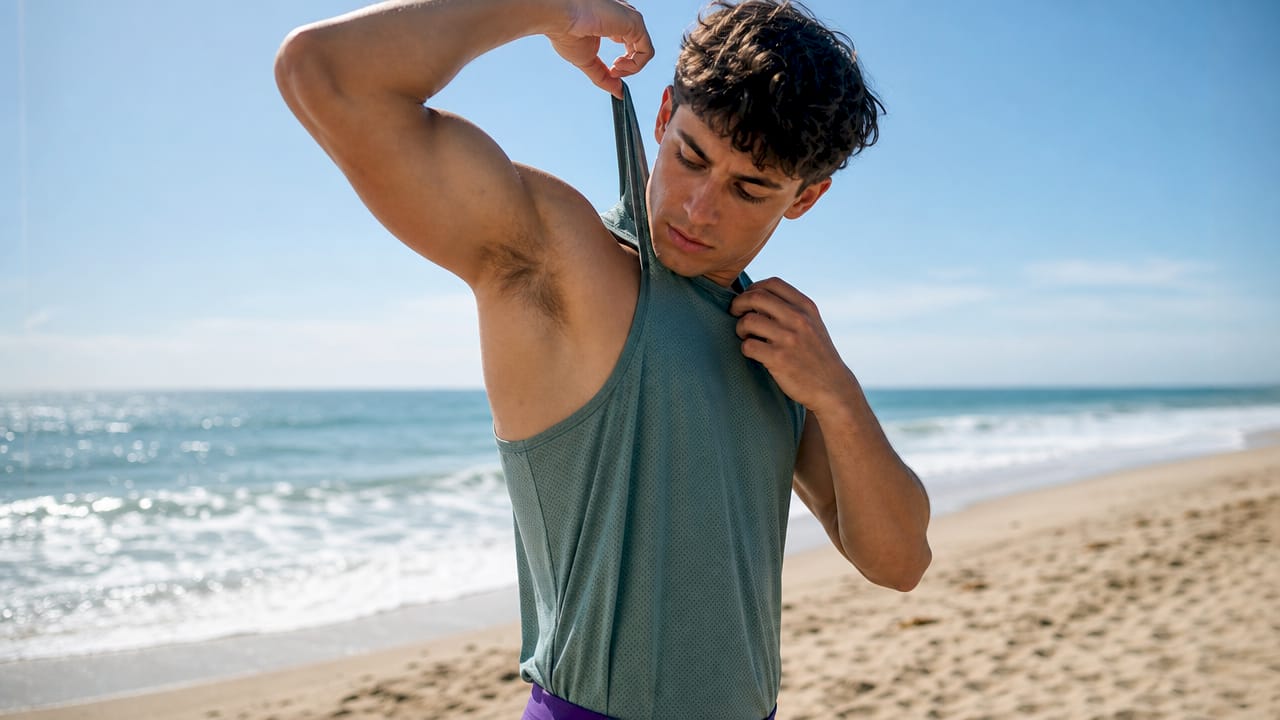
Stringer tanks are the most minimal cut available, with thin straps and an open back. They deliver maximum ventilation, which is why bodybuilders favor them. That said, stringer tanks lack durability for high-intensity or long sessions, and the thin fabric underperforms in sweat management. Treat them as a secondary option, not your go-to.
Racerback tanks cross the strap design behind the shoulder blades, combining support with airflow. They work particularly well for functional fitness, rowing, and any movement that demands full scapular range. The back design prevents straps from slipping during dynamic work.
Classic athletic tanks sit between muscle tanks and racerbacks in terms of coverage. They offer a straight shoulder strap, moderate armhole depth, and enough fabric to layer under a hoodie without bunching. These are the most gym-to-street-ready option in the category.
Construction details matter as much as the cut. Chafe-free seams and tag-free labels reduce skin irritation during repetitive movements like rowing or running. Gymreapers builds these features into their Performance Tank Top specifically for this reason.
Pro Tip: Buy at least two different styles before committing to one. A muscle tank that feels perfect for bench press may feel restrictive during pull-ups. Testing multiple cuts across different workouts gives you real data.
2. Best fabrics for men’s workout tank tops
Fabric is where most men make their biggest mistake. Prioritizing appearance over fabric technology when choosing training tanks is the single most common error fitness shoppers make. The material determines how your tank performs when sweat hits.
Polyester and nylon are the gold standard for training. Moisture-wicking synthetics dry 50% faster than 100% cotton during workouts, which means no heavy, clammy fabric weighing you down mid-session. Polyester holds its shape through hundreds of washes, and nylon adds a slight stretch that improves fit.
Tri-blends combine polyester, modal, and cotton in varying ratios. The result is a fabric that feels softer than pure synthetic while still managing moisture better than straight cotton. REP Fitness built their Daily Driver Tri-Blend Tank on a 50% recycled polyester base, proving that sustainability and performance can coexist in the same garment.
100% cotton is the weakest choice for intense training. Cotton absorbs sweat and holds it, creating a wet, heavy tank that chafes and slows drying. It works fine for light yoga or a casual walk, but it fails under barbell work or cardio.
| Fabric | Moisture control | Durability | Best for |
|---|---|---|---|
| 100% Polyester | Excellent | High | HIIT, cardio, heavy lifting |
| Nylon blend | Excellent | High | Functional fitness, endurance |
| Tri-blend | Good | Medium-high | Strength training, daily wear |
| Cotton/modal blend | Fair | Medium | Light training, lifestyle wear |
| 100% Cotton | Poor | Medium | Casual use only |
Pro Tip: Check the fabric label before you buy. A tank labeled “moisture-wicking” should list polyester or nylon as the primary fiber. If cotton appears first on the label, the performance claim is mostly marketing.
3. How to select the right fit and cut
Fit is not just about how a tank looks. Armhole depth and strap width significantly impact mobility and aesthetic for training tanks, with deeper armholes enabling better overhead range of motion. Getting this wrong creates restriction exactly where you need freedom.
Here is what to evaluate before buying:
- Armhole depth: Deeper armholes allow full shoulder rotation for overhead pressing and pull-ups. Shallower armholes provide more coverage and work better for running or rowing where chafing is a risk.
- Strap width: Wider straps distribute weight and reduce shoulder fatigue during loaded carries or sled work. Thin straps look sharp but can dig in during heavy training.
- Torso length: A tank that rides up during deadlifts or box jumps is a distraction. Look for tanks with a longer back hem that stays tucked.
- Fabric elasticity: Athletic fit tanks balance range of motion and physique accentuation, while classic fits offer more airflow. Four-way stretch fabric handles both without compromise.
- Sizing: Size up if you are between sizes. A tank that pulls across the chest during a press limits your movement and wears out faster at the seams.
The right fit also depends on your training style. Powerlifters and Olympic lifters benefit from wider straps and moderate armhole depth to keep the tank in place under a barbell. CrossFit athletes and runners do better with racerback cuts and deep armholes that stay out of the way entirely.
4. Comparing top training tank tops by price and features
Performance training tanks range from $15 to $75 depending on materials and brand reputation. The price gap reflects real differences in fabric quality, construction, and longevity.
| Brand and model | Price | Fabric | Standout feature |
|---|---|---|---|
| Mack Weldon 18-Hour Rib Tank | ~$48 | Cotton/modal/spandex | Fabric pre-cut for shape retention |
| Lululemon Metal Vent Tech Tank | ~$68 | Nylon/Lycra blend | Laser-cut ventilation panels |
| Gymreapers Performance Tank | ~$35 | Polyester blend | Chafe-free seams, tag-free label |
| REP Fitness Daily Driver Tank | ~$40 | 50% recycled polyester tri-blend | Sustainable build, lifter-designed cut |
| Budget polyester tank | ~$15 | 100% polyester | Entry-level moisture wicking |
Mack Weldon’s 18-Hour Rib Tank stands out for its construction method. The fabric is expanded for 18 hours before cutting, which means the finished garment resists warping after repeated wear and washing. That detail matters if you train five days a week and need a tank that holds its shape for a year, not a month.
Lululemon’s Metal Vent Tech Tank targets athletes who run hot. The laser-cut ventilation panels are placed at the back and sides where heat accumulates most during cardio. The nylon-Lycra blend adds compression without restricting breathing.
Gymreapers sits at the mid-range price point and delivers construction quality that punches above its cost. The reinforced shoulder seams and higher stitch counts increase longevity through multiple washes, which is exactly what you want from a training staple.
5. Styling men’s gym tanks beyond the workout
A well-chosen training tank does not stay in the gym bag. The best men’s fitness tank tops transition to casual wear with the right pairings, which means you get more value from every purchase.
At the gym: Pair a muscle tank with fitted training shorts and athletic shoes. Keep the color palette simple. A gray or navy tank with black shorts reads clean and intentional, not thrown together.
Post-workout casual: Layer a classic athletic tank under an open button-down or a lightweight bomber jacket. The tank handles the heat while the layer adds structure for a coffee run or errand stop. Joggers or slim chinos both work here.
Avoid these mistakes:
- Wearing a see-through tank to the gym. Thin, cheap polyester goes transparent when wet. Check the fabric weight before buying.
- Choosing a tank that is too tight across the chest. It restricts movement and looks uncomfortable, not athletic.
- Ignoring care instructions. Washing performance fabrics in hot water breaks down moisture-wicking treatments faster. Cold wash, hang dry.
Care and maintenance: Turn tanks inside out before washing to protect any printed graphics. Skip fabric softener entirely. Softener coats synthetic fibers and reduces their ability to wick moisture. Air drying preserves elasticity and prevents shrinkage better than a dryer cycle.
Pro Tip: Buy three to five tanks in neutral colors first. Black, white, gray, and navy pair with everything and never look dated. Add color or graphic tanks once you know which styles and fits work for your training.
Key takeaways
The best training tank top combines moisture-wicking synthetic or tri-blend fabric, an athletic cut with appropriate armhole depth, and construction details like chafe-free seams that hold up through heavy use.
| Point | Details |
|---|---|
| Fabric first | Polyester and nylon dry 50% faster than cotton, making them the top choice for intense training. |
| Match cut to training | Muscle tanks suit lifting; racerbacks work best for functional fitness and overhead movements. |
| Construction details matter | Chafe-free seams and tag-free labels reduce irritation during long or repetitive training sessions. |
| Price reflects quality | Budget tanks start at $15; premium options like Lululemon and Mack Weldon run $48 to $75 with measurable performance differences. |
| Style travels | A well-chosen athletic tank layers under jackets and pairs with joggers for gym-to-street wear. |
What I actually think about training tanks
I have trained in nearly every style and fabric combination on this list over the years, and the lesson that took me longest to learn is this: the tank that looks the best in the store is rarely the one that performs best under a barbell.
Stringer tanks are the clearest example. They photograph well and feel light, but after a 45-minute session they are soaked, stretched, and clinging in all the wrong places. I stopped buying them as primary training gear years ago. Now they stay in the bag for posing or warm-up sets, nothing more.
The Mack Weldon 18-Hour Rib Tank changed how I think about cotton-modal blends. I expected it to underperform against pure synthetics, and it does in a direct sweat test. But for moderate-intensity lifting sessions, the softness and fit retention make it the most comfortable tank I own. Context matters. Not every session is a max-effort grind.
My honest recommendation is to own at least one pure polyester or nylon tank for high-intensity days and one tri-blend for everything else. Gymreapers and REP Fitness both deliver at a price point that does not require you to think twice about throwing them in the wash after every session. That frequency of use is where cheap tanks fall apart and quality construction proves its value.
The men who get this right stop chasing the coolest design and start reading fabric labels. That shift in thinking is worth more than any single product recommendation.
— Giuseppe
Find your next training tank at Moreciandco
Moreciandco is built on one principle: you should get exactly what you pay for, every time. That means quality fabric, real construction, and gear that holds up through the kind of training you actually do.
Browse the men’s performance collection at Moreciandco to find training tanks that combine athletic cuts with fabrics built for serious gym sessions. Whether you train five days a week or are building your first real gym wardrobe, the collection covers both performance and style without compromise. Pair your tank with pieces from the Complesso Collection to build a gym-to-street look that works as hard as your training does.
FAQ
What is the best fabric for men’s training tank tops?
Polyester and nylon are the top choices for training tanks because they wick moisture and dry significantly faster than cotton. Tri-blends offer a softer feel while still outperforming 100% cotton in sweat management.
How should a training tank top fit?
A training tank should allow full shoulder rotation without the fabric pulling or bunching. Athletic fit tanks balance movement and physique, while classic fits offer more airflow for longer or lower-intensity sessions.
Are stringer tanks good for serious training?
Stringer tanks work well for ventilation and style but lack the durability and sweat management needed for long or high-intensity sessions. They are better suited as secondary options rather than primary training gear.
What is the price range for quality men’s workout tanks?
Quality training tanks range from $15 for basic polyester options to $75 for premium brands like Lululemon and Mack Weldon. Mid-range options from Gymreapers and REP Fitness around $35 to $40 deliver strong performance for the price.
Can training tank tops be worn casually?
Yes. Classic athletic tanks and muscle tanks layer well under open shirts or lightweight jackets and pair with joggers or slim chinos for a gym-to-casual look. Stick to neutral colors for the most versatile wardrobe use.