


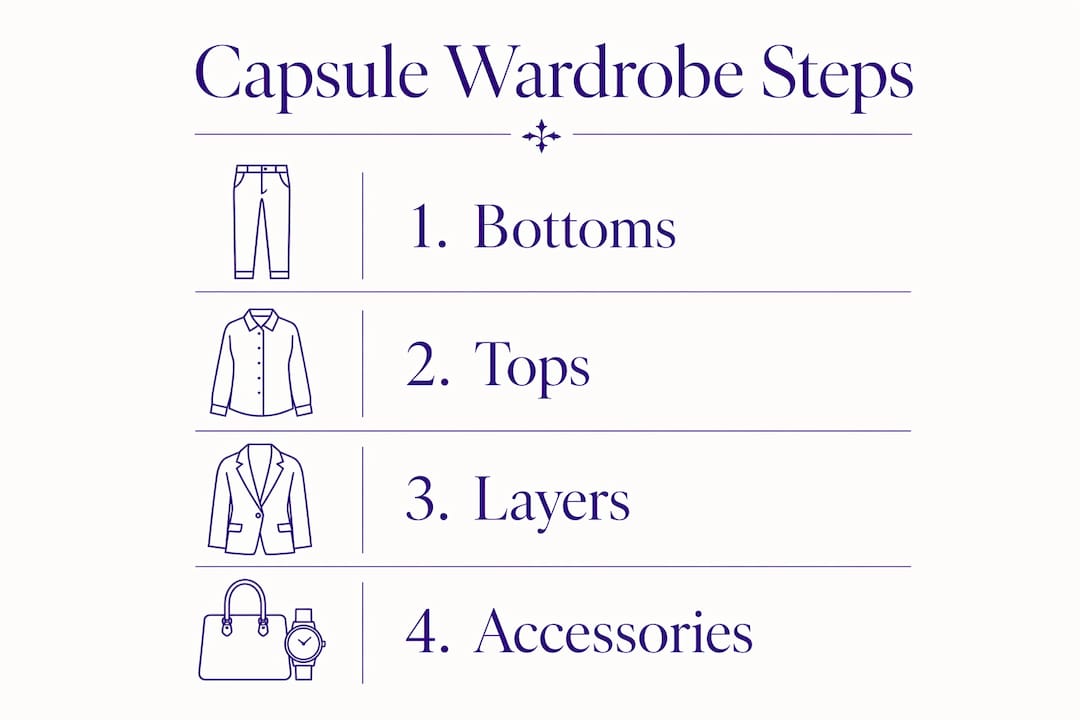
Start with three bottoms, four tops, and two second layers. That’s the whole plan. The 3:4:2 capsule formula gives you enough variety for several weekly workouts, handles most weather conditions with the right layering, and keeps every piece mix-and-match compatible from day one. No excess, no dead weight in the drawer.
Here’s what the capsule covers:
- Training bottoms (leggings or tights, training shorts, casual jogger)
- Training tops (performance tees, tank, long-sleeve, breathable hoodie)
- Support layers (sports bras by level, base layers, compression liners)
- Weather layers (lightweight shell, insulated mid-layer)
- Footwear (cross-trainer, optional dedicated running shoe)
- Accessories (socks, breathable cap, gym bag)
Pro Tip: Apply a one-in-one-out rule from the start. When a piece wears out or stops working, replace it with the same or a near-identical item. This keeps the capsule tight and prevents the slow drift into a cluttered drawer full of mismatched gear.
Table of Contents
- What core pieces should you buy first?
- How do you layer for seasons and cross-training?
- Which fabrics and technical features actually matter?
- How do you build a color palette that actually mixes?
- What shoes and accessories complete the capsule?
- How many pieces do you need, and when do you buy them?
- What’s the checklist for buying any new piece?
- How do you care for technical apparel so it lasts?
- How do you make functional pieces look polished outside the gym?
- Key Takeaways
- Why the capsule approach is the only wardrobe strategy worth following
- Moreciandco pieces that fit this capsule approach
- Useful sources
What core pieces should you buy first?
The bottoms are the foundation. Three is the right number: a pair of full-length leggings or tights for cold training and yoga, a versatile training short for gym sessions and runs, and a tapered jogger or warm-up trouser for commutes and travel days. Each one needs to work for at least two distinct activities to earn its spot. A short that only works for basketball and nothing else is a single-activity piece — it doesn’t belong in a capsule.
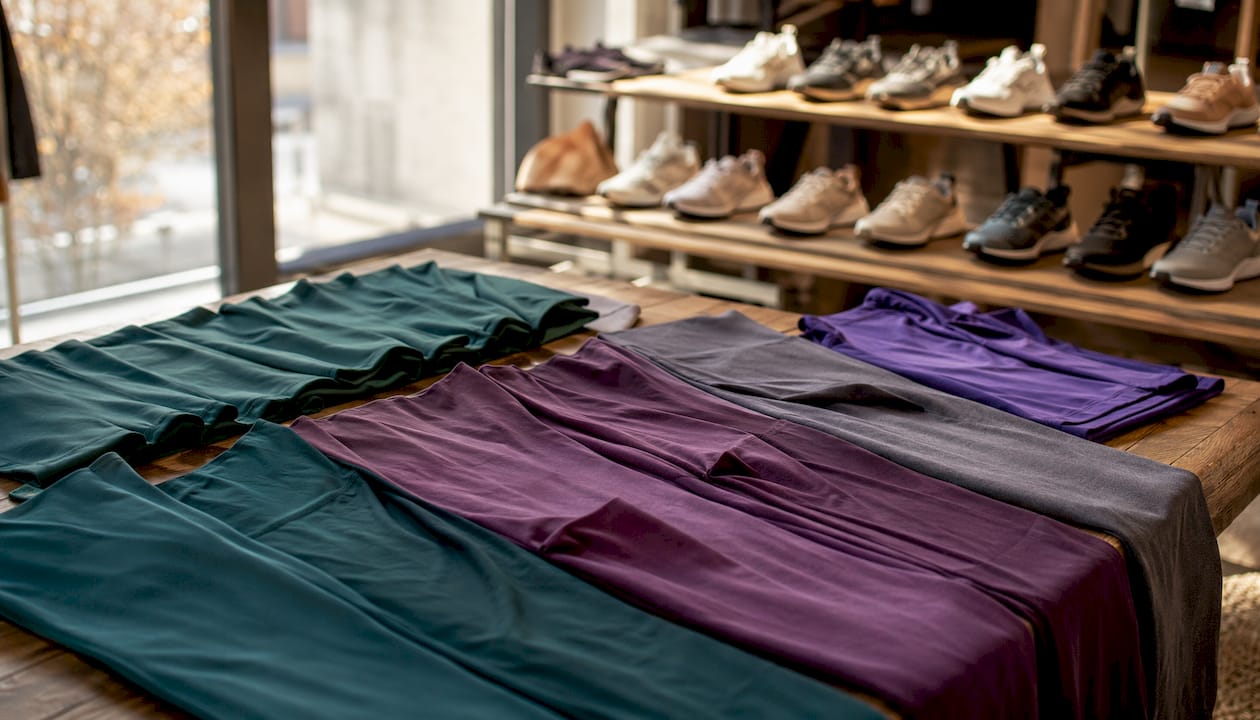
For tops, four pieces cover the full range. A moisture-wicking performance tee is the workhorse. A training tank handles hot sessions and layering. A long-sleeve training top bridges cool mornings and outdoor runs. A breathable hoodie or lightweight long-sleeve rounds out the set for warm-ups, post-workout cool-downs, and low-key errands. The athletic fit matters here: a tapered cut through the torso pairs cleanly with both high-rise bottoms and standard waistbands without bunching.
Support pieces deserve more budget than most people give them. Sports bras split into different support levels for low, medium, and high impact activities. Owning at least one medium and one high-support option covers the majority of training types. Compression liners under shorts add comfort and reduce chafing on longer efforts. Socks are underrated: a quality synthetic or merino blend prevents blisters and manages moisture better than a cotton sock ever will.
Essential bottoms and tops at a glance:
- Leggings or tights (full-length, squat-proof, with elastane content to ensure stretch)
- Training shorts with inseam lengths suited for versatile training, liner optional
- Tapered jogger or warm-up trouser
- Performance tee (moisture-wicking, flatlock seams)
- Training tank (breathable, minimal seams)
- Long-sleeve training top (lightweight, four-way stretch)
- Hoodie or warm-up layer (zip or pullover)
A note on insoles and socks: if your shoes fit well but your feet fatigue quickly, a thin performance insole often solves the problem before you blame the shoe. It’s a small addition that doesn’t count against your capsule but meaningfully affects comfort.
How do you layer for seasons and cross-training?
Layering is what converts a small capsule into a year-round system. The logic is simple: base layer manages moisture, mid-layer traps warmth, outer layer blocks wind and rain. You don’t need all three for every workout, but understanding the roles lets you mix what you already own rather than buying new pieces for every season.
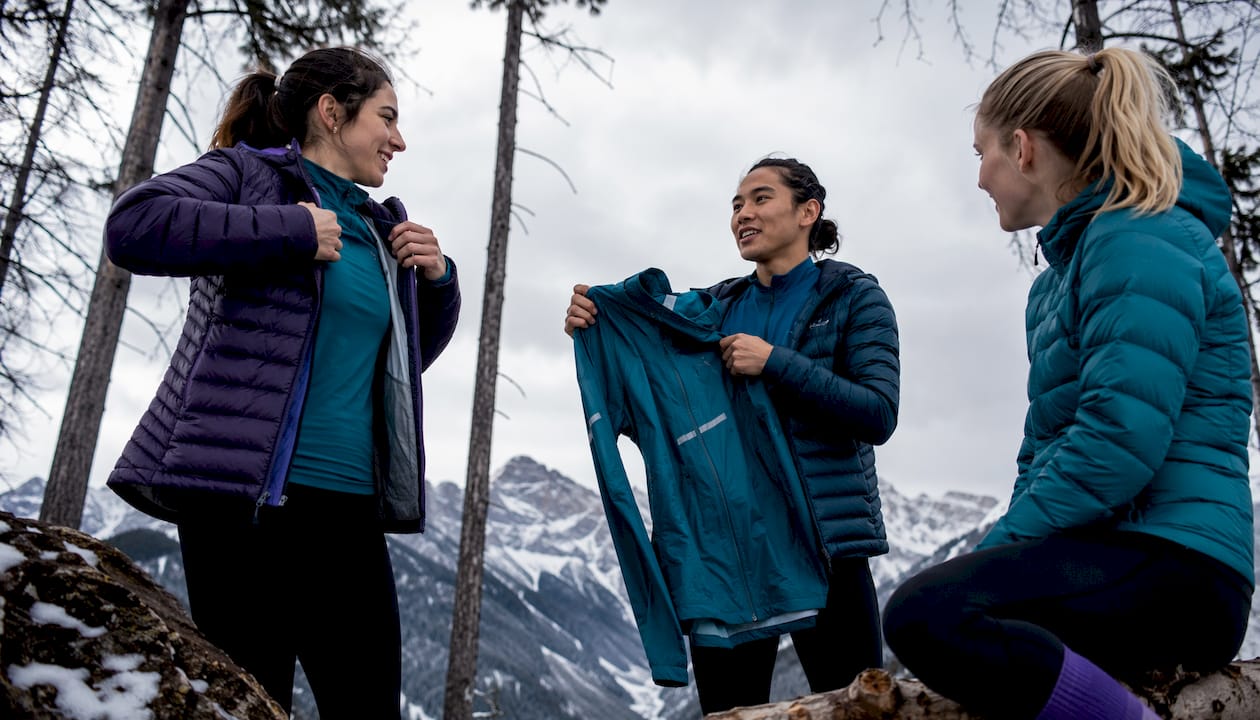
For most active people, one or two lightweight zip layers and one warmer insulated piece cover the full cold-weather range. A packable shell or zip layer handles commutes and outdoor runs in mild cold or wind. A heavier hoodie or insulated mid-layer handles genuinely cold mornings. That’s it. You don’t need a dedicated winter training jacket unless you’re running outside in sub-freezing temperatures regularly.
Silhouette matters when layering. A cropped track jacket or fitted zip-up sits cleanly over high-rise leggings or joggers without adding bulk at the hip. A boxy hoodie over slim tights creates a top-heavy look that most people find unflattering and harder to move in. Fit-to-fit compatibility is a real consideration when you’re building a capsule, not just an aesthetic preference.
Layering checklist:
- 1 lightweight packable shell (wind and light rain resistance, reflective accents for outdoor runs)
- 1 mid-layer hoodie or insulated zip (warmth for cold mornings, gym commutes)
- Cropped or fitted cut for second layers to maintain silhouette over high-rise bottoms
- Base layer (optional for cold climates, merino or synthetic)
Pro Tip: A packable shell with reflective accents doubles as a running layer and a commute layer. Look for one that compresses into its own pocket — it takes up very little space in a gym bag and adds weather protection without adding a dedicated “outdoor” piece to your capsule.
Which fabrics and technical features actually matter?
Fabric is where a lot of people make expensive mistakes. The feel in the store tells you almost nothing about how a piece performs after six months of washing. What to look for instead: moisture-wicking construction, four-way stretch, opacity under load, and breathability. Those four properties cover the majority of training scenarios.
For bottoms, elastane content at a moderate level delivers the stretch-and-recovery balance you want. Below 15% and the fabric loses shape over time. Above 25% and it often feels compressive in a way that’s uncomfortable for longer sessions. Flatlock seams prevent chafing on the inner thigh and waistband, which matters on any workout longer than 30 minutes. A gusset at the crotch seam improves range of motion and prevents the fabric from pulling during squats or lunges. These construction details separate a well-made training bottom from one that looks similar on the rack but fails in use.
For tops, antimicrobial finishes extend the time between washes without sacrificing freshness. UPF 30 or higher is worth prioritizing if you train outdoors regularly. Zip pockets on shorts and jackets are a practical feature that earns its place on any piece you wear outside. For high-intensity sessions, look for mesh ventilation panels at the back or underarm, not just a marketing claim about breathability.
Technical features worth prioritizing:
- Moisture-wicking construction (polyester, nylon, or bamboo blends)
- Four-way stretch with good recovery
- Flatlock seams (inner thigh, waistband, shoulder)
- Gusseted crotch for range of motion
- Antimicrobial finish for odor control
- UPF 30+ for outdoor training
- Zip pockets on any piece worn outside
One trade-off to know: heavier insulating blends last longer and feel more substantial, but they pack poorly and dry slowly. For a capsule that needs to travel and turn over quickly between laundry days, lighter technical fabrics win on practicality even if they feel less premium in hand.
How do you build a color palette that actually mixes?
The simplest rule: dark bottoms, lighter or neutral tops. Charcoal, ink, and navy bottoms pair with almost any top color you’ll realistically buy. Pearl, taupe, dusty blue, and white tops work with all three. That’s the palette. Every new piece you add should pair with everything already in the capsule, not just one or two items.
The 3:4:2 formula is partly a color strategy. Three bottoms in a dark, neutral palette multiply against four tops to give you twelve distinct outfit combinations before you’ve added a single second layer. Add two second layers in a compatible neutral and the number of viable looks expands further. This is why one-off accent pieces in a bright color that only pairs with one bottom are a problem: they don’t multiply, they just add visual noise.
Capsule math: Three bottoms × four tops = 12 base combinations. Add two second layers and you’re looking at 24+ viable outfits from nine pieces. That’s the efficiency the 3:4:2 formula delivers.
When you want to add an accent color, do it in a top or accessory, not a bottom. A single olive or rust tee adds personality without breaking the system, because it still pairs with all three dark bottoms. A bright orange legging pairs with almost nothing else you own and creates a dead end in the capsule.
Color palette rules:
- Bottoms: charcoal, ink, navy, black (dark neutrals only)
- Tops: white, pearl, taupe, dusty blue, light gray (light-to-mid neutrals)
- Second layers: match or slightly darker than tops
- Accent color: one piece maximum, always a top or accessory
For sport-casual looks that work outside the gym, matte technical fabrics in neutral tones read as intentional and polished. Bright neons or heavy logo graphics narrow the context where a piece works, which is the opposite of what a capsule needs. For more on sport-casual dressing, the principles carry directly from the gym to the street.
What shoes and accessories complete the capsule?
Two shoe types cover most training scenarios: a versatile cross-trainer and, if you run more than 15 miles per week, a dedicated running shoe. The cross-trainer handles strength sessions, HIIT, court sports, and short runs. It’s the workhorse. A running shoe with proper cushioning and a last shaped for your foot becomes necessary when mileage climbs, because a cross-trainer’s lateral support structure isn’t built for repetitive forward motion over long distances.
Shoe choice interacts directly with your activity mix. If you lift primarily and run occasionally, one cross-trainer is enough. If you cycle, a stiff-soled shoe or clip-compatible option becomes relevant. Court sports like tennis or basketball need lateral support that a running shoe doesn’t provide. The point is to match the shoe to your actual training, not to buy a dedicated shoe for every sport you try once.
Accessories that earn their place:
- Synthetic or merino wool socks (at least 5–6 pairs to match training frequency)
- A breathable, minimal cap for outdoor training (the Cappellino Baseball Hat is a clean, unbranded option that works across contexts)
- A well-ventilated gym bag with a wet/dry compartment
- Lightweight gloves and a neck buff for cold-weather outdoor sessions
On buying: try shoes in-store when possible for fit-sensitive decisions, especially if you have a narrow or wide foot. Return policies matter more for footwear than for any other category. Break-in expectations vary: most technical training shoes are comfortable from the first session, but running shoes with a stiffer midsole may need two to three runs to settle.
How many pieces do you need, and when do you buy them?
The 3:4:2 formula is the starting point, but your actual count depends on four variables: how often you train, how often you do laundry, what climate you’re in, and what types of workouts you do. Someone training five days a week with laundry every ten days needs more pieces than someone training three days a week with laundry every five. The four-variable method prevents overbuying and keeps the capsule functional rather than aspirational.
| Workouts per week | Laundry cycle | Tops needed | Bottoms needed | Support pieces |
|---|---|---|---|---|
| 2–3 | Every 5–7 days | 3–4 | 2–3 | 2–3 |
| 4–5 | Every 5–7 days | 4–5 | 3–4 | 3–4 |
| 4–5 | Every 10 days | 5–6 | 4–5 | 4–5 |
| 6+ | Every 5–7 days | 6–7 | 4–5 | 4–5 |
A 12-piece capsule works well for people who want a slightly larger base — it typically maps to five tops, four bottoms, and three support or second layers, which covers higher training frequencies without requiring daily laundry.
Phased buying plan:
- Phase 1 (buy now): 3 bottoms, 4 tops, 2 second layers, 1 cross-trainer, 5 pairs of socks, 1 cap
- Phase 2 (next 60–90 days): Performance upgrades — replace the weakest piece in each category with a higher-quality version; add a dedicated running shoe if your training activity requires it
- Phase 3 (seasonal): Add a packable shell for fall/winter; add one activity-specific piece if a new sport becomes a regular part of your routine
Pro Tip: Spend more on bottoms and support pieces — they take the most mechanical stress and affect comfort most directly. Save on duplicate tops and trend colors. A second charcoal tee costs less than a second pair of quality leggings, and the leggings will outlast the tee if you buy well.
What’s the checklist for buying any new piece?
Before any piece earns a place in the capsule, run it through this sequence. It takes three minutes in a fitting room and prevents the most common mistakes.
- Overhead reach test. Raise both arms fully. Does the waistband stay put? Does the top ride up past the navel? If yes to either, the fit is wrong.
- Squat test. Drop into a full squat. Check opacity in a mirror. If the fabric goes sheer, it fails.
- Lateral lunge test. Step wide to each side. Does the fabric pull, restrict, or create discomfort at the inner seam? A gusseted crotch usually passes; a flat seam often doesn’t.
- Waistband stability check. Jump lightly in place. Does the waistband roll or slide? A rolling waistband is a dealbreaker for any training bottom.
- Multi-use test. Name two distinct activities this piece works for. If you can only name one, it doesn’t belong in a capsule.
- Color compatibility check. Hold it against your existing bottoms or tops. Does it pair with at least two pieces you already own?
- Seam inspection. Run your fingers along the inner thigh and shoulder seams. Raised seams chafe. Flatlock seams don’t.
Red flags to walk away from:
- Fabric that goes sheer under any stretch
- Waistband that rolls during light movement
- Raised seams at high-friction points
- A color that only pairs with one item you own
- Single-activity design (e.g., a compression short with no liner option for warm weather)
On sizing and returns: always check the return window before buying online. For performance workout gear, size charts are more reliable than general sizing, but a first wash can change fit slightly. If the retailer allows a wash-and-return window, use it. Buy in-store for fit-sensitive items like sports bras and shoes; basics like tees and socks are straightforward online purchases.
How do you care for technical apparel so it lasts?
Technical fabrics are more durable than most people realize, but they fail fast when washed wrong. The rules are short: cold water, gentle detergent, no fabric softener, and low heat or air dry. Fabric softener coats the fibers that make moisture-wicking work. One wash with softener won’t ruin a piece, but regular use degrades the finish over months. Cold water protects elastane from breaking down prematurely.
Technical detergents designed for performance fabrics are worth using if you train frequently. They rinse cleanly without residue and preserve antimicrobial finishes longer than standard detergents. Turn garments inside out before washing to protect surface finishes and reduce pilling.
Care rules that extend garment life:
- Cold wash, gentle cycle, inside out
- No fabric softener, no bleach
- Air dry or low-heat tumble dry (check the label — some elastane blends tolerate low heat; others don’t)
- Store away from direct sunlight, which degrades elastic fibers over time
- Repair small seam separations immediately with a needle and thread — a 10-minute fix prevents a piece from becoming unwearable
Antimicrobial finishes reduce how often you need to wash a piece after light use. A tee worn for a 30-minute walk doesn’t need the same treatment as one worn through a 90-minute HIIT session. Spot-clean when appropriate and reserve full washes for genuinely sweaty sessions.
When a piece reaches the end of its functional life — the elastic is gone, the fabric has pilled heavily, or the moisture-wicking finish no longer works — donate it if it’s still structurally sound, or recycle it through a textile collection program. Replace it with the same or a near-identical item to maintain capsule consistency rather than using the moment as an excuse to add something new.
How do you make functional pieces look polished outside the gym?
The gym-to-street transition comes down to three things: proportion, branding, and fabric finish. High-rise leggings or joggers paired with a cropped second layer create a clean vertical line that reads as intentional rather than accidental. A boxy tee over slim tights does the opposite. The tapered athletic fit is the silhouette that travels best between contexts.
Limit visible branding. A large logo across the chest narrows the contexts where a piece works. Minimal or no branding reads as deliberate and pairs with more. Matte technical fabrics in neutral tones look polished in a coffee shop or airport in a way that shiny compression fabric doesn’t, even when the construction is identical.
For the gym-to-street swap, three quick changes cover most situations: swap training shoes for a clean minimal sneaker, add a structured track jacket over the base layer, and put on a minimal cap. That combination converts a training outfit into something that works for errands, travel, or a casual lunch without changing the base pieces. More on this transition in the gym-to-street style guide.
Small details that elevate a workout outfit:
- Tuck the front of a tee into high-rise bottoms for a cleaner silhouette
- Match the second layer color to the shoe or cap for a pulled-together look
- Choose a cap with a minimal or unbranded front panel — it reads cleaner in non-gym settings
- Avoid mixing more than two textures (e.g., matte tee + ribbed hoodie is fine; add a shiny legging and it gets busy)
- A women’s cropped sports bra in a neutral tone works as a visible base layer under an open zip jacket for a polished active-casual look
Key Takeaways
A well-built sports capsule starts with three bottoms, four tops, and two second layers chosen for multi-activity compatibility, a disciplined color palette, and technical fabrics that hold up over time.
| Point | Details |
|---|---|
| Start with the 3:4:2 formula | Three bottoms, four tops, two second layers cover 3–4 weekly workouts with full mix-and-match compatibility. |
| Fabric construction over feel | Prioritize 15–25% elastane, flatlock seams, and moisture-wicking construction — these determine longevity, not the in-store feel. |
| Dark bottoms, neutral tops | A dark neutral bottom palette paired with light neutral tops maximizes outfit combinations from a small capsule. |
| Phase your buying | Buy phase-1 essentials first; upgrade performance pieces in phase 2; add seasonal or sport-specific items in phase 3. |
| Moreciandco for core tops and accessories | The Complesso Tee and Complesso Polo map directly to the capsule’s core top roles; the Cappellino Baseball Hat covers the accessory slot with a minimal, unbranded design. |
Why the capsule approach is the only wardrobe strategy worth following
Most people build a sports wardrobe the wrong way: they buy reactively, one piece at a time, chasing whatever looks good in the moment. The result is a drawer full of items that don’t coordinate, a few pieces worn constantly, and a lot of money tied up in things that never get used. The capsule approach fixes this not because it’s minimalist for its own sake, but because it forces every purchase to justify itself against the whole system.
The discipline that matters most isn’t the formula itself. It’s the multi-use test. A piece that only works for one activity is a liability in a small wardrobe, regardless of how well it performs in that single context. The best athletes and the most thoughtful dressers share this instinct: they buy less and choose better, and they replace worn pieces with the same item rather than using wear-out as an excuse to experiment.
Quality compounds over time in a way that cheap pieces never do. A well-made training bottom that holds its shape and opacity through two years of washing costs less per wear than a budget version replaced every six months. That math is obvious when you write it out, but it’s easy to ignore at the point of purchase. The capsule framework makes it harder to ignore, because every piece has a defined role and a replacement cost attached to it.
Moreciandco pieces that fit this capsule approach
If you’re filling the core top and accessory slots in your capsule, Moreciandco’s offerings are worth a close look. The Complesso Tee is built from a bamboo-cotton blend made in Portugal, which means it’s naturally breathable, soft against the skin, and manages moisture without a synthetic feel. It sits cleanly in the performance tee role and transitions to casual wear without looking like gym gear. The Complesso Polo fills the transitional top slot: low-impact training, travel, and post-workout errands all work without a wardrobe change.
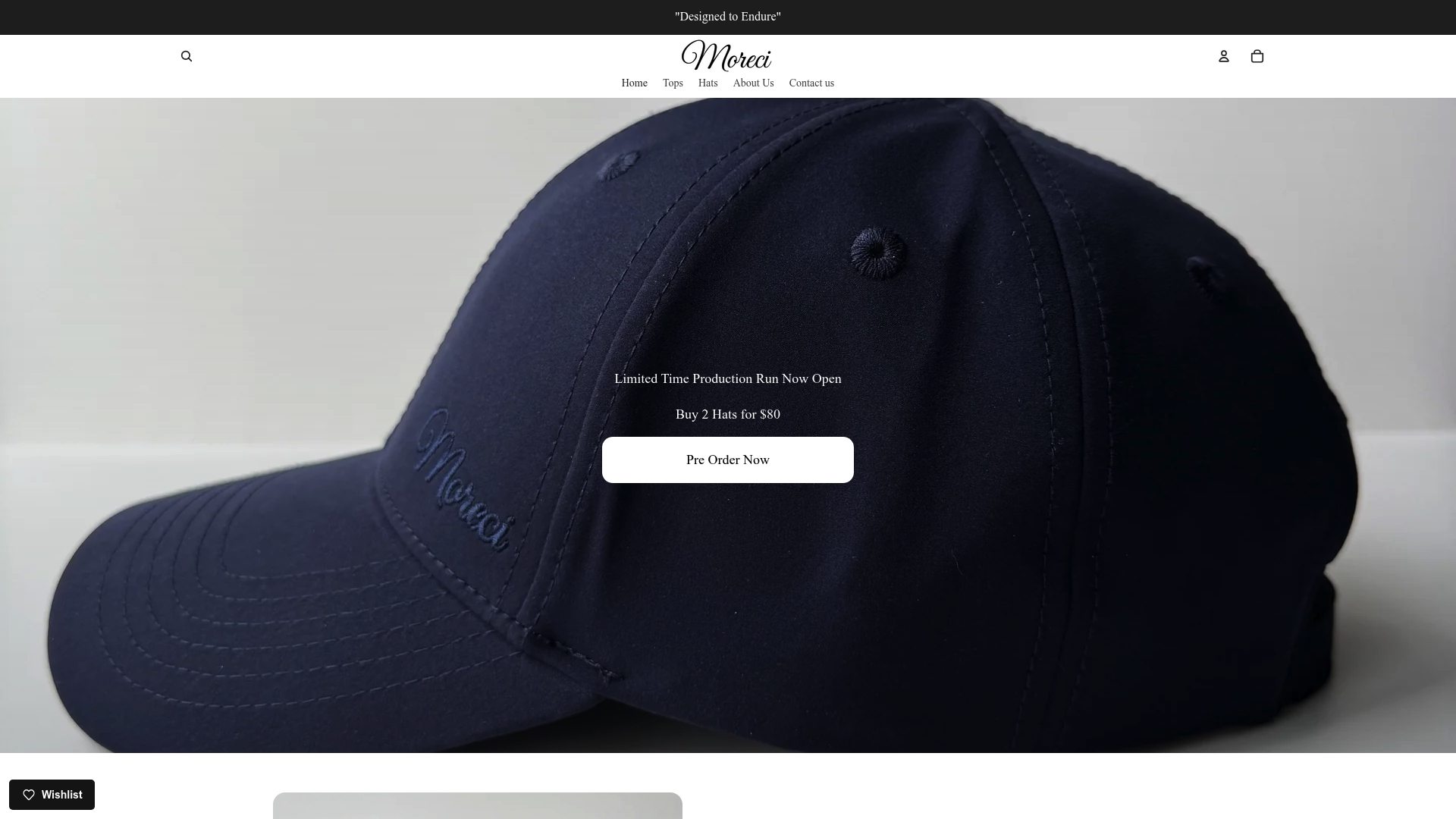
For the accessory slot, the Cappellino Baseball Hat is minimal, unbranded, and built with a tailored fit that holds its shape. It’s the kind of cap that works on a run, in the gym, and at a coffee shop without looking out of place in any of them. All three pieces align with the guide’s fabric, fit, and palette rules and slot directly into the 3:4:2 structure. Browse the full Complesso Collection to see how the pieces map to your capsule, or visit the Moreciandco store to start building.
Useful sources
| Source | Why it’s useful |
|---|---|
| Moreciandco — Layering Pieces for 2026 | Specific layering recommendations for year-round training and commute transitions |
| Moreciandco — How to Choose Performance Workout Gear | Selection rules and common shopper mistakes for multi-use gear |
| Moreciandco — Tapered Athletic Fit Guide | Fit and silhouette guidance for mix-and-match compatibility |
| MioLook — Sports Capsule Wardrobe Guide | Source for the 3:4:2 formula, elastane guidance, and construction details |
| Gymwear — Year-Round Gym Outfit Capsule | Four-variable method for calculating personal capsule counts |
| FlexWearLab — 12-Piece Capsule Gym Wardrobe | Alternate 12-piece capsule layout for higher training frequencies |
| ElevatedMagazines — Essential Sports Apparel Guide | Laundering rules and care tips for technical performance fabrics |