


A business casual outfit is a curated combination of five core wardrobe items styled in seven distinct steps to create a polished yet comfortable work look. The five core items are a blazer, a button-up shirt, polished bottoms, a sweater or cardigan, and leather shoes. Mastering this business casual outfit step by step approach removes the guesswork from your morning routine and replaces it with a repeatable system. Young professionals who follow a structured assembly method dress faster, look sharper, and project more confidence from the moment they walk in the door.
What wardrobe pieces does every business casual outfit need?
A polished business casual wardrobe starts with five anchor items, and mixing at least three of them per outfit consistently produces a professional result. Each piece plays a specific role in the overall look, so understanding that role helps you shop and dress with purpose.
The blazer
The blazer is the single most powerful piece in any business casual wardrobe. It instantly adds structure to an outfit, signals professionalism, and works over almost any base layer. A well-fitted blazer in navy, charcoal, or camel covers the widest range of workplace situations. Avoid oversized or boxy cuts unless they are intentionally tailored, because an unstructured blazer reads as sloppy rather than relaxed.
The base layer
Button-up shirts and blouses form the foundation of most business casual looks. For men, a crisp Oxford or poplin shirt in white, light blue, or soft gray pairs with nearly every blazer and trouser combination. For women, a fitted blouse or a structured button-down in a solid or subtle print works equally well. Fabric matters here: cotton and cotton-blend fabrics hold their shape through a full workday better than synthetic alternatives.
Polished bottoms
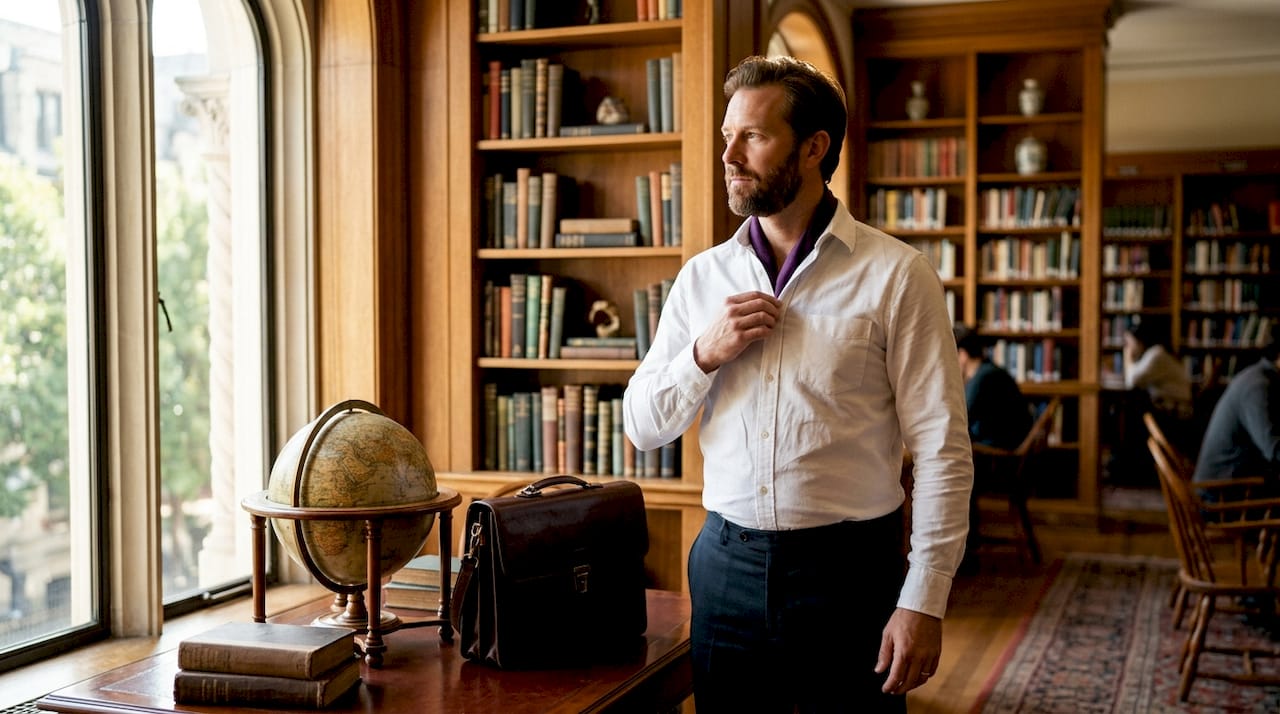
Dark-wash jeans, tailored trousers, and midi skirts are the three strongest options for business casual bottoms. Dark-wash jeans work in most casual-leaning offices but require a structured top or blazer to stay professional. Tailored trousers in wool or a wool blend are the most versatile choice across office cultures. Midi skirts in solid colors or conservative prints add variety for women without sacrificing formality.
Layering pieces and footwear
Cardigans and lightweight sweaters serve as a second layer when a blazer feels too formal. A fine-knit merino cardigan in a neutral tone layers cleanly over a button-up without adding bulk. For footwear, loafers, leather flats, and low block heels are the standard business casual options. Proper footwear is foundational to a polished look because uncomfortable or worn-out shoes undermine an otherwise sharp outfit.
| Piece | Function | Best Colors |
|---|---|---|
| Blazer | Anchor and structure | Navy, charcoal, camel |
| Button-up shirt | Base layer | White, light blue, gray |
| Trousers or dark jeans | Polished bottoms | Black, navy, dark gray |
| Cardigan or sweater | Second layer | Neutral tones |
| Leather shoes | Footwear foundation | Black, tan, cognac |
Pro Tip: Buy your blazer first and build every other piece around it. One quality blazer in a neutral color unlocks more outfit combinations than any other single purchase.
How to build a business casual outfit step by step
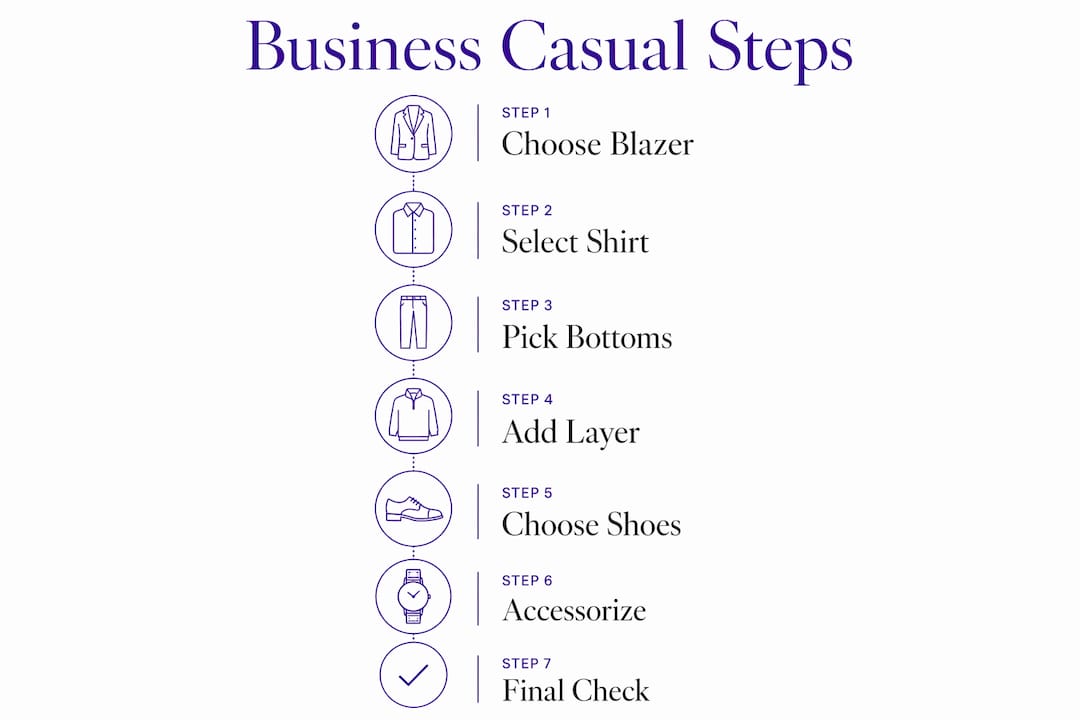
The 7-step assembly method reduces morning outfit prep to about three minutes when practiced consistently. The steps move from the largest structural piece to the smallest finishing detail, which keeps proportions balanced and prevents over-accessorizing.
-
Choose your anchor piece. Start with your blazer or structured outer layer. This sets the formality level for everything else. A structured blazer signals a more formal day; a fine-knit cardigan signals a relaxed one.
-
Select your base layer. Pick a shirt or blouse that complements the anchor piece in color and fabric weight. Avoid patterns that compete with a patterned blazer. Solid base layers work with almost everything.
-
Add your second layer if needed. On cooler days or in heavily air-conditioned offices, add a lightweight sweater under your blazer. Keep the second layer fitted so it does not add visual bulk.
-
Choose your bottoms. Match the formality of your bottoms to your top half. A structured blazer pairs best with tailored trousers. A cardigan can work with dark-wash jeans if the rest of the outfit is polished.
-
Put on your shoes. Shoes lock in the formality level. Leather loafers or low heels confirm a business casual look. Sneakers typically fall outside traditional business casual standards, so research your office culture before wearing them.
-
Select your bag. A structured tote, leather satchel, or slim briefcase completes the professional silhouette. Avoid backpacks with casual branding unless your office culture is explicitly relaxed.
-
Add one statement accessory. A watch, a simple necklace, or a silk scarf adds personality without overwhelming the outfit. One deliberate accessory reads as intentional. Three or more reads as cluttered.
Pro Tip: Lay out your full outfit the night before, including shoes and accessories. This eliminates morning decision fatigue entirely and takes under two minutes.
Building outfit systems rather than choosing individual pieces each morning cuts decision time from 20 minutes to under five minutes. The system works because every decision is already made at the category level, not the item level.
What mistakes undermine a business casual look?
Intentional silhouette is the defining factor between a polished business casual look and a sloppy one. Even relaxed or trend-forward pieces read as professional when the overall outfit looks deliberate.
The most common mistakes young professionals make include:
- Wearing unstructured pieces together. A loose sweater over wide-leg trousers with casual sneakers creates a look that reads as weekend wear, not office wear. Always anchor the outfit with at least one structured piece.
- Ignoring fit. Clothes that are too large or too small undermine professionalism regardless of the brand or price. Tailoring a single pair of trousers costs less than buying a new pair and makes a bigger difference.
- Skipping proper undergarments. Well-fitted undergarments are the invisible foundation of a polished silhouette. Visible lines or poor support affect how every outer layer sits.
- Over-accessorizing. More than one or two accessories shift attention away from the outfit and toward individual items.
- Wearing sneakers without checking office norms. Sneakers are generally excluded from traditional business casual in most workplaces.
“Mixing texture and structure is more impactful than color matching alone. A smooth silk blouse under a textured tweed blazer creates depth that a monochrome outfit in the same fabric cannot. Texture mixing adds the dimension that separates a truly professional look from one that is merely office-appropriate.”
A practical blazer care habit most professionals overlook: when you sit down at your desk, briefly sit on the back of your lapels to help them lay flat throughout the day. This simple habit keeps the blazer looking pressed without a steamer.
How do you adapt business casual for different seasons?
Seasonal fabric choices and layering adjustments maintain business casual style year-round without sacrificing comfort. The core five pieces stay constant; the fabrics and weights shift with the weather.
For summer:
- Choose breathable cotton, linen, or bamboo-blend fabrics for shirts and trousers.
- Swap the blazer for a lightweight, unlined version in linen or a cotton blend.
- Opt for leather sandals or open-toe flats in offices where they are acceptable.
- Keep accessories minimal to avoid adding visual weight in the heat.
For winter and transitional seasons:
- Layer a fitted turtleneck or fine-knit sweater under your blazer for warmth without bulk. Read the full guide on layering for winter to get the proportions right.
- Choose wool or wool-blend trousers over cotton for better insulation and structure.
- Add a tailored overcoat in camel or charcoal for commuting without disrupting the outfit underneath.
- Switch to leather ankle boots or closed-toe heels for both warmth and polish.
For hybrid work and virtual meetings:
- Focus on the top half of your outfit for video calls. A blazer or structured cardigan over a clean shirt reads as professional on camera even with casual bottoms.
- Keep a blazer on the back of your chair for unexpected video calls when working from home.
- Transition a daytime business casual look to an evening event by swapping flats for heels and adding a bolder accessory.
How do you build a business casual capsule wardrobe for 2026?
A capsule wardrobe is a small, curated set of pieces that mix and match to create multiple outfits. Capsule wardrobe planning with limited, versatile pieces enables creating 7–10 different business casual outfit combinations efficiently. That range covers a full two-week work rotation without repeating an exact look.
The concept works because each piece is chosen to pair with at least two or three others in the same wardrobe. A navy blazer pairs with gray trousers, dark jeans, and a black midi skirt. That single blazer generates at least three distinct outfits before you change anything else.
| Category | Recommended Pieces | Outfits Generated |
|---|---|---|
| Blazers | 2 (neutral + one color) | 6+ combinations |
| Shirts or blouses | 4 (solids and one print) | Pairs with all bottoms |
| Trousers or skirts | 3 (black, navy, gray) | Pairs with all tops |
| Shoes | 2 pairs (loafer + low heel) | Covers all formality levels |
| Accessories | 3 (watch, scarf, simple necklace) | Rotates across outfits |
Shopping for outfit systems rather than individual pieces is the core principle here. Before buying anything new, ask whether the item pairs with at least three pieces you already own. If it does not, it does not belong in a capsule wardrobe. This approach also reduces impulse purchases and builds a wardrobe that lasts longer.
Key Takeaways
A polished business casual outfit requires five core pieces, a seven-step assembly process, and consistent attention to fit, fabric, and silhouette to look deliberate and professional every day.
| Point | Details |
|---|---|
| Five core pieces | Blazer, button-up shirt, polished bottoms, cardigan, and leather shoes form every outfit. |
| Seven-step assembly | Follow anchor piece to accessory in order to dress in under three minutes. |
| Fit beats fashion | Tailored, well-fitted clothes always outperform expensive but poorly fitted ones. |
| Capsule planning | Seven to ten outfit combinations come from as few as twelve carefully chosen pieces. |
| Seasonal adaptation | Swap fabric weights and layer counts while keeping the same five-piece structure. |
Why outfit systems changed how I dress for work
The biggest shift in my approach to business casual was stopping the habit of choosing outfits and starting the habit of building systems. Before I had a system, I spent real time every morning staring at a full closet and feeling like I had nothing to wear. The problem was never the number of clothes. The problem was that none of the pieces were chosen to work together.
Once I committed to the capsule approach and the seven-step method, mornings became genuinely fast. My blazer goes on first, every time. That single decision collapses every other choice that follows. The base layer, the bottoms, the shoes: each one has a short list of options that already work with the blazer. The decision is not “what do I wear?” It is “which of these three shirts?”
The other thing most style guides skip is the role of undergarments and shoe comfort in how you carry yourself. You can wear a perfect outfit and still look uncomfortable if your shoes hurt by 10:00 AM. Comfort and polish are not opposites. The right leather loafer or low block heel gives you both.
My personal favorite combination is a navy blazer, a white Oxford shirt, and tailored charcoal trousers with cognac loafers. It works in virtually every professional environment, photographs well, and takes four minutes to put on. Build your version of that combination and repeat it with minor variations. That is the whole system.
— Giuseppe
Quality pieces that make the system work
The seven-step method only works as well as the pieces you put into it. Cheap fabrics lose their shape, poor construction shows through the day, and low-quality shoes undermine even the sharpest outfit.
Moreciandco was built on the idea of getting what you pay for. The Complesso Collection offers luxury clothing pieces selected for exactly the kind of versatile, mix-and-match wardrobe this guide describes. From structured tops to refined accessories, every item is made to hold its shape and its value across seasons. If you are ready to build a wardrobe that actually works, browse the full store and start with the pieces that anchor your system.
FAQ
What are the five core business casual pieces?
The five core pieces are a blazer, a button-up shirt or blouse, polished bottoms such as trousers or dark-wash jeans, a cardigan or lightweight sweater, and leather shoes. Mixing at least three of these per outfit consistently produces a polished result.
How long does the seven-step outfit method take?
The seven-step method reduces morning outfit prep to about three minutes when practiced consistently. Laying out your outfit the night before cuts that time even further.
Are sneakers acceptable in business casual?
Sneakers are generally excluded from traditional business casual in most workplaces. Always research your specific office culture before wearing them, as some casual offices permit clean, minimal sneaker styles.
How many pieces does a business casual capsule wardrobe need?
A capsule wardrobe of roughly twelve carefully chosen pieces generates 7–10 distinct business casual outfit combinations. The key is selecting items that each pair with at least two or three others in the same wardrobe.
How do you keep a blazer looking polished all day?
Sit briefly on the back of your lapels when you arrive at your desk. This simple habit helps the lapels lay flat and maintains a crisp, structured silhouette throughout the workday without needing a steamer.