


Layering business clothing for winter means combining a moisture-wicking base layer, an insulating mid-layer, and a structured outer layer to stay warm without losing your professional edge. The three-layer system is the standard framework for winter office attire, and it works because each layer serves a distinct function. The real challenge is not staying warm outdoors. It is managing the transition from a freezing commute into an overheated conference room without looking like you grabbed whatever was closest to the door.
What fabrics work best for each winter business clothing layer?
Fabric choice determines whether your layering system works or fails. The wrong material traps moisture, creates bulk, or wrinkles under a blazer by 10 a.m. Getting this right starts at the base.
Base layer: merino wool and silk
Merino wool is the strongest base layer choice for office professionals. It is thinner than standard wool, breathable, odor-resistant, and comfortable enough to wear alone indoors. Silk is the second option. It sits flat under dress shirts, adds a thin layer of warmth, and never adds visible bulk. Synthetic moisture-wicking fabrics work for commutes but tend to trap odor over a full workday, which makes them a weaker choice for office environments.
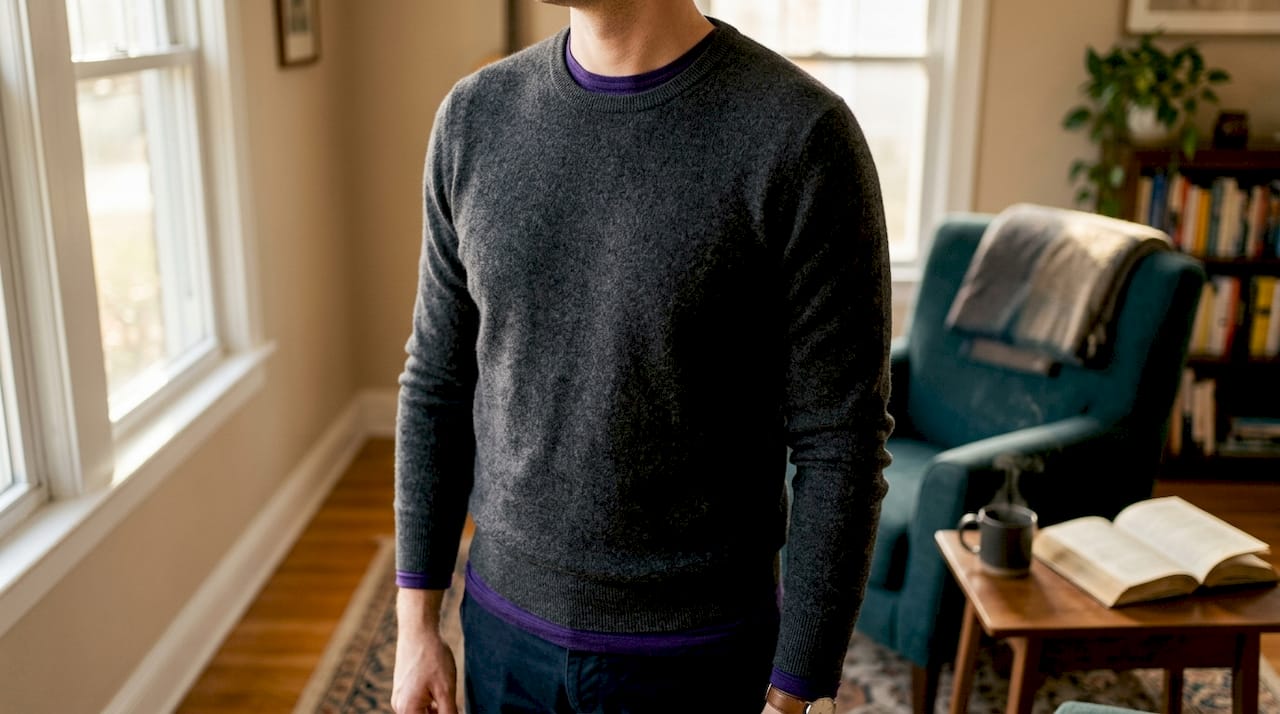
Mid-layer: cashmere, fine-gauge knits, and cardigans
The mid-layer provides insulation without adding weight. Fine-gauge cashmere sweaters and merino knit cardigans are the standard choices for business environments. They sit close to the body, move with you, and look polished whether your blazer is on or off. Chunky cable-knit sweaters add too much volume under a structured jacket and push the silhouette into casual territory.
Pro Tip: A V-neck cashmere sweater over a dress shirt is one of the most versatile mid-layers in professional winter outfits. It works with or without a tie and reads as intentional, not improvised.
Outer layer: wool blazers, peacoats, and topcoats
Structured wool outerwear anchors a winter business outfit with both warmth and authority. Wool blazers work for indoor wear. Peacoats and wool topcoats handle the commute. Tweed adds texture and weight without sacrificing structure. Avoid puffer jackets as outerwear over business attire. They compress your silhouette and undercut the formality of everything underneath.
- Base layer fabrics: merino wool, silk, lightweight thermal knit
- Mid-layer fabrics: fine-gauge cashmere, merino knit, wool-blend cardigan
- Outer layer fabrics: wool, tweed, wool-blend topcoat, structured peacoat
How do you layer for a polished, professional silhouette?
Bulk is the enemy of a professional layered look. The goal is to add warmth without adding visual weight. Fitted and tailored garments are the foundation of a clean winter silhouette, and every piece you add should sit closer to the body, not further from it.
Tonal dressing is the most reliable way to keep layers looking cohesive. Wearing similar shades across your layers, think camel, navy, charcoal, and gray, creates a continuous line from collar to hem. That visual continuity makes a three-layer outfit read as one deliberate look rather than three separate items stacked on top of each other.
Proportion matters as much as fit. A slim trouser balances a longer cardigan or a structured blazer. Wide-leg trousers work with a fitted turtleneck and a single-button coat. The rule is simple: if the bottom half is relaxed, the top half should be fitted, and vice versa. Mixing textures, such as a smooth silk base under a matte wool blazer, adds depth without adding bulk.
Pro Tip: Lay your full outfit flat before wearing it. If any layer looks thick or stiff on its own, it will look worse under another layer. Replace it with something slimmer before you leave the house.
- Choose slim or tailored cuts at every layer
- Match tones across layers for a cohesive look
- Balance proportions: fitted top with relaxed bottom, or the reverse
- Mix textures, not volumes
- Avoid double-breasted mid-layers under structured blazers
For more guidance on building a wardrobe that layers well, the business casual essentials guide at Moreciandco covers color palettes and matching strategies worth bookmarking.
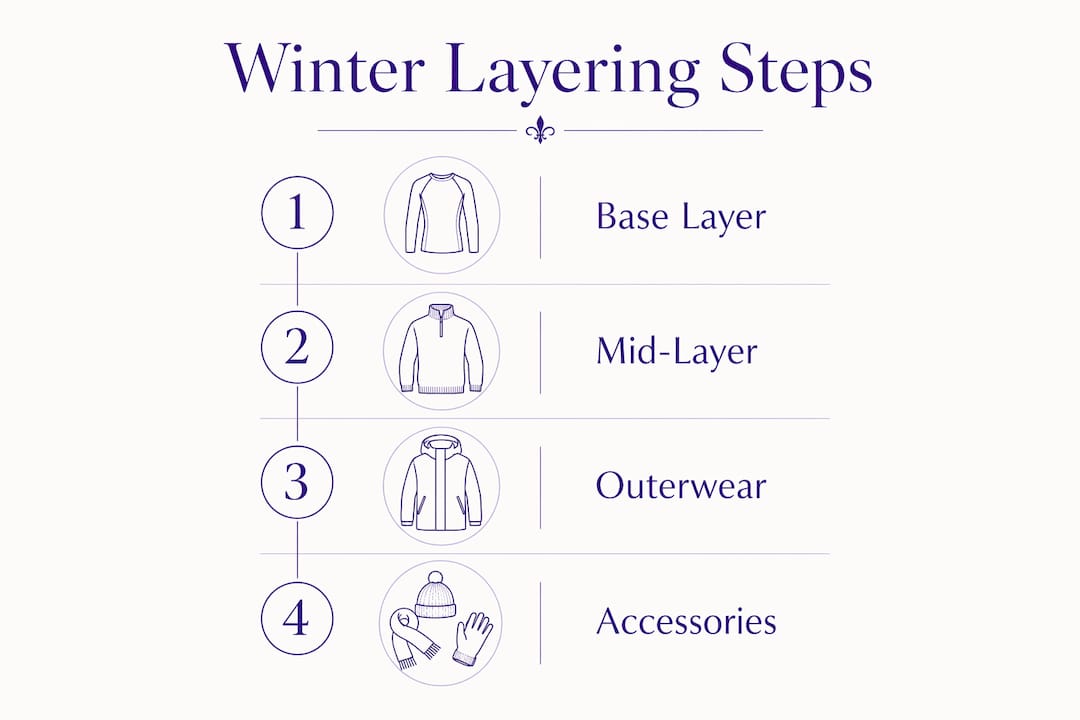
Step-by-step guide to layering business clothing for winter
Building a winter office outfit layer by layer takes less than five minutes once you know the sequence. The key is treating each layer as a complete outfit on its own before adding the next one.
Step 1: Start with a base layer that works alone indoors
Starting with a base layer that can stand alone indoors solves the climate mismatch between a cold commute and a heated office. A merino wool crewneck or a fitted silk undershirt under a dress shirt qualifies. If you strip down to your base layer at your desk, you should still look put together. This is not optional. It is the design principle that makes the whole system work.
Step 2: Add your mid-layer for warmth control
The mid-layer is your primary warmth dial. A fine-gauge cashmere V-neck adds warmth without bulk. A wool-blend cardigan gives you the option to unbutton and adjust as the office temperature shifts. Mixing silk, wool, and cashmere textures creates insulation while supporting ease of movement, which matters when you are moving between meetings all day.
Step 3: Finish with structured outerwear
Your outer layer handles the commute and the first impression. A wool topcoat or a tailored peacoat over a blazer is the standard for business formal environments. For business casual winter clothing, a structured wool blazer worn as the outer layer is often enough in mild cold. The outerwear should be the most polished piece in the stack.
Step 4: Add accessories that complement, not compete
Accessories extend your warmth without adding layers to your torso. A fine wool or cashmere scarf in a neutral tone works with almost any business outfit. Merino wool dress socks provide breathable, moisture-wicking warmth for full workdays without sacrificing professionalism. Leather gloves in black or brown complete the look for outdoor commutes.
| Layer | Purpose | Best Fabric |
|---|---|---|
| Base | Moisture management, indoor comfort | Merino wool, silk |
| Mid | Insulation, warmth control | Cashmere, fine-gauge merino knit |
| Outer | Weather protection, professional anchor | Wool, tweed, wool-blend topcoat |
| Accessories | Extended warmth, finishing detail | Merino wool socks, cashmere scarf |
What are the most common layering mistakes to avoid?
Most layering mistakes come from prioritizing warmth over fit. Wearing three thick layers may keep you warm on the walk to the office, but it creates a silhouette that reads as unprepared rather than professional.
- Layering too many bulky pieces: Three slim layers outperform two thick ones every time. Volume accumulates fast. Each layer should be thin enough that you barely notice it under the next one.
- Ignoring breathability: A base layer that traps moisture will make you uncomfortable within an hour of entering a heated building. Merino wool and silk both wick moisture away from the skin. Synthetic base layers often do not.
- Wearing outerwear indoors: Keeping a heavy coat on at your desk signals that you did not plan your mid-layers well. Your indoor outfit should be complete and polished without the coat.
- Mismatching formality levels: A fine cashmere sweater over a dress shirt under a wool blazer is cohesive. A hoodie under a blazer is not, regardless of how cold it is outside.
- Forgetting graceful removal: Every layer you add should be easy to remove without disrupting the rest of the outfit. Avoid tucked-in mid-layers that untuck when you pull off a sweater.
“The biggest misconception in winter office layering is trying to keep the entire outfit intact all day. Each layer should be a standalone, polished piece.” Winter layering for work editorial
Treating each layer as independent is the mindset shift that separates professionals who look polished all day from those who look disheveled by noon.
Key takeaways
The most effective approach to layering business clothing for winter is a three-layer system built on merino wool or silk at the base, fine-gauge cashmere in the middle, and structured wool outerwear on top.
| Point | Details |
|---|---|
| Use the three-layer system | Base, mid, and outer layers each serve a distinct function for warmth and professionalism. |
| Choose natural fibers | Merino wool and cashmere outperform synthetics for breathability and all-day comfort. |
| Prioritize fit over warmth | Slim, tailored layers create a polished silhouette without sacrificing insulation. |
| Design each layer to stand alone | A base or mid-layer that looks polished alone lets you remove outer layers without losing credibility. |
| Use tonal dressing | Matching shades across layers makes a multi-piece outfit read as one cohesive look. |
Why I think most professionals are layering backwards
Giuseppe here. After years of paying attention to how professionals dress through winter, the pattern I keep seeing is the same mistake repeated: people build from the outside in. They buy a great coat, then scramble to fill in the layers underneath. The coat ends up doing all the work, and everything under it is an afterthought.
The system works the other way around. Your base layer is the most important decision you make. If it is uncomfortable, breathable, or too casual to wear alone, every layer on top of it is compensating for a problem you created at step one. A quality merino wool base or a premium undershirt changes how the entire outfit sits and feels.
The other thing I have noticed is that texture variety is underused. Professionals tend to stack similar fabrics, a cotton shirt under a cotton sweater under a cotton blazer. That creates a flat, one-dimensional look. Mixing a silk base with a cashmere mid-layer and a wool blazer gives the outfit depth. Each layer catches light differently. That is what makes a layered outfit look intentional rather than accidental.
My honest recommendation: invest in two or three exceptional mid-layers rather than a dozen mediocre ones. A single fine-gauge cashmere cardigan in charcoal or navy will do more work in your winter wardrobe than five cheaper alternatives combined. Quality at the mid-layer is where the return on investment is highest.
— Giuseppe
Moreciandco’s winter layering pieces for professionals
Moreciandco builds clothing around the principle of getting what you pay for. That philosophy shows up directly in the pieces that matter most for winter office layering.
The Complesso Collection includes garments designed to function as standalone pieces and as part of a layered system. The Complesso Tee, made from luxury bamboo-cotton in Portugal, works as a base layer that holds up to a full workday in a heated office. Every piece in the collection is built with fabric quality and fit as the starting point, not afterthoughts. If you are building or rebuilding your winter professional wardrobe, Moreciandco’s full range is worth a look before you settle for less.
FAQ
What is the three-layer system for winter business clothing?
The three-layer system uses a breathable base layer, an insulating mid-layer, and a structured outer layer. Each layer serves a distinct function: moisture management, warmth, and weather protection.
What is the best base layer fabric for office wear?
Merino wool is the best base layer fabric for office professionals. It is thin, breathable, odor-resistant, and comfortable enough to wear alone indoors when outer layers come off.
How do you avoid looking bulky when layering for work?
Choose slim, tailored cuts at every layer and stick to tonal color palettes. Three thin layers always look more polished than two thick ones.
Can you wear a cashmere sweater as a mid-layer in a business formal setting?
A fine-gauge cashmere V-neck or crewneck over a dress shirt qualifies as a mid-layer in most business formal environments. It adds warmth without disrupting the structure of a blazer worn on top.
How do you handle removing layers gracefully in the office?
Design each layer to look polished on its own. A base layer that works as a standalone indoor outfit means you can remove your mid-layer or outerwear without looking underdressed at your desk.