


A suit that fits well does one thing immediately: it makes you look like you meant to get dressed that morning. The silhouette is clean, the shoulders sit where they should, and nothing pulls, bunches, or sags. That’s the whole argument for fit, and it’s a strong one. A well-fitted suit creates a flattering shape while still allowing you to move naturally, which is something a poorly sized jacket simply cannot do.
Here’s a pattern worth knowing: most men overestimate their jacket size, according to GQ editors, and end up in suits that swamp their frame rather than define it. The result is a look that reads as sloppy even when the fabric is expensive. Fit, not price tag, is what separates a sharp suit from a forgettable one.
The sections below break down every fit element you need to know, from collar to hem, along with the consequences of getting it wrong and a practical guide for assessing fit before you buy or book a tailor.
Table of Contents
- 1. How a suit jacket should fit: key elements explained
- 2. How suit pants should fit: waist to hem
- 3. What happens when a suit fits poorly
- 4. The real benefits of wearing a suit that fits
- 5. How to assess suit fit and what to expect from a tailor
- Key Takeaways
- Moreciandco knows what a well-dressed man actually needs
1. How a suit jacket should fit: key elements explained
The jacket is where fit is most visible and most often wrong. Getting each of these elements right is what separates a suit that looks custom from one that looks borrowed.
Collar. The jacket collar should lie flat against your shirt collar with no gap and no bunching. A gap usually means the jacket is too large in the back; bunching means the opposite. Neither is a quick fix.
Shoulders. This is the single most critical measurement on a jacket. The shoulder seam must sit exactly at the edge of your natural shoulder, not a centimeter over or under. Shoulder misalignment is one of the few fit problems a tailor genuinely cannot correct without rebuilding the jacket from scratch. Get this right off the rack, or don’t buy it.
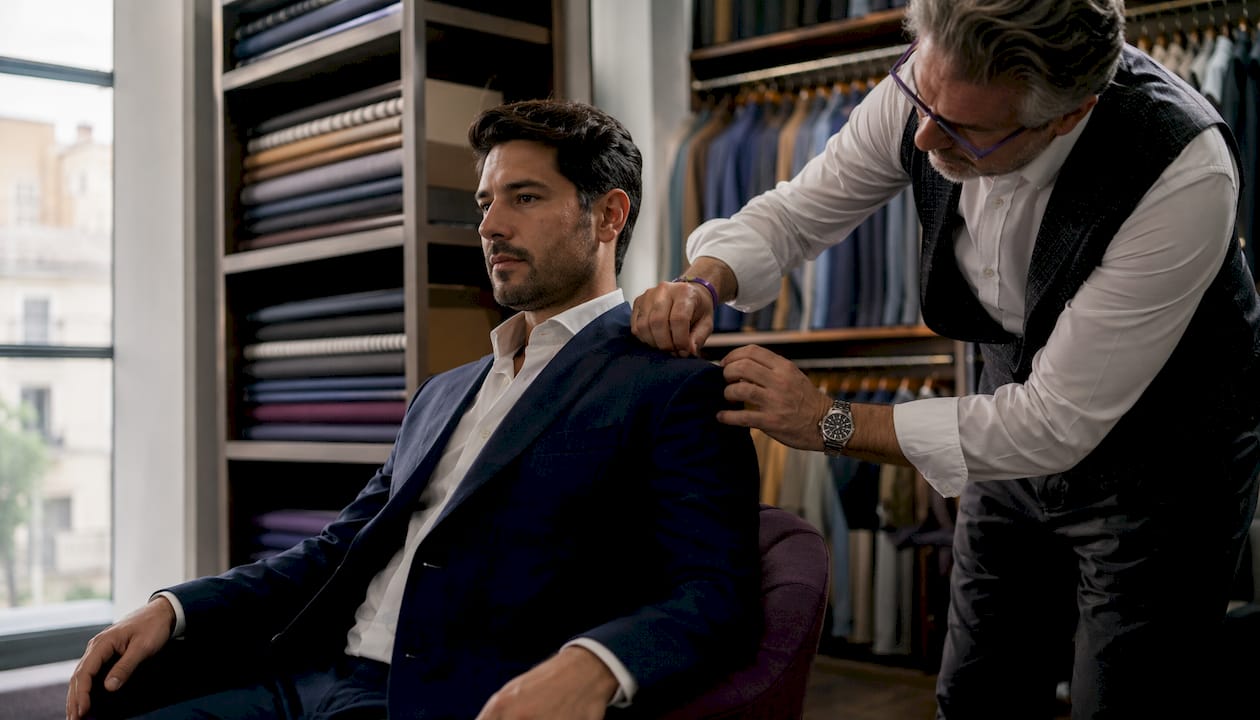
Chest and lapels. Button the jacket and check whether the lapels lie flat. A thumb’s width of space between the fabric and your torso is the standard. More than that and the jacket looks baggy; less and you’ll see horizontal pulling across the chest.
Waist. A well-cut jacket tapers slightly at the waist to suggest shape. It shouldn’t grip you, but it should acknowledge that you have a torso. This is where slim, classic, and modern fits diverge most noticeably. Slim fit follows the body closely; classic fit allows more room through the midsection; modern fit sits between the two. Choose based on your build and how much you move during the day.
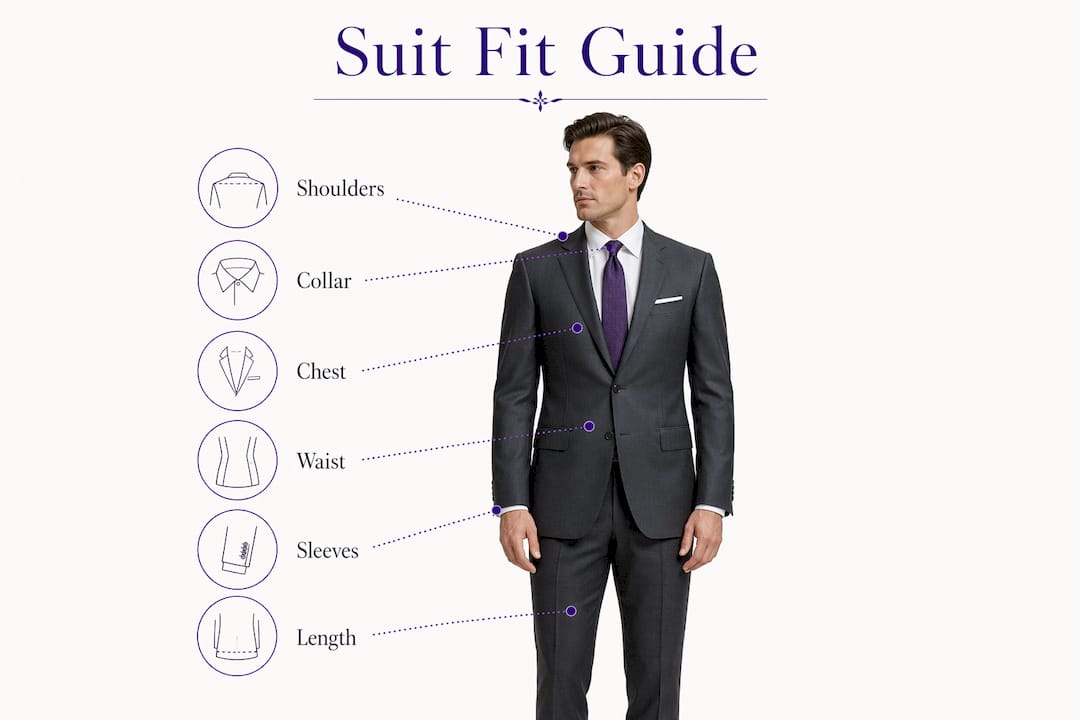
Sleeves. The sleeve should hug your arm without wrinkling and end so that roughly a half-inch of your dress shirt cuff shows. Sleeve length is one of the easiest and least expensive alterations a tailor can make, so don’t let a slightly long sleeve kill an otherwise good fit.
Jacket length. Let your arms hang naturally. Your fingers should curl just at the hem of the jacket. It should cover your seat entirely without excess fabric hanging below it.
Pro Tip: When trying on jackets, bring the dress shirt you plan to wear with the suit. The collar, sleeve, and chest fit all change depending on what’s underneath.
2. How suit pants should fit: waist to hem
Pants are where men tend to accept the most compromise, usually because they’re hidden under a jacket. That logic falls apart the moment you sit down, walk across a room, or take the jacket off.
Suit pants should sit at your natural waist, fitting snugly but without pinching. If you need a belt to hold them up, the waist is too large. If you see horizontal creasing across the front, they’re too tight.
- Seat and crotch: The fabric should lie smooth across the seat with no pulling or sagging. Excess fabric here creates a drooping, unflattering look; too little and every step becomes uncomfortable.
- Taper: Modern preferences favor a tapered leg that narrows from the thigh down. Straight-leg trousers read as dated on most body types, while an extreme taper can look costume-like. Aim for a clean line that follows your leg without clinging.
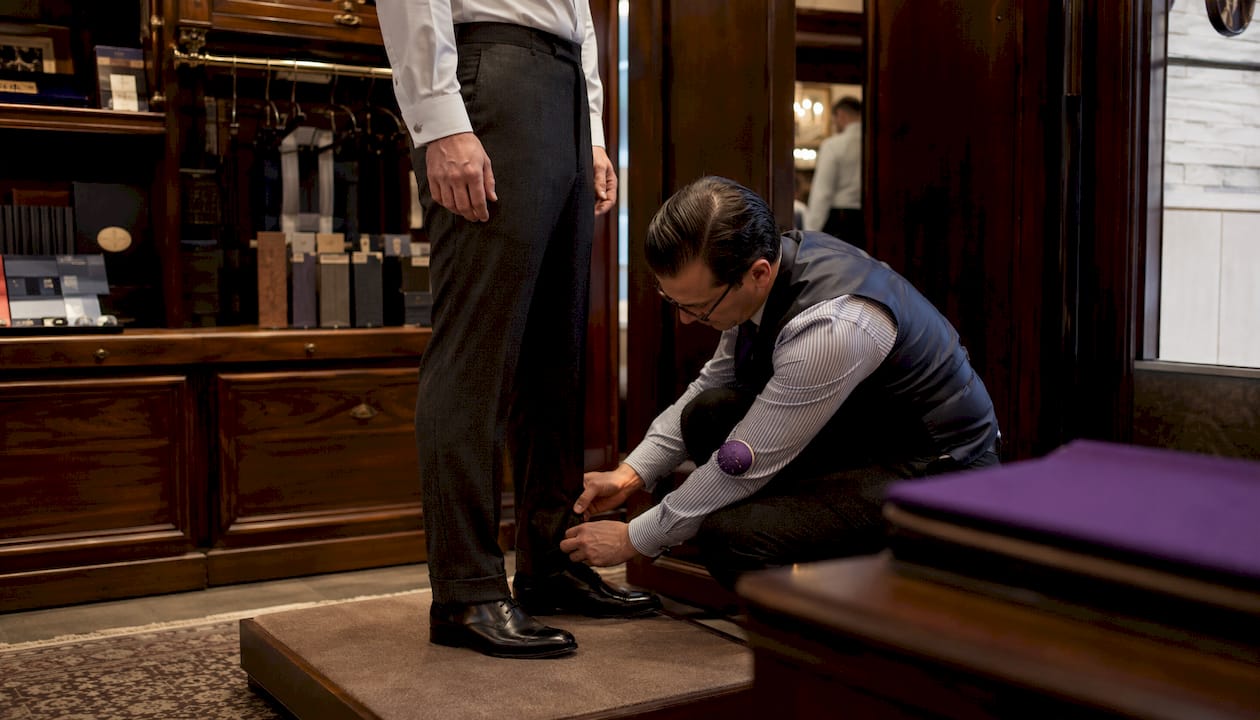
- Length: The break, meaning where the trouser hem meets the shoe, should be minimal. A slight break is classic; no break at all is contemporary. Excess bunching at the ankle is always wrong and is the most common pants fit error.
Common fixes a tailor handles routinely: hemming the length, tapering the leg, and taking in or letting out the waist. These are inexpensive adjustments that transform an off-the-rack pair into something that looks made for you.
Pro Tip: Sit down in the pants before you decide they fit. If the waistband digs in or the seat pulls tight, you’ll know immediately. Standing still in a fitting room tells you almost nothing about how pants perform during a full day.
3. What happens when a suit fits poorly
Ill-fitting suits damage professional image and create physical discomfort that compounds throughout the day. The consequences are more specific than most men realize.
A tight jacket causes horizontal creasing across the chest and back, gaps at the button stance, and restricted arm movement. Wearing one for eight hours is genuinely fatiguing. A loose jacket does the opposite: it swamps your frame, kills any sense of proportion, and signals that you either don’t know your size or don’t care. Men who choose looser fits for comfort often end up hiding their natural lines entirely, which defeats the purpose of wearing a suit at all.
The professional cost is real. A suit that doesn’t fit reads as inattention to detail, and in settings where first impressions carry weight, that’s a liability. It’s not about vanity. It’s about whether the clothes support or undermine the impression you’re trying to make.
There’s also a practical cost to ignoring fit at purchase. Minor alterations are affordable. Major structural corrections, like resetting a shoulder or rebuilding a chest, can cost more than the suit itself, and some problems simply can’t be fixed at all.
4. The real benefits of wearing a suit that fits
The case for proper fit goes well past looking sharp. A well-fitted suit enhances comfort and confidence in ways that affect how you carry yourself and how others respond to you.
When a suit fits correctly, you stop thinking about it. You’re not tugging at the collar, adjusting the shoulders, or conscious of fabric pulling across your back. That freedom of attention is worth more than most men account for. You move better, you sit more comfortably, and you project the kind of ease that reads as confidence.
There’s also a longevity argument. A suit worn under constant tension, where seams are stressed and fabric is stretched, wears out faster. Proper fit distributes the garment’s structure evenly, which means it holds its shape longer and requires less frequent pressing. For anyone investing in quality fabric, that matters.
From a personal branding standpoint, a well-fitted suit signals that you understand the occasion and respect it. That’s a message worth sending consistently.
5. How to assess suit fit and what to expect from a tailor
Evaluating fit accurately takes a few minutes and a clear checklist. Most men rush this step and pay for it later.
At the fitting:
- Wear a fitted dress shirt, not a t-shirt or a thick sweater. The shirt you’ll actually wear with the suit is the only accurate baseline.
- Check the shoulder seam first. If it’s off, move on to the next jacket.
- Button the jacket and look for chest pulling or lapel gaping.
- Check sleeve length against your shirt cuff.
- Sit down in the pants. Walk a few steps. Squat slightly if the setting allows.
Communicating with your tailor:
Be specific. “It feels tight” is less useful than “the chest pulls when I reach forward.” Point to exactly where the garment is binding or sagging. A good tailor will confirm what’s fixable and what isn’t. Common alterations like sleeve shortening, pant tapering, and waist suppression are straightforward and relatively inexpensive. Shoulder corrections are not.
Choosing the right suit also means being honest about your measurements. The size-overestimation bias GQ editors flag is real: if you’ve been wearing a 42 for years and it always feels a little big, try the 40. Fabric and construction also affect how alterations take. Wool and wool blends tailor more cleanly than heavily structured synthetics. If you’re investing in a suit you plan to wear for years, luxury fabric selection is worth understanding before you buy.
Pro Tip: Plan for at least two fittings if you’re working with a tailor on significant adjustments. The first fitting identifies the changes; the second confirms they were executed correctly. Skipping the second fitting is where most alterations go slightly wrong.
Men who prioritize fit in their broader wardrobe choices, whether it’s a suit or the right shirt silhouette, consistently look more put-together than those chasing labels or trends. The principle holds across every category of menswear, including the gym and streetwear space where fit has become just as deliberate.
Key Takeaways
A suit that fits correctly at the shoulders, chest, waist, and hem is the single most important factor in how well it looks and how long it lasts.
| Point | Details |
|---|---|
| Shoulders are non-negotiable | The shoulder seam must align with your natural shoulder; no tailor can fix a misaligned shoulder without rebuilding the jacket. |
| Size-overestimation bias is common | GQ editors note most men wear jackets too large, hiding their natural lines and reducing overall sharpness. |
| Pants fit matters beyond the jacket | Waist, seat, taper, and break all affect silhouette; sitting in the pants before buying is the only reliable test. |
| Minor alterations are worth it | Sleeve length, pant hemming, and waist suppression are affordable fixes that make off-the-rack suits look custom. |
| Moreciandco | Moreciandco offers quality menswear built around the principle that you should get exactly what you pay for, starting with fit. |
Moreciandco knows what a well-dressed man actually needs
Most men have bought a suit that looked fine on the hanger and disappointing in the mirror. The gap between those two moments is almost always fit. Moreciandco was built around a straightforward idea: bring back the experience of getting what you pay for, in quality, in construction, and in how the garment actually wears.
If you’re ready to stop settling for suits that almost fit, the Moreciandco store is the place to start. The Complesso Collection offers luxury clothing pieces built with the kind of attention to detail that shows up in the fit, the fabric, and the way the garment holds up over time. Browse the collection and find out what it feels like to wear something made to the standard you actually deserve.