


Full-grain leather is the topmost layer of an animal hide with its entire natural surface left intact — no buffing, sanding, or corrective mechanical treatment of any kind. For buyers, that single fact translates to the most durable, breathable, and character-rich leather available, and a price tag that reflects it.
The ISO 15115:2019 standard defines full-grain leather precisely this way: the outer layer of hide that retains its complete grain, free from any surface removal. That definition is the benchmark serious buyers and tanneries use.
Table of Contents
- What full-grain leather actually is
- How does full-grain compare to other leather types?
- Why buyers pay more for full-grain leather
- How can you tell if a product is truly full-grain?
- How to care for full-grain leather so it lasts
- Labeling pitfalls U.S. buyers should know
- Is full-grain leather right for belts, shoes, wallets, and bags?
- Quick checklist before you buy
- Key Takeaways
- Why material honesty matters more than the label
What full-grain leather actually is
Full-grain leather is the hide’s outermost layer, the densest and most tightly woven part of the animal’s skin. Because nothing is removed from the surface, the fiber structure stays completely intact, which is what gives it superior tensile strength and resistance compared to any sanded alternative.
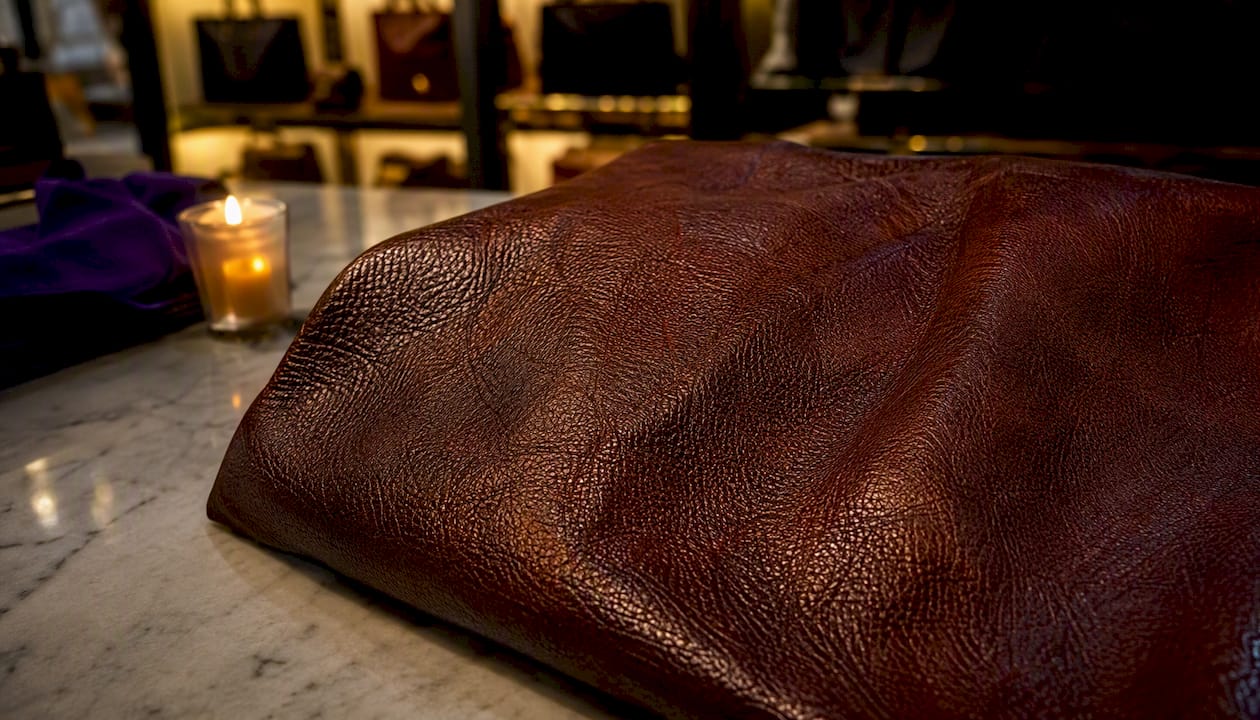
Tanneries apply different finishes on top of that intact grain. Aniline leather uses only transparent dye, so the natural surface stays fully visible. Semi-aniline adds a thin protective pigment coat. Pigmented finishes apply a heavier opaque layer. All three can technically sit on full-grain hide, but the thicker the finish, the less of the natural character you actually see or feel.
Pro Tip: Ask specifically about finishing thickness. A manufacturer who skives edges thin and uses a light aniline finish is working with genuine full-grain hide and the skill to match. A vague answer about “premium leather” is a signal to dig deeper.
How does full-grain compare to other leather types?
The grading terms buyers encounter — full-grain, top-grain, genuine, bonded — are descriptive, not government-regulated. Here is what each actually means at the tannery level.
| Leather type | Surface treatment | Natural grain intact? | Patina over time | Relative durability | Price signal |
|---|---|---|---|---|---|
| Full-grain | None (hair removed only) | Yes | Rich, unique | Highest | Premium |
| Top-grain | Buffed/sanded, light finish | Partially | Moderate | High | Mid-to-high |
| Corrected-grain | Heavily sanded, embossed | No | Minimal | Moderate | Mid |
| Split (“genuine”) | Split from lower hide layers | No | Very little | Lower | Budget-to-mid |
| Bonded | Shredded scraps + adhesive | No | None | Lowest | Budget |
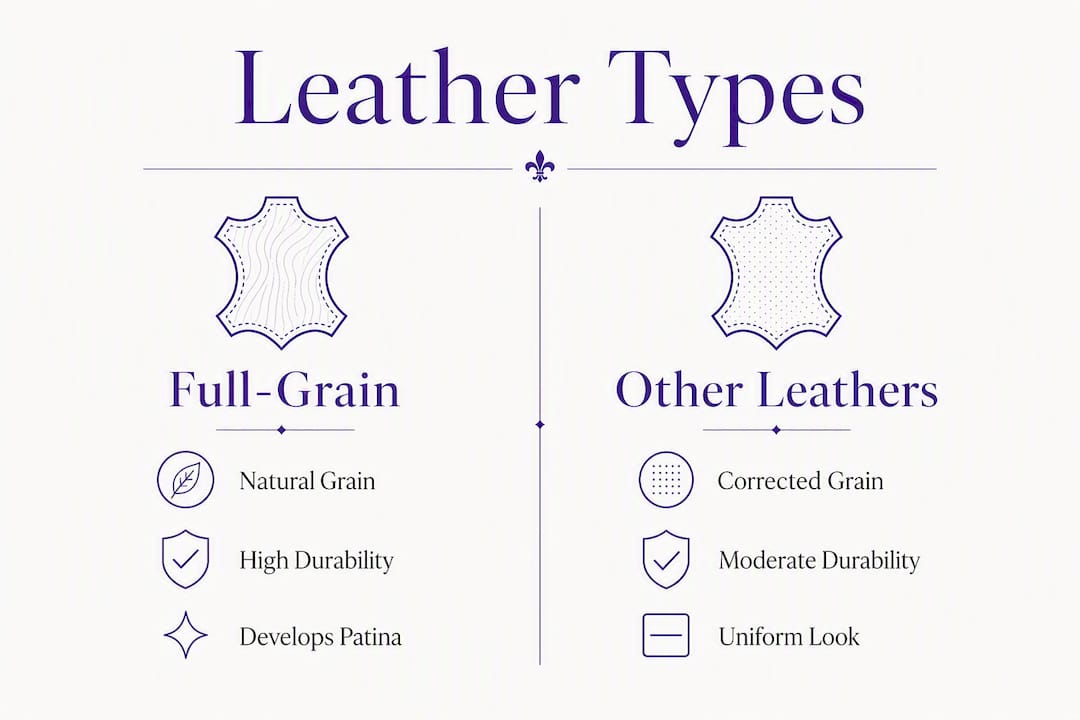
Top-grain is the most common source of confusion. Sanding removes surface blemishes and creates a uniform look, but it also thins the fiber layer that provides strength. The result is a cleaner appearance at the cost of long-term durability and the patina development that makes full-grain goods age so well.
Why buyers pay more for full-grain leather
The intact fiber structure is the whole story. Because nothing has been removed, full-grain leather holds its shape, resists abrasion, and develops a patina — a deepening, personalized sheen — that no synthetic or corrected leather can replicate. A belt you wear daily for a decade looks better at year ten than it did on day one.
Key benefits worth the premium:
- Durability: The dense, unbroken fiber layer resists tearing and stretching far longer than sanded alternatives.
- Breathability: Natural pores remain open, which matters for shoes and belts worn against the body.
- Patina: Oils from your hands and daily contact gradually darken and enrich the surface in a pattern unique to your use.
- Lower replacement cost: A quality full-grain wallet or belt outlasts several mid-tier replacements.
Pro Tip: Full-grain pays back on items you wear or carry every single day — shoes, belts, wallets, work bags. For a trend accessory you’ll rotate out in a season, a high-quality synthetic or coated leather is the smarter spend.
How can you tell if a product is truly full-grain?
Visual inspection is your first tool. Genuine full-grain leather shows natural variation: visible pores, occasional small scars or marks from the animal’s life, and a surface that is not perfectly uniform. A flawless, mirror-consistent texture is almost always a corrected or embossed hide.
Run your fingers across the edge. On a real full-grain piece, the cut edge reveals the full hide thickness as a single dense layer, not a split core with a coated top. The smell matters too — natural leather has an earthy, slightly organic scent. A rubbery or plastic smell points to heavy synthetic finishing or bonded construction.
“By classical definition, full grain means no buffing of the grain — period. It does not mean ‘minimal alteration’ or ‘limited modification.’ Any buffing or sanding disqualifies a hide from being full grain.” — Steve Siegel Leather
Pro Tip: Ask the seller directly: “Was the surface buffed or sanded? What finishing was applied, and how thick is the pigment coat?” A confident, specific answer is a good sign. Deflection is not.
How to care for full-grain leather so it lasts
Full-grain leather is low-maintenance by design, but a little attention goes a long way.
- Dry-brush loose dirt with a soft bristle brush before any wet cleaning.
- Spot clean with a slightly damp cloth. Avoid soaking the surface.
- Condition sparingly with a neutral, leather-specific conditioner — products like Leather Honey or Bick 4 work well. Apply a thin coat, let it absorb, then buff lightly.
- Avoid silicone-based dressings and household oils like olive or coconut oil. They can clog pores and darken the leather unevenly.
- Store away from direct sunlight and heat. Prolonged UV exposure fades and dries the surface faster than almost anything else.
- Treat salt stains on shoes immediately with a damp cloth and follow with conditioner once dry.
Pro Tip: For daily-use items like belts and wallets, conditioning once or twice a year is enough. Over-conditioning softens the fiber structure and can actually reduce the leather’s natural firmness.
For leather goods you travel with, a leather laptop sleeve benefits from the same routine: brush, spot clean, and condition lightly before extended storage.
Labeling pitfalls U.S. buyers should know
There is no single government-regulated grading system for leather in the United States. “Genuine leather” sounds like a quality claim but legally describes the lowest processed tier. “Full-grain” on a label is a marketing term, not a certified grade.
Ask three specific questions before purchasing: Was the hide buffed or corrected? What type of finish was applied, and how thick is the pigment coat? Was the grain embossed or printed? A seller who can answer all three clearly is working with a product they stand behind.
Is full-grain leather right for belts, shoes, wallets, and bags?
For everyday carry items, full-grain leather is the right call. Belts, dress shoes, wallets, and structured bags all benefit from the durability and patina that only an untouched hide surface delivers. Roughout full-grain — where the flesh side faces out — is a particularly durable choice for rugged boots and heavy-use bags.
When Moreciandco designs accessories like its PU leather golf bags, the choice of material is deliberate: performance contexts where moisture resistance and weight matter more than patina call for a different solution than a dress belt or a wallet you carry for a decade.
Quick checklist before you buy
- Confirm the label says “full-grain” and ask if the surface was buffed or sanded.
- Check the edge: one dense layer, not a split core with a coated cap.
- Smell it: earthy and organic, not rubbery or plastic.
- Look for natural variation: pores, minor marks, non-uniform texture.
- Ask about finish type and pigment thickness.
- Verify the return policy and, for online purchases, request close-up edge and surface photos.
- Flag unrealistically low prices — genuine full-grain hides and the skilled labor to work them cost money.
Key Takeaways
Full-grain leather is the only leather type that retains the hide’s complete natural surface, making it the most durable and character-rich option for premium everyday accessories.
| Point | Details |
|---|---|
| ISO-aligned definition | Full-grain retains the entire natural grain with zero buffing, sanding, or corrective surface removal. |
| Durability and patina | Intact fiber structure delivers the longest service life and a patina no synthetic can replicate. |
| Label skepticism | No U.S. government grade regulates “full-grain”; always ask about buffing and finish thickness. |
| Best use cases | Belts, wallets, dress shoes, and structured bags benefit most; synthetics suit wet or performance contexts. |
| Care frequency | Condition daily-use full-grain items periodically with a neutral leather conditioner. |
Why material honesty matters more than the label
The leather market is full of confident claims and vague vocabulary. “Premium,” “genuine,” “top-quality” — none of those phrases tell you whether the hide was buffed, how thick the pigment coat is, or whether the grain you see is natural or printed. The ISO definition of full-grain is clean and unambiguous, but the label on a product is not always held to that standard.
What actually separates a great leather good from a mediocre one is the combination of hide quality, finishing restraint, and the craft applied to construction. Skiving edges cleanly, choosing a light aniline finish that lets the grain breathe, hand-sorting hides to manage natural variation — these are the decisions that show up in how a piece feels and how long it lasts.
At Moreciandco, the philosophy is straightforward: you should get exactly what you pay for. That means being honest about when full-grain leather is the right answer and when a well-engineered synthetic serves the purpose better. A golf bag that needs to handle rain and rough handling is a different conversation than a belt you’ll wear to work for the next ten years. The Moreciandco store is built around that kind of material honesty — premium where premium pays back, practical where it does not.