


Relaxed athletic fit is a hybrid cut that gives you the extra room of a relaxed silhouette in the chest, shoulders, and thighs while keeping the waist tapered so the garment doesn’t hang loose around your midsection. Relaxed fit on its own means generous ease throughout with minimal taper. Athletic fit means broader at the shoulders and chest, tapered at the waist, and often built with stretch fabric for mobility. The hybrid sits between them.
Quick starting point by body type:
- Muscular or V-shaped: Start with athletic fit. If thighs are the problem, look for a relaxed athletic cut specifically.
- Average build: Regular or athletic fit both work. Try athletic first for a cleaner silhouette.
- Broader midsection: Relaxed fit gives you the most comfortable drape without pulling.
Table of Contents
- What’s the real difference between relaxed and athletic fit?
- What designers actually mean by relaxed fit
- What athletic fit is and why it was built that way
- Which body types suit relaxed, athletic, or a hybrid cut?
- How to measure and choose the right fit before you buy
- When to wear relaxed vs athletic fit, and how to style each
- Why fit names vary by brand and what to trust instead
- Key Takeaways
- The fit conversation most men are having wrong
- Moreciandco: quality that fits the way it should
- Useful sources and further reading
What’s the real difference between relaxed and athletic fit?
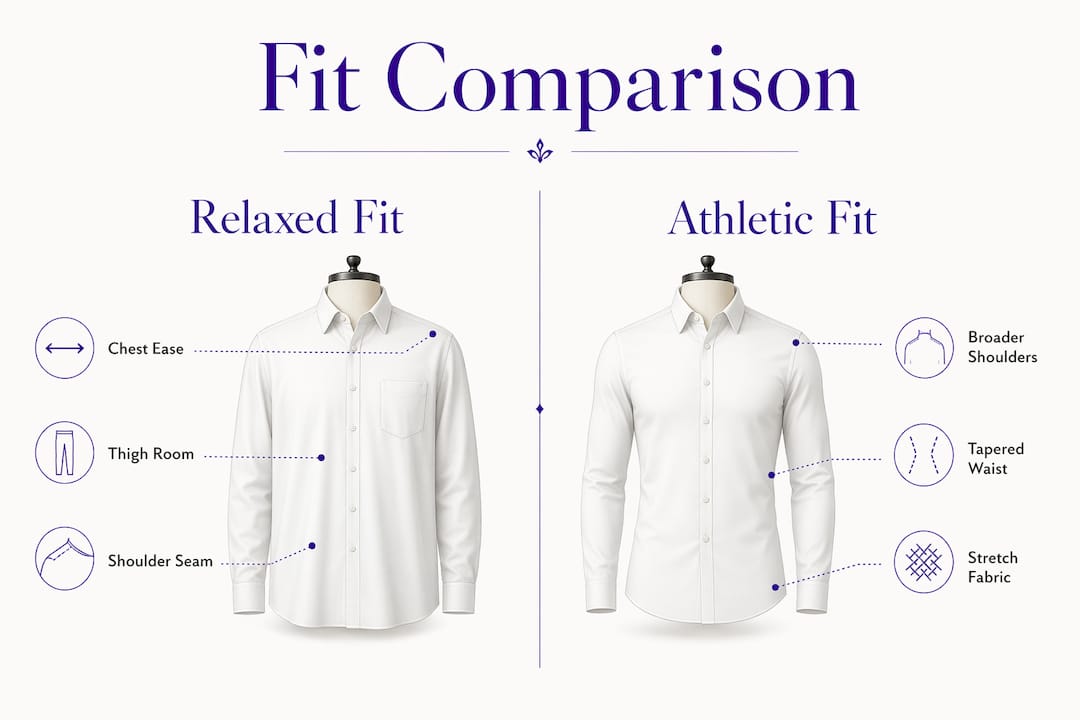
| Relaxed Fit | Athletic Fit | |
|---|---|---|
| Chest ease | generous ease above body measurement | moderate ease, structured at chest |
| Waist taper | Minimal to none | Noticeable taper toward waist |
| Thigh/seat room | Roomy throughout | Extra room in seat and thigh, tapers below knee |
| Stretch fabric | Low-stretch cotton or blends | Often includes 2–4% elastane for recovery |
| Typical garments | Casual tees, jeans, chinos, jackets | Dress shirts, performance tees, chinos, jeans |
| Overall look | Laid-back, casual | Tailored, contemporary |
Four cues to read before you buy:
- Shoulder seam: Should sit at the edge of your actual shoulder, not drop down your arm.
- Chest ease: Pinch the fabric at the side seam. More than two inches of excess = relaxed territory.
- Thigh room: Sit down in the dressing room. Athletic fit gives targeted room; relaxed gives room everywhere.
- Waist taper: Look at the garment flat. Athletic cuts narrow visibly from chest to hem; relaxed stays roughly the same width.
Pro Tip: When reading product copy, look for the words “tapered waist” or “tapered torso” to confirm athletic fit. “Relaxed through the seat and thigh” signals a relaxed or relaxed athletic cut.
What designers actually mean by relaxed fit
Relaxed fit is a deliberate design choice, not a euphemism for baggy. The goal, as retail commentary frames it, is “breathability without billowing.” The garment adds ease everywhere, but the anchor points stay put.
Here’s what the ease numbers look like in practice, compared across fit types:
| Fit Type | Chest Ease | Thigh Ease |
|---|---|---|
| Slim | +2–3 inches | Minimal |
| Regular | +4–6 inches | Moderate |
| Relaxed | +6–8+ inches | +3–4 inches |
Those chest ease numbers (slim +2–3", regular +4–6", relaxed +6–8+") mean the fabric floats away from your body rather than following its contours. On a shirt, the chest doesn’t pull. On jeans, the thighs have room to move without the denim straining at the seam.
The critical distinction from oversized: a relaxed fit keeps the shoulder seam on your actual shoulder. Oversized drops it halfway down your arm and adds intentional excess length. Anchor point placement is what separates a polished relaxed look from a sloppy one.
Pro Tip: Stick to your actual size in relaxed fit. The extra room is engineered into the pattern — buying up adds bulk at the shoulders and hem, which kills the intentional look.
Common relaxed-fit garments: straight-leg or relaxed jeans, casual button-downs, weekend tees, and unstructured jackets. Relaxed works best when one piece is fitted and the other is loose — relaxed jeans with a fitted tee, or a relaxed shirt tucked into slim chinos.
What athletic fit is and why it was built that way
Athletic fit exists to solve one specific problem: muscular bodies don’t fit standard cuts cleanly. Broad shoulders and a narrower waist mean a regular shirt either pulls at the chest or bags at the waist. Designers solve this by adding volume at the shoulders and chest, then tapering the waist so there’s no excess fabric hanging around the torso.
The fit anatomy breaks down like this: broader shoulder and chest panels, a tapered waist and torso, extra room in the seat and thigh (especially in jeans and chinos), and a taper from the knee down. The result is a garment that reads tailored without restricting movement.
Fabric plays a big role. Athletic-fit pieces commonly include 2–4% elastane blended with cotton or performance fibers. That small percentage changes everything — the garment moves with you, recovers its shape, and doesn’t feel stiff across the back when you reach forward. For athletic shirt performance, that stretch is what separates a shirt that works from one that just looks good standing still.
Athletic fit is not skin-tight. It’s structured, not vacuum-sealed. The silhouette is cleaner than a relaxed cut, but you should still be able to raise your arms, sit comfortably, and layer a light jacket over it without the seams pulling.
Which body types suit relaxed, athletic, or a hybrid cut?
Muscular or V-shaped build: Athletic fit is your baseline. It’s built for your proportions. The risk with relaxed fit is that you get thigh room but end up with too much fabric at the waist and calf — a common pitfall for guys with athletic legs. A relaxed athletic hybrid works well for lower-body bulk combined with a narrower waist.

Average build: You have the most options. Athletic fit gives you a sharper silhouette; relaxed gives you more comfort. Try athletic first for shirts and chinos, relaxed for weekend jeans.
Lean build: Relaxed fit can overwhelm a lean frame. Athletic fit or regular fit keeps proportions balanced. If you want a relaxed look, size down one and choose a relaxed cut in a lighter fabric.
Broader midsection: Relaxed fit drapes rather than clings, which reads cleaner. Avoid athletic fit if the waist taper creates a pulling effect across the stomach.
Try-on checklist by garment:
- Shirts: Check the shoulder seam first — it must sit at the edge of your shoulder. Then check chest ease (pinch test at the side seam). Finally, check whether the waist pulls or hangs.
- Jeans/chinos: Sit down immediately. Check thigh room and seat. Stand and check the waist gap at the back. Walk a few steps to test the knee and calf taper.
- Jackets: Raise both arms overhead. The jacket should lift slightly but not pull at the back seam or restrict the shoulders.
Pro Tip: Muscular men often grab a relaxed fit for thigh room and end up with a boxy waist. Look for “relaxed athletic” or “athletic taper” in the product description — that’s the cut that solves both problems at once. The tapered athletic cut adds room where you need it and removes it where you don’t.
How to measure and choose the right fit before you buy
Measure these five points before shopping — use a soft tape measure and measure over a fitted base layer:
- Chest: Measure at the fullest point, arms relaxed at your sides.
- Shoulders: Measure from shoulder point to shoulder point across the back.
- Natural waist: Measure at your navel or the narrowest point of your torso.
- Thigh: Measure around the fullest part of one thigh.
- Sleeve/inseam: Sleeve from shoulder point to wrist; inseam from crotch to ankle.
Compare those numbers to the garment’s listed measurements, not just the size label. Ease is the variable that changes between fits — two garments labeled “Large” can feel completely different depending on how much ease is built in.
Five try-on checkpoints, in order:
- Shoulder seam sits at the edge of your shoulder, not drooping down.
- Chest has room to breathe — you can pinch at least an inch of fabric at the side seam.
- Waist either tapers (athletic) or stays consistent (relaxed) — neither pulls nor billows.
- Sleeve length hits the base of your thumb; inseam breaks cleanly at the shoe.
- Mobility test: raise your arms, sit down, reach forward. Nothing should pull or gap.
Common mistakes to skip:
- Sizing up to get chest room, then ending up with shoulders that drop and a hem that’s too long.
- Ignoring stretch content — a non-stretch athletic fit in a rigid fabric will feel restrictive even if the measurements look right.
- Buying relaxed fit in a heavy fabric when you want a casual look. Heavy relaxed fabric reads sloppy; lighter fabric reads intentional.
When to wear relaxed vs athletic fit, and how to style each
Matching fit to occasion keeps both looks intentional:
- Work (business casual): Athletic fit shirts and chinos. Clean silhouette without looking overdressed. Pair with leather loafers or clean sneakers.
- Casual weekend: Relaxed jeans or chinos with a fitted tee or light knit. One relaxed piece, one fitted piece — that ratio keeps the look balanced.
- Travel: Relaxed athletic fit is the practical choice. The extra room and stretch fabric handle long flights and varied movement without wrinkling badly.
- Gym to street: Athletic fit tee or polo with slim or athletic chinos. For sport-to-street transitions, fit matters as much as fabric — athletic cut reads polished even off the court.
- Layering: Relaxed fit layers easily under an unstructured jacket or overshirt. Athletic fit layers under a fitted bomber or sport coat. Don’t layer a relaxed piece under a fitted outer layer — the bulk shows at the shoulders.
One tailoring note: if a relaxed shirt fits perfectly at the chest and shoulders but hangs loose at the waist, a tailor can take in the side seams for about $15–25. That single alteration turns a casual piece into something that looks considered.
Why fit names vary by brand and what to trust instead
“Athletic fit” and “relaxed fit” are shorthand, not standards. One brand’s athletic fit is another brand’s slim fit. Fit labels are starting points, not guarantees.
The only reliable way to confirm a fit is to compare the garment’s listed chest, shoulder, and waist measurements against your own body measurements and the ease you want. A label tells you the designer’s intent; the numbers tell you whether it will actually fit.
What changes the perceived fit between brands: stretch percentage in the fabric, fabric weight (heavier fabric hangs differently than lightweight), and the pattern block (how the pieces are cut and sewn together). Two shirts with identical measurements can feel completely different if one uses 4% elastane and the other uses rigid cotton.
Pro Tip: When a brand lists garment measurements rather than just size labels, use them. Chest, shoulder width, and body length are the three numbers that matter most for shirts. For pants, check the thigh measurement — it’s the one most brands bury in the size chart but the one that determines whether athletic or relaxed is the right call.
Key Takeaways
Relaxed athletic fit gives you targeted ease where your body needs it most, with enough taper to keep the silhouette clean rather than boxy.
| Point | Details |
|---|---|
| Relaxed fit ease | Relaxed fit adds generous ease in the chest and thigh areas versus your body measurement. |
| Athletic fit design | Athletic fit adds room at shoulders and chest, then tapers the waist — often with a small percentage of elastane for mobility. |
| Trust measurements, not labels | Fit names vary by brand; compare garment chest, shoulder, and thigh measurements to your own numbers. |
| Body-type match | Muscular builds: start with athletic fit. Broader midsection: relaxed fit drapes better. Average build: athletic fit first. |
| Moreciandco | The Complesso Collection offers relaxed and tailored pieces built with quality fabrics worth trying against your measurements. |
The fit conversation most men are having wrong
Most fit guides treat relaxed and athletic as opposites on a spectrum. They’re not. They solve different problems. Relaxed fit is about ease of movement and a laid-back silhouette. Athletic fit is about proportion correction for a specific body shape. A man with a muscular build who grabs relaxed jeans for thigh room and ends up with a baggy waist hasn’t found a compromise — he’s just made a different mistake.
The hybrid “relaxed athletic” label exists because the market finally caught up to what muscular men have known for years: you can’t solve a proportion problem by adding ease everywhere. You need targeted ease. That’s a design decision, not a size decision. Buying up in a regular cut to get chest room is not the same as buying an athletic cut — the shoulder seam drops, the sleeve lengthens, and the whole garment reads off.
What actually matters when you’re standing in a dressing room: shoulder seam placement, chest ease, and whether the waist pulls or hangs. Everything else is secondary. A garment that passes those three checks in 30 seconds is the right fit, regardless of what the label says.
Moreciandco: quality that fits the way it should
If you’ve read this far, you know what to look for. Moreciandco was built around one idea: you should get exactly what you pay for, in quality and in fit. The Complesso Collection brings together relaxed and tailored pieces made from fabrics that hold their shape and wear well — including the Complesso Tee, a bamboo-cotton shirt made in Portugal that sits in that relaxed-but-intentional territory this guide is about.
Browse the collection at Moreciandco and use the measurement checklist from this guide to find your fit with confidence.
Useful sources and further reading
- Primer Magazine: Denim hacks for guys with muscular thighs — explains why athletic fit was designed and how it solves muscular-build proportion problems.
- The Apparel Factory: Why relaxed/oversized fashion dominates US trends — covers the difference between relaxed and oversized and why anchor points matter.
- Orvis: Guide to fit and sizing — explains the “ease” principle and why garment measurements matter more than size labels.
- TailorSizeGuide: Slim vs regular vs relaxed fit — industry ease table showing chest ease by fit type.
- KnowingFabric: What is athletic fit — covers elastane percentages and how stretch fabric changes perceived fit.
- The Litt: Oversized vs relaxed vs regular fit — technical breakdown of anchor point placement and how relaxed differs from oversized.
- Tailored Athlete: Relaxed fit vs loose fit — practitioner guidance on why muscular men need targeted ease, not general looseness.
- Moreciandco: Tapered athletic fit explained — deep dive on how tapered athletic cuts work and who they’re built for.