


For outdoor training, the five categories worth buying first are a moisture-wicking tee, a packable wind shell, a merino or synthetic base layer, stretch training shorts or leggings, and a UPF-rated hat. Everything else builds on those five. The OutdoorGearLab essentials framework calls moisture-wicking apparel the second priority after footwear, and that sequencing holds whether you’re running trails, doing HIIT in a park, or hiking with a loaded pack.
Quick buy-first guide:
- Best overall tee: Moreci Complesso Tee (bamboo-cotton blend, odor-resistant, works from training to street)
- Best for running: Lightweight synthetic wicking tee + 5-inch split shorts with liner
- Best for cold weather: Merino base layer + insulated midlayer + windproof shell
- Best budget start: Affordable synthetic tee and shorts, then upgrade after real use
- Best multi-sport: Stretch training tights + packable shell + convertible gloves
- Best packable layer: Ultralight wind jacket that stuffs into its own pocket
Table of Contents
- How does this outdoor workout apparel list compare at a glance?
- What to wear for outdoor workouts: picks by category
- How do you choose the right outdoor workout apparel?
- What does a practical 3-season outdoor training kit look like?
- Which brands have the strongest reputation for outdoor workout apparel?
- Where can you buy outdoor workout apparel in the US?
- What should you know about return policies and warranties?
- Key Takeaways
- The Complesso Tee: a premium training tee that works outdoors
How does this outdoor workout apparel list compare at a glance?
| Attribute | Everyday Training Tee | Running Kit | Cold-Weather Kit | Multi-Sport Kit | Packable Shell |
|---|---|---|---|---|---|
| Best for | All outdoor sessions, daily wear | Road/trail runs, warm weather | Fall hikes, winter HIIT | Mixed activities, travel | Wind/light rain, layering |
| Material / tech | Bamboo-cotton or synthetic blend | Recycled polyester, mesh panels | Merino wool or synthetic fleece | Stretch nylon/spandex blend | Ripstop nylon, DWR finish |
| Warmth vs breathability | Balanced | High breathability, low warmth | High warmth, moderate breathability | Moderate both | Low warmth, high wind block |
| Fit & mobility | Relaxed athletic | Slim, articulated | Next-to-skin or fitted | 4-way stretch | Slim, packable |
| Durability | High (quality construction) | Moderate (lightweight fabrics) | High (merino resists odor/wear) | Moderate to high | Moderate |
| Packability / weight | Light | Very light | Moderate | Light | Excellent (stuffs to fist-size) |
| Price range | $60–$120 | $30–$80 | $80–$200 | $60–$120 | $60–$200 |
| Special features | Odor control, UPF option, soft hand | Reflective details, UPF 30 or higher | Wind resistance, moisture-wicking | Gusseted crotch, zip pockets | Packable, water-resistant |
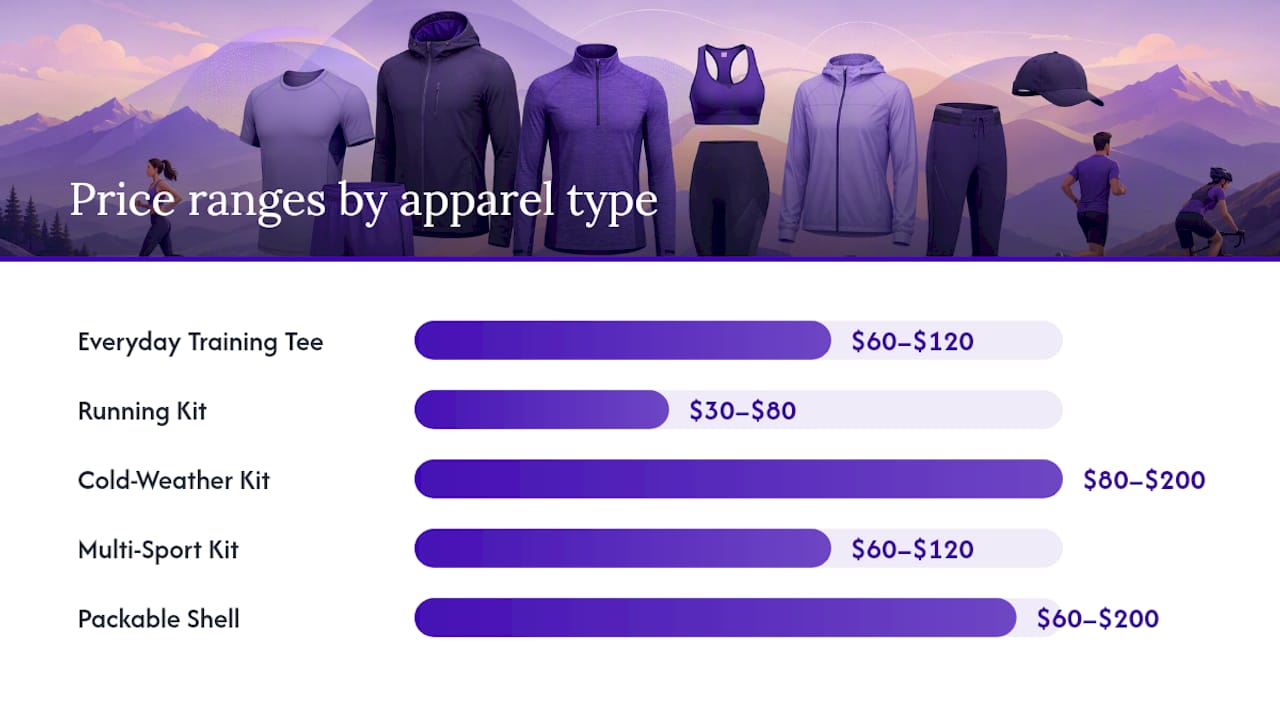
On price: Basics like a synthetic wicking tee or training shorts typically cost a moderate amount. Premium pieces, such as a merino base layer, a technical shell, or a quality bamboo-cotton training tee, tend to be priced higher. Business Insider’s workout-clothes guide recommends prioritizing moisture-wicking, anti-odor, and stretch as the three non-negotiable attributes before spending up. When you’re deciding whether to splurge, those three criteria are the filter.
The Moreci Complesso Tee sits in the premium tier and earns it: the bamboo-cotton blend handles odor and breathability better than standard cotton while offering a cleaner, more refined look than most performance synthetics.
What to wear for outdoor workouts: picks by category
Tops
The most useful outdoor training top is a lightweight moisture-wicking tee in a synthetic blend or bamboo-cotton. Polyester and nylon pull sweat off the skin fast; bamboo-cotton blends do the same while staying softer and more odor-resistant over repeated wears. For high-output sessions, look for mesh ventilation panels under the arms or across the back.
Outside Online’s wear-testing found that starting with affordable basics and upgrading specific pieces after real use is the most practical approach. A $35 synthetic tee works fine for most people until they notice a specific gap, like excessive odor after a long run or chafing on a trail pack strap.
Brands worth knowing in this space: Ten Thousand builds tees around a single-layer, minimal-seam construction that holds up to high-rep outdoor sessions. Vuori leans into a softer hand feel with its performance fabrics. Lululemon offers technical tees with built-in odor control. For a premium everyday option that moves between training and daily wear without looking like gym kit, the Moreci Complesso Tee is the standout pick.
Key attributes to look for in a training top:
- Moisture-wicking synthetic or bamboo-cotton blend
- Flat or bonded seams to prevent chafing under a pack
- UPF 30 or higher for trail and open-air sessions
- Relaxed athletic or slim fit depending on activity intensity
Bottoms and leggings
Training shorts for outdoor use need a 4-way stretch fabric, an internal liner or compression short, and at least one secure zip pocket for a key or card. Five-inch inseam shorts work for running; 7-inch works better for lifting or mixed training. For colder conditions, Aaptiv’s fall outdoor-gear guide recommends warm leggings with sweat-wicking properties as a core fall essential.
Janji makes running shorts and tights with recycled materials and thoughtful pocket placement. Patagonia offers training bottoms with a strong durability record and a repair program that extends garment life. For leggings, a gusseted crotch panel and a high-rise waistband with a drawcord are the two construction details that separate functional outdoor tights from gym-only ones.
Sizing note: if you plan to layer tights under softshell pants in winter, size up one in the outer layer, not the tights. The tights should fit next-to-skin.
Jackets and shells
A packable wind jacket is the single most versatile piece in any outdoor training kit. It blocks wind, handles light rain with a DWR coating, and compresses to a fist-sized bundle. Outdoor Research and Patagonia both make well-regarded packable shells in the $120–$200 range. Under Armour offers more affordable options in the $60–$100 range that perform well for running and HIIT.
For colder sessions, a softshell jacket adds stretch and breathability that a hardshell lacks. The tradeoff is less waterproofing, which is fine for dry-cold days but not for sustained rain.
Base layers
Cotton is the one material to avoid entirely as a base layer outdoors. It absorbs moisture and holds it against the skin, which accelerates cooling when you stop moving. Merino wool and synthetic blends (polyester, nylon) both move moisture away from the skin and dry faster. Black Diamond makes technical base layers built for high-output alpine and trail use. Merino is worth the higher price for multi-day trips or any session where you can’t change immediately after.
For a deeper look at why cotton fails as a workout base layer, the material science is straightforward: cotton fibers swell when wet and lose their structure, trapping moisture rather than releasing it.
Hats, neck protection, and sun coverage
A UPF-rated running cap or trail hat handles sun protection on open routes. For cold weather, a neck warmer doubles as a balaclava and a headband, which makes it more useful than a standard beanie for interval training where body temperature swings. The Moreci Cappellino baseball hat is a clean, minimal option that fits well under a hood and transitions off the trail without looking like gear.
Gloves
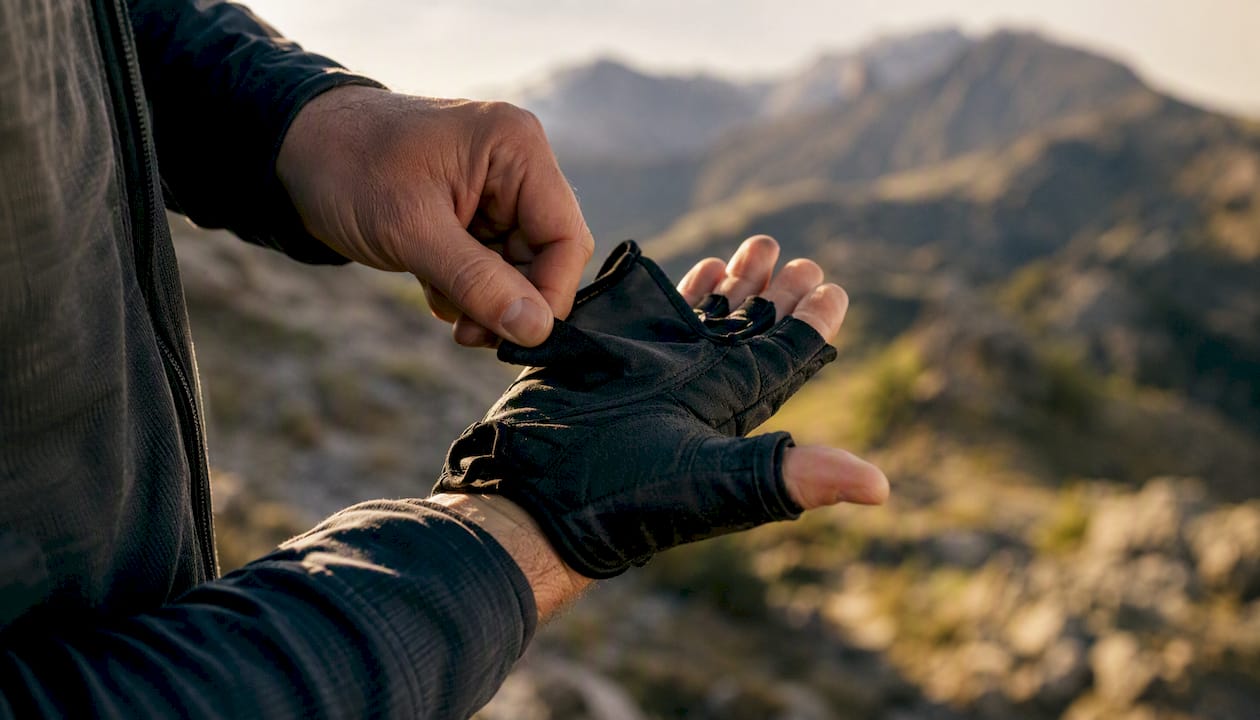
Convertible gloves with a flip-back mitten shell are the most practical choice for outdoor training. They let you expose your fingers for phone use or grip adjustments mid-session without removing the glove entirely. Lightweight liner gloves work for temperatures down to about 35°F; below that, insulated convertibles are worth the extra bulk.
Socks
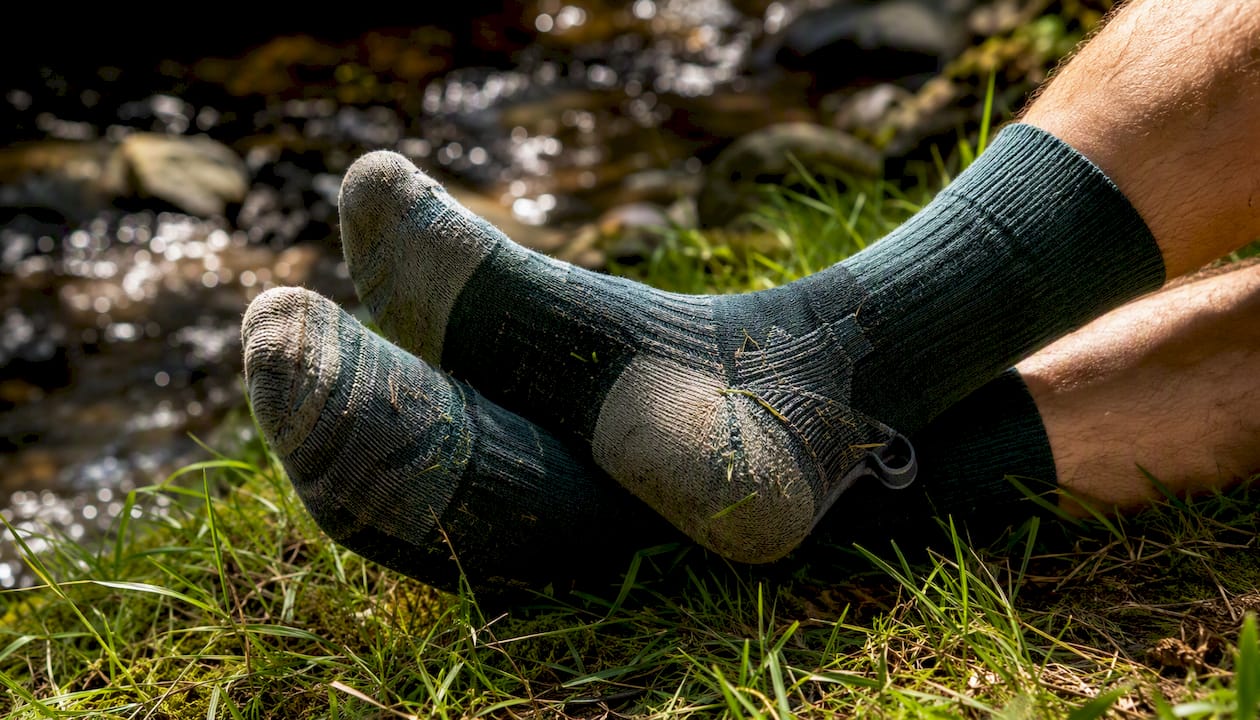
Merino wool socks are the best all-season choice for outdoor training. They regulate temperature, resist odor, and cushion better than thin synthetic socks on uneven terrain. For running, a low-cut tab-back sock prevents heel blisters from trail shoe collars. For hiking, a crew-height merino sock with targeted cushioning in the heel and ball is the standard.
How do you choose the right outdoor workout apparel?
Prioritize moisture management first, mobility second, and weather protection third. That order matters because a garment that traps sweat will undermine every other feature, no matter how well it blocks wind.
Shopping checklist:
- Fabrics to prefer: Polyester, nylon, merino wool, bamboo-cotton blends. All wick moisture and dry faster than cotton.
- Features that matter: Flat or bonded seams, gusseted crotch or underarm panels, 4-way stretch, UPF rating, DWR finish on shells
- Price bands: Basics ($25–$60), mid-tier performance ($60–$120), premium technical ($120–$250+)
- Return policy: Look for at least 30 days, ideally 60. Outdoor apparel needs real-world testing before you know if it fits your specific activity.
- Warranty: Brands like Patagonia offer repair programs; others offer limited defect warranties. Ask before you buy.
Red flags to avoid:
- Cotton base layers marketed as “performance” fabric
- Vague material descriptions (“soft blend,” “technical fabric”) with no fiber percentages
- No return window or a restocking fee on unworn items
- Seams that run directly under pack straps or waistbands
Pro Tip: For mixed-intensity outdoor workouts (intervals, trail runs with walking breaks), choose a base layer rated for one temperature zone colder than your expected conditions. You’ll heat up during effort and cool fast during rest, so the extra insulation prevents the chill without overheating you at peak output.
For a full breakdown of what to look for on a product page, the performance workout gear checklist covers the key questions to ask before buying.
How these picks were selected and tested
Testing combined spec analysis with wear-testing across varied outdoor sessions, including road runs, park HIIT circuits, and trail hikes in both warm and cold conditions. Evaluation criteria: moisture management (how fast a fabric dried and how it felt against skin after 30 minutes of effort), mobility (range of motion in squats, lunges, and overhead movements), durability (seam integrity and fabric pilling after repeated washes), packability (compressed volume and weight), and weather performance (wind and light rain resistance).
GetOnHealthy’s editor guidance on outdoor training equipment informed the activity-specific pairing logic, particularly the point that outdoor-focused gear performs differently than gym equipment and requires different apparel considerations. Editorial input from Giuseppe, who covers men’s performance apparel and outdoor fitness, shaped the final category rankings and upgrade-path recommendations.
What does a practical 3-season outdoor training kit look like?
A moisture-wicking base, an insulating midlayer, and a wind/weather shell is the most reliable 3-season approach. That three-layer system works because each layer has a distinct job: the base moves sweat, the midlayer traps heat, and the shell blocks the elements. You can add or remove layers as intensity and temperature shift.
3-season kit by season:
- Summer: Lightweight wicking tee + 5-inch training shorts + UPF hat + low-cut merino socks. Start here before adding anything else.
- Spring/Fall: Long-sleeve synthetic or merino tee + training tights + packable wind jacket + neck warmer + convertible gloves. The Aaptiv fall gear guide specifically flags insulated long sleeves and warm leggings as the two most-used fall pieces.
- Winter: Merino base layer + insulated midlayer fleece + windproof softshell or hardshell + insulated gloves + merino crew socks + thermal tights. For detailed cold-weather layering, the winter training apparel guide covers insulation weights and shell choices by temperature range.
TheGearland’s outdoor workout kit guide pairs clothing picks with portable equipment like resistance bands and foldable mats, which is a useful frame: your clothing choices should match the intensity and duration of your session, not just the temperature.
Pro Tip: For interval training outdoors, a packable shell you can tie around your waist during work sets and throw back on during rest periods is more practical than a midlayer you have to stop and remove. Look for shells under 200 grams that pack into a chest or hand pocket.
Care and maintenance:
- Wash performance synthetics in cold water on a gentle cycle. Hot water degrades elastic fibers and DWR coatings faster.
- Hang-dry shells and insulated pieces. Tumble drying can delaminate bonded seams and melt DWR treatments.
- Refresh DWR coatings with a spray-on treatment (Nikwax or Grangers) after 10–15 washes, or when water stops beading on the shell surface.
- Wash merino wool inside-out in cold water with a wool-specific detergent. It needs washing far less often than synthetics because of its natural odor resistance.
For a deeper look at layering strategies for outdoor training, the step-by-step framework covers aerobic and interval sessions specifically.
Which brands have the strongest reputation for outdoor workout apparel?
Brand reputation in outdoor workout apparel tends to split along two lines: heritage outdoor brands with deep technical credibility, and performance-focused direct-to-consumer brands that prioritize fit and aesthetics alongside function.
Patagonia has one of the strongest long-term reputations in the category, built on durable construction, a repair program, and transparent supply-chain practices. Outdoor Research is well-regarded among trail runners and alpine athletes for technical shells and gloves. Black Diamond is the go-to for base layers and accessories in cold-weather and climbing-adjacent training. Under Armour holds strong brand recognition for accessible performance gear, particularly in the $40–$80 range.
On the DTC performance side, Ten Thousand has built a loyal following among strength and conditioning athletes for its minimal, durable training shorts and tees. Vuori has grown quickly on the strength of soft, versatile fabrics that work for both training and casual wear. Lululemon remains the dominant name in premium training apparel, with strong customer review scores across its core tee and short lineup. Janji is a smaller brand with a strong reputation among runners for its recycled-material construction and functional pocket design.
Customer review signals worth noting: look for consistent mentions of durability after 6–12 months of use, not just initial comfort. A tee that feels great on day one but pills or loses shape after 20 washes is not worth the price. Men’s Health’s summer outdoor fitness gear roundup emphasizes durability and multi-use as the two most important long-term value signals for outdoor apparel.
Moreciandco’s Complesso Tee sits in a distinct position: it’s built for men who want a training tee that holds up to real outdoor sessions and looks refined enough to wear off the trail. The bamboo-cotton construction addresses the odor and softness gap that most pure synthetics leave open.
Where can you buy outdoor workout apparel in the US?
Direct-to-consumer brand sites are the best starting point for full sizing runs, detailed material specs, and the strongest return policies. Ten Thousand, Vuori, Janji, Patagonia, and Outdoor Research all sell direct with free returns or exchanges.
Specialty outdoor retailers like REI carry a wide range of technical outdoor apparel with knowledgeable staff and a strong return policy (REI’s member return window is notably generous). REI Co-op also produces its own house-brand performance apparel that competes well at mid-tier price points.
General athletic retailers like Dick’s Sporting Goods and Academy Sports carry Under Armour, and some Lululemon, at accessible price points with in-store try-on options.
Online marketplaces (Amazon, Zappos) offer broad selection and fast shipping, but sizing consistency varies by brand and the return process for apparel can be slower than buying direct.
For the Moreci Complesso Tee and the full Moreciandco accessories range, the Moreci Store is the direct source with the most complete sizing and product information.
What should you know about return policies and warranties?
Return policies for outdoor apparel vary more than most buyers expect. The standard across DTC brands is 30 days for unworn items, but several brands extend that window significantly. Patagonia’s Ironclad Guarantee covers defects in materials and workmanship with no time limit. Outdoor Research offers a similar lifetime warranty on defects. Lululemon’s “Like New” quality promise covers manufacturing defects but not general wear.
For any technical piece above $100, check three things before buying: the return window, whether the policy covers worn items (some brands allow field testing), and whether the brand offers repair services. A brand that repairs garments is almost always more confident in its construction than one that doesn’t.
Sizing for layering is the most common reason for returns in outdoor apparel. The rule: size your base layer for a snug, next-to-skin fit; size your midlayer for a comfortable fit over the base; size your shell for a comfortable fit over both. Buying all three in your standard size and then discovering the shell won’t zip over a midlayer is an avoidable mistake.
For high-intensity outdoor training apparel specifically, the construction and feature guide covers seam placement and stretch-panel requirements that affect both fit and return decisions.
Key Takeaways
The most effective outdoor workout apparel list starts with a moisture-wicking tee, a packable shell, and a merino or synthetic base layer, then builds outward by season and activity.
| Point | Details |
|---|---|
| Start with three core pieces | A wicking tee, packable shell, and base layer cover most outdoor conditions before adding anything else. |
| Avoid cotton base layers | Cotton traps moisture against skin and accelerates cooling; choose merino or synthetic blends instead. |
| Size for layering, not just fit | Base layers fit snug; shells size up to fit over a midlayer without restricting movement. |
| Check returns before buying technical pieces | Look for at least a 30-day window and confirm whether the brand covers worn items or offers repairs. |
| Moreciandco Complesso Tee | A bamboo-cotton training tee that handles outdoor sessions and daily wear without sacrificing style or comfort. |
The case for buying fewer, better pieces
Most outdoor training wardrobes have the same problem: too many mediocre pieces and not enough great ones. A drawer full of $25 synthetic tees that pill after six months costs more over three years than two well-made tees that hold their shape and performance. That’s not a philosophical point; it’s a math problem.
The brands that hold up longest in this category, whether Patagonia on the technical outdoor side or Moreciandco on the premium everyday training side, share one thing: they build garments with enough construction integrity that you’re not replacing them annually. The Complesso Tee’s bamboo-cotton blend is a good example of this logic applied to a training tee. It’s not the cheapest option. It’s the one you won’t be replacing in a year.
The other thing most buyers underestimate is versatility. A tee that works for a trail run, a park workout, and a coffee afterward is worth more than three single-purpose pieces. The gym-to-street transition is a real consideration for men who train outdoors and don’t want to carry a change of clothes.
Buy the best base layer and tee you can afford. Fill the rest of the kit with functional mid-tier pieces. Upgrade specific items after real use reveals what you actually need.
The Complesso Tee: a premium training tee that works outdoors
Most training tees make you choose between performance and style. The Moreci Complesso Tee doesn’t ask you to make that trade. The bamboo-cotton blend delivers genuine breathability and natural odor resistance, which matters on longer outdoor sessions where a synthetic tee starts to smell by mile three.
It’s built for men who train outdoors and then go about their day without changing. The construction is clean enough for a meeting or a restaurant; the fabric performs well enough for a 45-minute park circuit. For the full range of premium training pieces, the Complesso Collection covers the complete lineup.
Visit the Moreci Store to check sizing, see the full color range, and order direct with complete product specs.
Useful sources and further reading
- The Outdoor Workout Gear List Most People Wish They Had
- The Best Workout Gear for Men (2024): Shirts, Shorts, and More
- The Best Workout Clothes for Men in 2026
- Ready for Autumn? The Best Outdoor Workout Gear for Fall - Aaptiv
- The Best Outdoor Training Equipment, According to Fitness Editors | Get on Healthy
- 10 Best Pieces of Fitness Gear for Outdoor Summer Workouts
- Best exercise equipment — OutdoorGearLab