


Why is cotton bad for workouts?
Cotton is bad for workouts because it absorbs sweat and holds it, turning your shirt into a wet, heavy layer that clings to your skin and blocks your body from cooling down. That single property creates a chain reaction: trapped moisture prevents evaporation, your core temperature climbs faster, and the damp fabric rubs against your skin with every rep.
Here is what actually happens when you wear cotton during exercise:
- Cotton absorbs sweat and holds it inside the fiber rather than moving it away from your skin
- The saturated fabric becomes heavy and clingy, restricting airflow and making you feel hotter
- Sweat cannot evaporate efficiently, so your body’s primary cooling mechanism stalls
- Prolonged skin contact with wet fabric increases chafing and irritation
- Cotton loses its shape when wet, causing bunching that can interfere with movement
The problem is not that cotton is a bad fabric. It is that cotton was never designed for high-sweat activity. For a morning walk or a gentle stretch session, it works fine. The moment you push into real intensity, it works against you.
How cotton affects moisture management and thermoregulation during exercise
Cotton is a hydrophilic fiber, meaning it actively pulls water into its structure. According to Imran Islam, Ph.D., associate professor of textile development and marketing at FIT, “because cotton is a hydrophilic fiber, it readily absorbs sweat and other moisture. As the fibers absorb water, they swell, which reduces fabric porosity and airflow.” That swelling is the core mechanical problem. The fiber physically closes off the tiny gaps that allow air to circulate, so breathability drops exactly when you need it most.
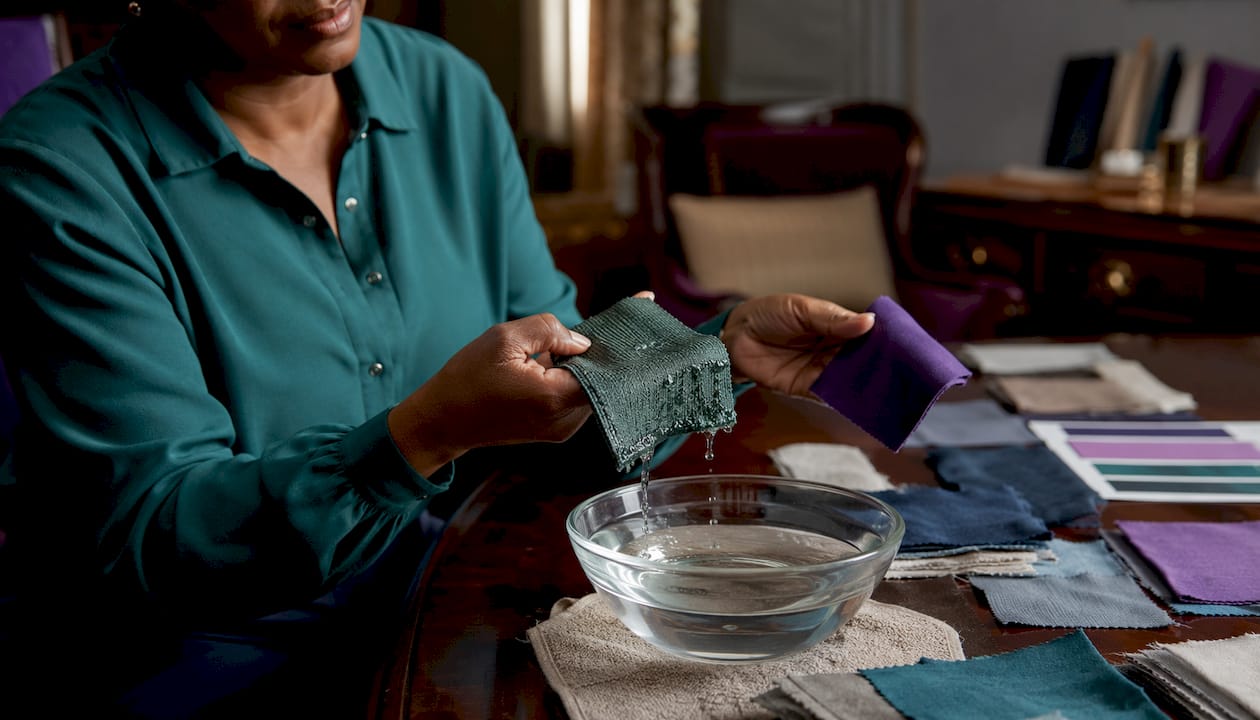
A cotton shirt can absorb a very large amount of water relative to its weight. That weight gain is not abstract. It translates directly into a shirt that drags on your shoulders, sticks across your lower back, and pulls at your waist during any movement that involves rotation or reach.
Thermoregulation during exercise depends almost entirely on evaporation. Sweat cools you when it turns from liquid to vapor at the skin surface. Cotton blocks that process by trapping moisture against the skin, preventing the vapor transition. The result is that your body keeps producing sweat to compensate, your perceived effort rises, and you feel far hotter than the actual workload warrants.
| Attribute | Cotton | Synthetic (polyester/nylon) |
|---|---|---|
| Moisture absorption | Very high | Very low (hydrophobic structure) |
| Moisture-wicking | None (absorbs, does not transport) | Strong (moves moisture to outer surface) |
| Drying time | Slow | Fast |
| Breathability when wet | Poor (fibers swell, block airflow) | Good (structure stays open) |
| Shape retention when wet | Poor (stretches, bunches) | Good |
| Odor resistance | Better (less microbial environment) | Lower (traps bacteria and oils) |
Pro Tip: If you sweat heavily, check the fabric’s drying capacity before you buy. A shirt that dries in under 20 minutes keeps you comfortable through a full session. Cotton, even in a light cut, rarely meets that bar during high-intensity training.
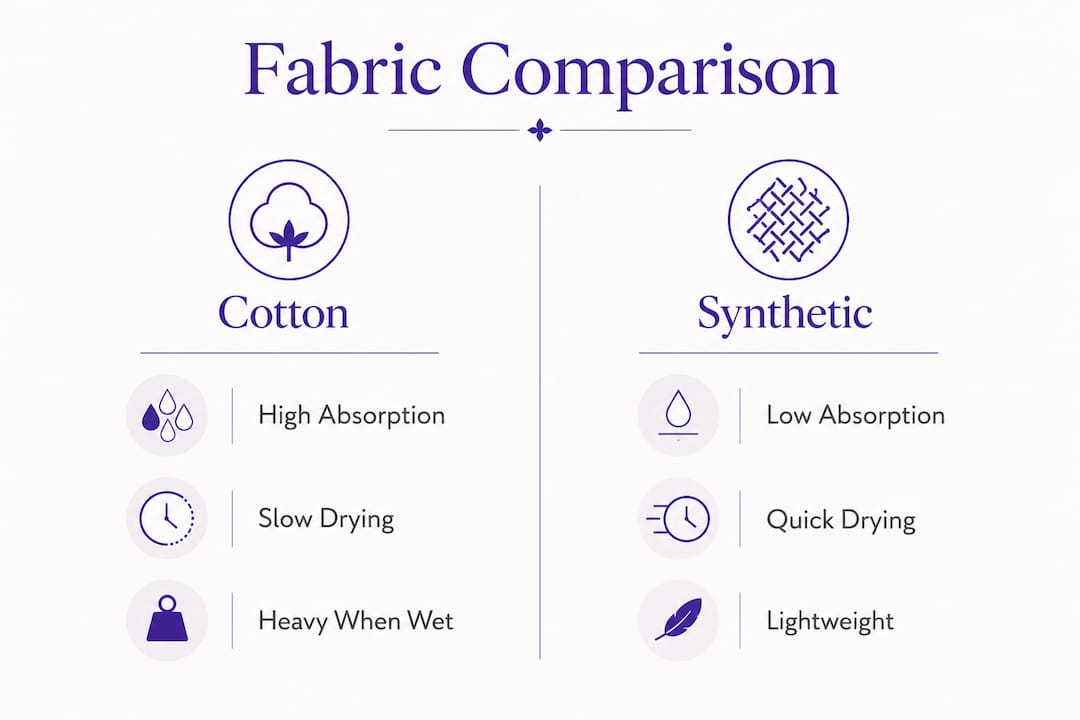
How do cotton and synthetic fabrics actually compare for workout gear?
The core difference comes down to what each fiber does with moisture. Synthetics like polyester and nylon are hydrophobic, meaning they repel water at the fiber level. Instead of soaking sweat in, they channel it from the inner surface of the fabric to the outer surface, where it evaporates. Islam describes it plainly: “performance fabrics transport moisture from the inner surface of the fabric to the outer surface, where it can evaporate quickly.”
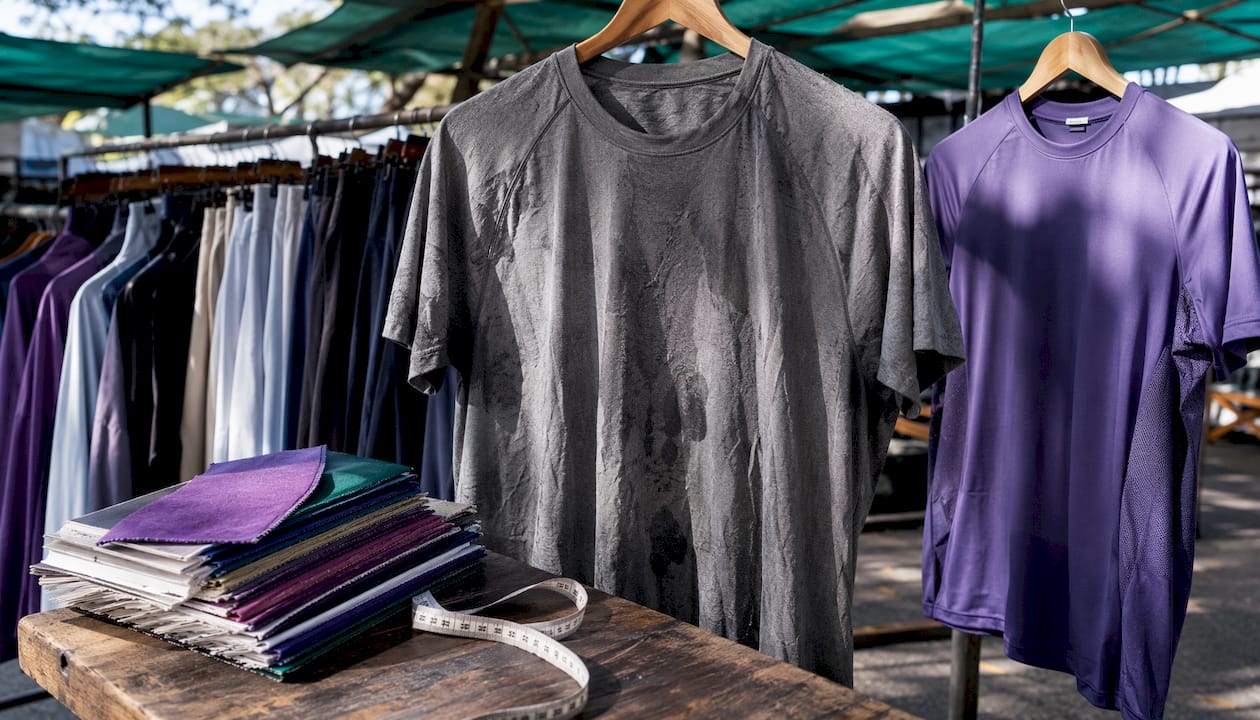
Cotton does the opposite. It absorbs liquid into the fiber itself and holds it. RVCA’s moisture-wicking overview makes the distinction clear: cotton is breathable, but it is not moisture-wicking unless specially treated, because it absorbs liquid into its fibers instead of pushing it out. Breathable and performance-ready are not the same thing.
| Criterion | Cotton | Synthetic performance fabric |
|---|---|---|
| Breathability | Good when dry, poor when wet | Consistently good |
| Moisture-wicking | No | Yes |
| Drying time | Slow | Fast |
| Comfort during high sweat | Low (heavy, clingy) | High (stays light) |
| Performance impact | Negative at high intensity | Neutral to positive |
| Odor management | Better (natural fiber resists odor) | Worse (traps bacteria, needs treatment) |
Key distinctions worth knowing before you shop:
- Polyester is the most common performance fabric: lightweight, moisture-wicking, and quick-drying, though older versions felt stiff. Today’s engineered polyester is far more comfortable than its reputation suggests.
- Nylon adds durability and a softer hand feel compared to standard polyester, making it a strong choice for leggings and fitted tops.
- Synthetic fabrics hold very little internal moisture, which reduces the environment where odor-causing bacteria thrive, but the fibers can trap oils and bacteria on the surface, so they need proper laundering after every session.
- Cotton-polyester blends sit in the middle: softer than pure synthetic, better at moisture management than pure cotton, and a reasonable choice for moderate-intensity workouts.
What are the pros and cons of wearing cotton during workouts?
Cotton is not the enemy. It has real advantages that explain why people keep reaching for it. The problem is that those advantages disappear under sweat.
Where cotton works:
- Softness against the skin, especially for people with sensitive skin or fabric sensitivities
- Natural fiber with a comfortable, familiar feel that many people prefer for casual wear
- Acceptable for low-intensity activities like yoga, walking, and stretching where sweat output stays low
- Better odor resistance than synthetics over multiple wears, since natural cellulose fibers create a less hospitable environment for bacteria
- Generally less expensive and widely available
Where cotton fails:
- Absorbs sweat and holds it, making the fabric progressively heavier as a session continues
- Wet cotton swells and blocks airflow, trapping heat against the body
- Dries slowly, so you stay in a cold, damp layer long after you stop moving
- Increases chafing risk at friction points like underarms, inner thighs, and waistbands
- Loses shape when saturated, causing bunching that can affect movement mechanics
- Creates conditions for bacterial growth and persistent odor when worn repeatedly for high-sweat sessions
The honest summary: cotton is fine when your sweat rate does not exceed how quickly the fabric can dry. Once you cross that threshold, the cotton workout disadvantages stack up fast.
What should you wear instead of cotton for workouts?
For any workout where you will genuinely sweat, synthetic performance fabrics are the practical answer. They move moisture away from your skin, dry fast, and hold their shape through the entire session. The best fabrics for workouts are those engineered specifically for moisture transport, not just comfort at rest.
Fabric options ranked by performance:
- Polyester: The standard for a reason. Lightweight, durable, moisture-wicking, and available at every price point. Modern versions are far softer than older iterations.
- Nylon: Slightly heavier than polyester but more abrasion-resistant. Excellent for leggings, shorts, and any gear that takes friction.
- Polyester-spandex blends: Add stretch and compression to polyester’s moisture management. The go-to for fitted training tops and leggings.
- Merino wool: A natural fiber that wicks moisture, regulates temperature, and resists odor naturally. More expensive, but worth it for outdoor sessions and cold-weather training.
- Bamboo-cotton blends: Softer than pure synthetic, with better moisture management than pure cotton. A solid middle ground for moderate-intensity workouts where you want comfort without sacrificing too much performance. Moreciandco’s Complesso Tee, for example, uses a premium bamboo-cotton blend made in Portugal, offering the softness of natural fiber with meaningfully better moisture handling than standard cotton.
Pro Tip: If you love the feel of cotton but hate the sweat-soaked result, try a cotton-polyester blend with at least 50% polyester. The synthetic fibers carry moisture away while the cotton content keeps the handfeel close to what you are used to. For your hardest sessions, go fully synthetic.
For a deeper look at how to match fabric to workout type, Moreciandco’s guide on choosing performance workout gear breaks down the decision by training style and sweat intensity.
What do experts and recent research say about cotton workout wear?
The textile science and fitness communities agree on the core issue, and the reasoning is consistent across sources. Islam, speaking to the mechanism directly, explains that cotton’s cellulose structure supports microbial activity inside the fibers: “this inherent moisture and its cellulose structure support additional dampness and microbial activity inside the fibers, which can eventually lead to odor formation.” That is a problem that compounds over time if cotton becomes your regular workout shirt.
Certified trainer Albert Matheny, CPT, from Soho Strength Lab, puts it more bluntly: a wet, heavy shirt is simply “annoying” during movement, and if you sweat a lot, wearing cotton is a choice that works against you from the start.
Research published through fitness organizations like ACE Fitness reinforces what trainers observe in practice: longer workout sessions in synthetic shirts keep body temperature measurably lower than the same sessions in cotton. The Cleveland Clinic notes that prolonged contact with wet fabric is a primary driver of chafing, which cotton’s moisture retention directly enables.
On the odor question, the trade-off is real. Cotton’s natural fiber structure resists odor better across multiple wears because it creates a less favorable environment for bacteria. Synthetics dry faster and wick better, but their hydrophobic fibers can trap oils and bacteria on the surface, which is why gym clothes smelling after washing is a more common complaint with polyester than with cotton. Neither fabric is perfect. The difference is that overheating carries more immediate consequences than odor.
When does cotton hurt your workout the most?
Not every workout punishes you equally for wearing cotton. The fabric’s limitations become acute in specific scenarios where sweat output is high and sustained.
High-intensity interval training (HIIT): Short rest periods mean the cotton never gets a chance to dry between bursts. By the third or fourth round, the shirt is fully saturated and dragging.
Distance running: Cotton becomes heavy and clingy as mileage builds. The constant friction at underarms, inner thighs, and the waistband area turns a manageable irritation into genuine chafing over 45 minutes or more.
Hot yoga and heated studio classes: The combination of heat, humidity, and sustained effort means cotton reaches saturation quickly. In a 90-minute session, the difference between cotton and a moisture-wicking fabric is the difference between finishing strong and spending the last 30 minutes distracted by a soaked, cold layer against your skin.
Cold-weather outdoor training: This is where cotton becomes a safety concern, not just a comfort issue. Once saturated, cotton dries slowly. After you stop moving, a wet cotton base layer pulls heat away from your body rapidly, creating a chilling effect that can drop your core temperature faster than expected.
Strength training with high volume: Lower-body compound lifts, circuit training, and any session that keeps your heart rate elevated for extended periods generate enough sweat to saturate cotton. The fabric’s tendency to stretch out and lose shape when wet also means it can bunch under a barbell or shift during dynamic movements.
For technical shirt guidance that covers fabric selection by activity type, First Rise Outfitters offers a practical breakdown of what to look for in performance apparel across different training contexts.
Low-intensity activity, short duration, minimal sweat: cotton is fine. Anything beyond that, and you are asking a fabric to do a job it was not built for.
Key Takeaways
Cotton absorbs and retains sweat rather than moving it away from your skin, which blocks evaporation, raises perceived effort, and increases chafing risk during any high-intensity workout.
| Point | Details |
|---|---|
| Cotton absorbs, not wicks | Cotton can absorb up to 27 times its weight in water, making it progressively heavier as a session continues. |
| Thermoregulation suffers | Trapped moisture blocks sweat evaporation, the body’s primary cooling mechanism during exercise. |
| Chafing risk rises | Wet cotton creates sustained friction at underarms, inner thighs, and waistbands during longer sessions. |
| Synthetics outperform for sweat | Polyester and nylon transport moisture to the fabric’s outer surface, where it evaporates quickly. |
| Cotton still works for low intensity | Walking, gentle yoga, and short low-sweat sessions are where cotton remains a reasonable choice. |
Moreciandco is built on the idea that you should get exactly what you pay for, fabric included. If you are ready to move past the cotton tee, explore the Moreciandco store for apparel that takes both quality and performance seriously.