


The collar is the most visible part of any shirt, and the type you choose shapes your entire look from the neck up. With men’s collar styles listed across a spectrum from ultra-casual to black-tie formal, knowing each one gives you real control over how you dress. The classic Point Collar represents approximately 90% of dress shirt collar production worldwide. That single fact tells you everything about where the standard sits and why every other collar is measured against it.
1. What are the top men’s collar styles listed?
The ten collar types below cover the full range of men’s shirt collars, from everyday office wear to resort weekends and black-tie events. Each one has a specific job, and wearing the wrong one in the wrong setting is the fastest way to look like you didn’t think about your outfit.
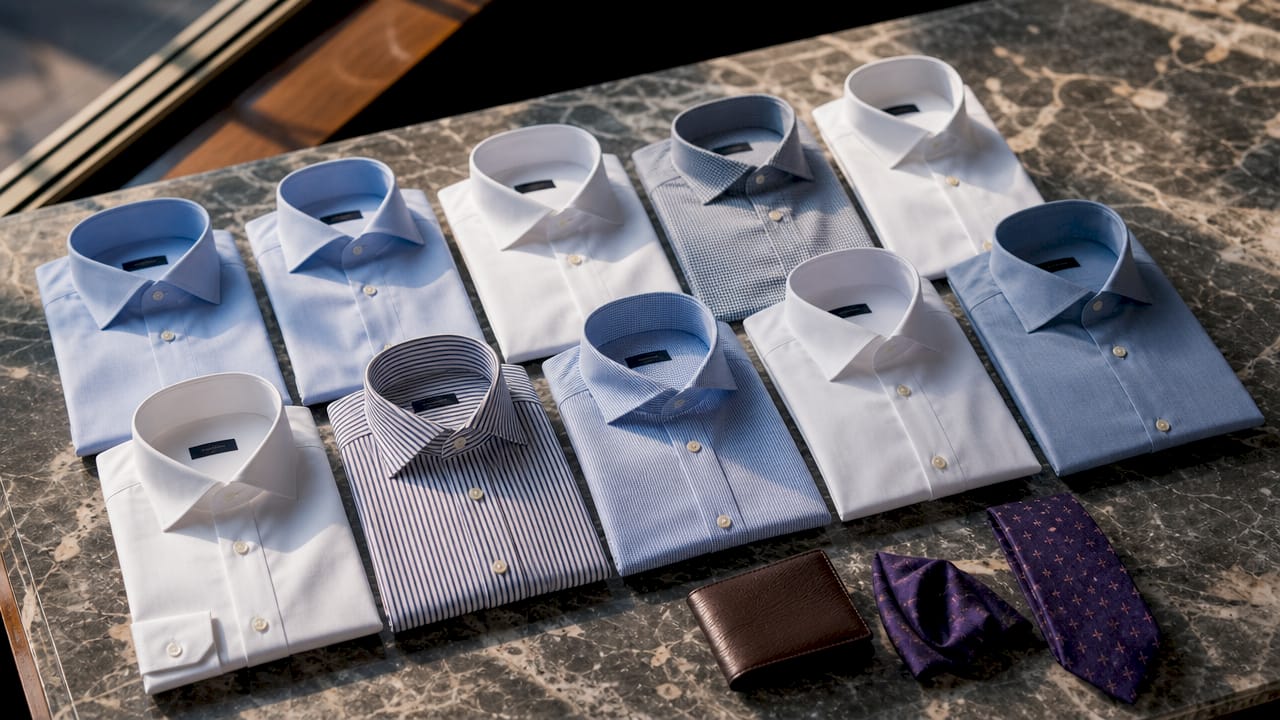
2. Classic point collar
The point collar is the default collar in menswear. It features collar points angled downward with a spread of 50–70 degrees, making it compatible with nearly every tie knot and face shape. It works in the office, at dinner, and under a suit jacket without drawing attention to itself. That invisibility is the point.
- Best for: Business formal, business casual, everyday dress shirts
- Tie pairing: Four-in-hand or half-Windsor knots
- Avoid: Oversized Windsor knots, which can push the collar points outward
3. Spread collar
The spread collar opens wider than the point collar, typically sitting at a 90-degree angle or beyond. That width creates visual balance on men with narrow or long faces. It also frames a Full Windsor knot perfectly, which is why it dominates boardrooms and formal dinners. You can find a full breakdown of spread collar styling in this spread collar guide.
- Best for: Business formal, formal events, power dressing
- Tie pairing: Full Windsor or Pratt knots
- Avoid: Wearing without a tie unless the shirt is intentionally casual
4. Cutaway collar
The cutaway collar takes the spread concept further, with points angled almost horizontally. It is the most open collar in everyday menswear and demands a wide, confident tie knot to fill the space. Worn without a tie, it reads as a deliberate style choice rather than an oversight. Pair it with a slim-fit suit for a sharp, modern silhouette.
- Best for: Contemporary formal, fashion-forward office looks
- Tie pairing: Full Windsor only
- Avoid: Slim knots, which leave the collar looking empty
5. Button-down collar
The button-down collar originated when polo players fastened their collar points to keep them from flapping during matches. That practical origin produced the most American of all collar styles. Today it sits at the intersection of smart casual and business casual, working equally well with chinos and a blazer or tucked into dress trousers.
- Best for: Smart casual, business casual, weekend wear
- Tie pairing: Optional; works with a four-in-hand if you choose to tie
- Avoid: Black-tie or highly formal events
Pro Tip: A button-down collar without a tie looks intentional. A button-down collar with a Windsor knot looks like a mistake. Match your knot size to your collar spread.
6. Camp (Cuban) collar
The Camp collar features an open, flat construction with no interlining and no tie requirement. It folds outward along the shirt’s front placket, creating a relaxed, open-neck look suited to hot weather and resort settings. The design is inherently casual, which means it rarely crosses into business territory without looking out of place.
- Best for: Resort wear, summer events, casual weekend outings
- Tie pairing: Never
- Avoid: Any formal or business setting
7. Winged collar
The winged collar is the most formal collar in menswear. It features stiff, starched fabric with small points folded outward like wings, designed to sit above a bow tie. You wear it with a tuxedo at black-tie events or with white tie at the most formal occasions. Outside those settings, it reads as costume rather than clothing.
- Best for: Black tie, white tie, formal galas
- Tie pairing: Bow tie only
- Avoid: Any setting below black-tie formality
8. Tab collar
The tab collar has a small fabric tab that snaps or buttons across the tie, pulling the collar points together and pushing the tie knot upward for a high, polished look. It is a niche style with a strong visual payoff. The elevated knot creates a structured, intentional appearance that reads as confident and detail-oriented.
- Best for: Business formal, formal events where you want to stand out
- Tie pairing: Medium knots; the tab controls the knot position
- Avoid: Wearing without a tie, which defeats the collar’s entire purpose
9. Club (Eton) collar
The club collar features rounded edges instead of pointed tips, giving it a vintage, preppy aesthetic originally tied to exclusive British school uniforms. Also called the Eton collar, it works well for smart casual occasions where you want texture and personality without going fully formal. It pairs well with a slim tie or worn open-neck with a blazer.
- Best for: Smart casual, creative professional settings, vintage-inspired looks
- Tie pairing: Slim four-in-hand knots
- Avoid: Ultra-formal events where the rounded edge reads as too casual
10. Band (Mandarin) collar
The band collar removes the folded collar entirely, leaving only a short, upright fabric band around the neck. It is the most minimal collar design in menswear and works best in casual or creative settings. Modern style allows band collars to be worn with casual blazers for an attention-grabbing, tieless look that feels current in 2026.
- Best for: Casual wear, creative industries, resort and travel
- Tie pairing: Never
- Avoid: Traditional business or formal settings
11. Pin collar
The pin collar uses a decorative pin or bar that passes through small eyelets on each collar point, holding them together beneath the tie knot. The effect is similar to the tab collar but more visible, since the pin itself becomes an accessory. It signals attention to detail and works best in formal business or cocktail settings.
- Best for: Business formal, cocktail events, formal dinners
- Tie pairing: Medium knots; the pin lifts and centers the knot
- Avoid: Casual settings where the hardware looks overdressed
How to choose the right collar based on face shape and occasion
Face shape is the most overlooked factor in collar selection. Round faces benefit from point collars, which create vertical lines that elongate the face. Square faces look better with spread collars, which soften a strong jawline. Oval faces suit almost any collar type. Long or narrow faces look wider with semi-spread or spread collars, which add horizontal visual weight.
Occasion matters just as much as face shape. Use this framework:
- Black tie: Winged collar with bow tie
- Business formal: Spread, cutaway, or point collar with a Windsor or Pratt knot
- Business casual: Point collar or button-down, with or without a tie
- Smart casual: Club collar, button-down, or band collar with a blazer
- Casual or resort: Camp collar, band collar, no tie required
Tie knot size is the decisive factor when you are wearing a tie. A Full Windsor knot needs a spread or cutaway collar to fill the space. A four-in-hand knot pairs with a point collar. Mismatching these causes collar points to flap or the knot to look cramped. Getting this pairing right is one of the fastest improvements you can make to a formal outfit. For a full breakdown, the guide on matching ties to shirts covers every combination.
Collar style comparison: features and when to wear each
Collar construction affects how a shirt looks and how long it lasts. Fused collars use a bonded interlining that keeps the collar crisp and structured. Unfused collars use a softer, sewn interlining that moves with the neck and softens over time. Formal shirts almost always use fused construction. Casual shirts lean toward unfused for comfort and a relaxed drape.
| Collar type | Formality | Tie required | Interlining | Best occasion |
|---|---|---|---|---|
| Point | Moderate to high | Optional | Fused | Office, business casual |
| Spread | High | Recommended | Fused | Business formal, formal events |
| Cutaway | High | Recommended | Fused | Contemporary formal |
| Button-down | Low to moderate | Optional | Soft/unfused | Smart casual, weekend |
| Camp | Low | Never | None | Resort, casual |
| Winged | Highest | Bow tie only | Stiff/starched | Black tie, white tie |
| Tab | High | Required | Fused | Business formal |
| Club | Moderate | Optional | Soft | Smart casual, vintage |
| Band | Low | Never | Minimal | Casual, creative |
| Pin | High | Required | Fused | Formal, cocktail |
Pro Tip: Check the interlining before you buy. Run your fingers along the collar edge. A fused collar feels stiff and uniform. An unfused collar has a softer, more natural give. Knowing which you have tells you how to care for it and what occasions it suits.
Scenario-based recommendations make collar selection straightforward. For the office, a point or spread collar on a white or light blue dress shirt covers 90% of situations. For a weekend wedding, a spread collar with a Windsor knot or a club collar with a slim tie both work. For a summer event, a camp collar shirt in linen or cotton is the correct call. For a black-tie event, the winged collar is non-negotiable.
How to style collars with shirts, suits, and accessories
Collar style and shirt construction work together. A dress shirt’s placket style affects how the collar sits and how formal the overall shirt reads. A hidden placket with a spread collar signals high formality. A standard placket with a button-down collar reads as smart casual. Understanding both elements together gives you more control over your final look.
Suit pairing follows a simple rule: the more structured the suit, the more structured the collar should be. A slim-fit suit in navy pairs well with a spread or cutaway collar. A relaxed blazer in linen pairs better with a button-down or band collar. Mixing a stiff, formal collar with a casual jacket creates visual tension that reads as unintentional.
Collar stays are the most underused tool in men’s dressing. They slide into small pockets on the underside of collar points and keep them flat and symmetrical throughout the day. The full guide on collar stays explains the different materials and when each type works best. Without them, even a well-made collar can curl or lift by midday.
Brooks Brothers notes that traditional collar formality is evolving in 2026, with spread collars worn without ties and band collars paired with tailored jackets becoming accepted in fashion-forward circles. That flexibility is real, but it works only when the rest of the outfit is intentional. A band collar with a well-fitted blazer and clean trousers looks deliberate. The same collar with a wrinkled shirt and ill-fitting pants looks like you forgot to finish getting dressed.
- Pair a spread collar with a turtleneck sweater underneath for a layered winter look
- Wear a camp collar shirt open over a plain white tee for a casual resort outfit
- Use a club collar with a slim tie and a tweed blazer for a vintage-inspired smart casual look
- Try a point collar on a white dress shirt as the foundation for versatile wardrobe building
Key takeaways
The point collar is the foundation of every man’s wardrobe, but knowing the full range of collar types gives you the tools to dress precisely for any occasion.
| Point | Details |
|---|---|
| Point collar dominates | It represents approximately 90% of dress shirt production and suits most occasions. |
| Match knot to collar spread | A Full Windsor needs a spread or cutaway collar; a four-in-hand suits a point collar. |
| Face shape guides collar choice | Round faces need point collars; square faces benefit from spread collars for balance. |
| Interlining determines formality | Fused collars stay crisp for formal wear; unfused collars suit casual, relaxed settings. |
| Modern rules allow mixing | Band collars with blazers and spread collars without ties are accepted style choices in 2026. |
The collar choice most men get wrong
Most men pick a collar by habit, not by intention. They buy the same point collar shirt they always have, wear it with the same half-Windsor knot, and wonder why their outfits feel flat. The collar is the first thing someone sees when they look at your face. Getting it right is not vanity. It is attention to detail.
The collar style I see most underused is the club collar. Men assume the rounded edge is too niche or too vintage to wear seriously. In practice, it is one of the most versatile collars for creative professionals and smart casual dressing. Pair it with a slim tie and a well-fitted blazer and it reads as intentional and distinctive, not costume.
The band collar is the other one worth experimenting with. Worn with a structured jacket and clean trousers, it creates a modern, tieless look that works in settings where a standard collar and open neck would look unfinished. The key is that the rest of the outfit has to be sharp. The collar cannot do all the work.
My honest advice: buy one shirt in a collar style you have never worn. Wear it somewhere low-stakes. See how it changes the way your face reads in the mirror. Collar choice is one of the few style decisions that costs almost nothing to experiment with and pays off immediately when you get it right.
— Giuseppe
Quality shirts with the right collar, at Moreciandco
Knowing your collar types is only half the equation. The other half is owning shirts built well enough to hold their shape, drape correctly, and last through regular wear.
Moreciandco brings back the standard of getting what you pay for. The Complesso Collection features luxury shirts and apparel built with quality fabric and real craftsmanship, so the collar sits the way it should and the shirt holds up over time. For men who want to shop the full range of luxury menswear, the Moreciandco store offers a curated selection worth exploring. When the shirt is made right, the collar does its job without any extra effort from you.
FAQ
What is the most common men’s collar style?
The point collar is the most common, representing approximately 90% of dress shirt collar production worldwide. Its versatility across formal and casual settings makes it the default choice for most men.
Which collar style works best for a job interview?
A spread or point collar on a white or light blue dress shirt is the strongest choice for a job interview. Pair it with a Windsor or half-Windsor knot for a polished, professional look.
Can I wear a spread collar without a tie?
A spread collar can be worn without a tie in casual or smart casual settings, particularly when paired with a well-fitted blazer. In formal business settings, a tie is still expected with a spread collar.
What collar style suits a round face?
A point collar suits a round face best because the downward angle of the collar points creates a vertical line that elongates the face. Avoid wide spread collars, which add horizontal width.
What is the difference between a tab collar and a pin collar?
A tab collar uses a fabric tab that snaps under the tie to lift the knot, while a pin collar uses a visible decorative bar or pin through eyelets on each collar point. Both create a high, centered knot, but the pin collar adds a visible accessory element.