


Collar style in athletic shirts is defined as the neckline construction that shapes how a shirt performs, fits, and looks during physical activity. The role of collar style in athletic shirts goes far beyond aesthetics. Collar design directly affects breathability, sun protection, moisture management, and how freely you move during a workout. Athletic collared shirts are the standard in dress-code sports like golf and tennis, while V-neck styles dominate high-intensity gym sessions. Understanding which collar works for your activity is the difference between a shirt that helps you perform and one that holds you back.
How do collar styles affect athletic performance and comfort?
Collar construction is one of the most underrated factors in athletic shirt performance. The neckline you choose determines airflow, neck freedom, and how well sweat moves away from your skin. Each collar type solves a different problem.
Polo collars are the most structured option in athletic wear. They provide direct sun protection to the neck and upper chest, which matters during outdoor sports like golf, tennis, and cycling. The trade-off is fabric bulk. A polo collar adds layers at the neckline, which can trap heat during intense exertion. Polo collars shield from sun but increase heat retention, making them better suited for moderate-intensity outdoor activity than for heavy cardio.

Mandarin collars sit close to the neck without folding over. They offer a clean finish with minimal interference during movement. The mandarin collar is the go-to choice when you want a polished look without the bulk of a traditional polo. It works well in yoga, Pilates, and light training sessions where neck freedom matters but a structured appearance is still preferred.
V-neck collars are the performance leader for high-intensity training. V-necks improve heat dissipation and freedom of movement by 10–20% compared to closed necklines. That reduction in fabric bulk at the neck allows more airflow and reduces friction during repetitive movements like running or lifting.
- Polo collar: Best for outdoor sports with dress codes; provides sun protection but adds heat
- Mandarin collar: Clean, minimal design; suits moderate-intensity and athleisure settings
- V-neck collar: Maximum breathability and movement freedom; ideal for high-intensity workouts
- Crew neck (collarless band): Neutral choice for casual training; no structured collar element
Collar stiffness and interlining density directly affect how a collar feels during movement. An overly stiff collar causes chafing at the neck during high-repetition activities. The best athletic collars use a softer interlining that holds shape without creating friction.
Pro Tip: If your polo collar chafes during runs or cycling, look for shirts with a flat-knit ribbed collar rather than a woven one. Flat-knit construction is softer against the skin and flexes with your movement instead of resisting it.
Collar design, manufacturing complexity, and cost in athletic wear
Collar choice affects more than how a shirt looks. It shapes how the shirt is made, how much it costs, and how long it holds its shape after repeated washing and wear.
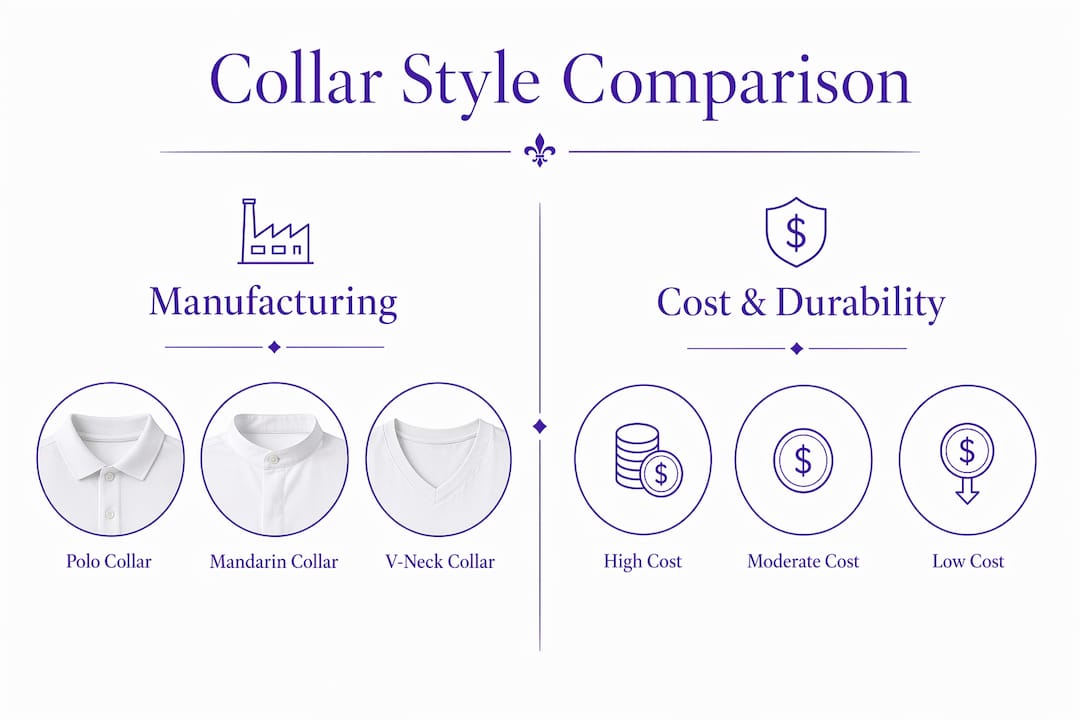
Polo collars carry the highest manufacturing complexity of any athletic neckline. Polo collars raise production costs by 15–25% compared to crew or V-neck styles. That cost comes from the collar stand alignment, placket construction, and the skilled sewing required to keep the collar from sagging after washing. A poorly constructed polo collar loses its shape within a few months of regular use.
| Collar style | Manufacturing complexity | Relative cost | Shape retention over time |
|---|---|---|---|
| Polo collar | High | Higher | Moderate (prone to sagging if poorly made) |
| Mandarin collar | Low to moderate | Lower | Good (minimal construction points) |
| V-neck collar | Low | Lowest | Good (simple cut, fewer seams) |
| Banded/collarless | Lowest | Lowest | Excellent (no structured collar to deform) |
Mandarin collars require far less construction. There is no placket, no fold-over, and no stand to align. That simplicity translates to lower production costs and fewer points of failure over time. For brands focused on performance polo shirts, the mandarin collar offers a way to deliver a polished look without the manufacturing overhead of a full polo construction.
The athleisure trend has made collar design a genuine style decision, not just a functional one. Athleisure has elevated demand for collar styles that move from workout to casual and professional settings without a wardrobe change. A well-constructed polo or mandarin collar athletic shirt now competes directly with casual button-downs in everyday wear. That versatility adds real value to the purchase price.
How do you choose the right collar style for your activity?
Choosing a collar style for athletic wear comes down to three factors: exercise intensity, sport environment, and your personal build. Getting all three right means your shirt works with you, not against you.
-
Match collar to intensity. High-intensity training calls for V-neck or collarless styles. The reduced fabric at the neckline keeps airflow high and friction low. Moderate-intensity activities like golf, tennis, or cycling work well with polo or mandarin collars, where structure and sun protection add value without overheating you.
-
Respect the dress code. Sports with formal dress codes require structured collars. Athletic collared shirts are preferred in dress-code sports for their professional appearance. A polo collar signals that you belong on the course or court, which matters in club environments.
-
Consider your build. Broader shoulders suit spread collar styles, while narrower builds benefit from classic or button-down collar proportions. The collar frames your face and neck. A collar that is too wide on a narrow frame looks unbalanced. A collar that is too narrow on a broad frame disappears visually.
-
Think about transition wear. If you move from the gym to a meeting or a social setting, a mandarin or polo collar athletic shirt handles both environments. Athletes in transitional wear need structured collars to maintain style from training to casual settings. A V-neck works at the gym but reads as gym-only outside of it.
-
Check the collar construction before you buy. Run your fingers along the collar edge. A quality collar feels consistent in thickness with no puckering at the seams. Uneven construction is the first sign of a shirt that will lose its shape quickly.
Pro Tip: For gym-to-street versatility, choose a mandarin collar athletic shirt in a neutral color like navy, white, or charcoal. It reads as casual enough for coffee and structured enough for a quick meeting, without looking like you just left a spin class.
Check the athletic shirt fit guide to match collar proportions to your body type before purchasing.
How to care for collar style athletic shirts
Proper care is what separates a collar that holds its shape for two years from one that sags after ten washes. Most collar damage is avoidable with a few consistent habits.
- Wash in cold water. Hot water breaks down synthetic performance fibers and weakens the interlining that gives the collar its structure. Cold water preserves both.
- Avoid fabric softener. Fabric softener coats moisture-wicking fibers and reduces their ability to pull sweat away from the skin. Skip it entirely on performance athletic shirts.
- Air dry when possible. High dryer heat degrades synthetic fibers and causes collar interlinings to warp. Lay the shirt flat or hang it to dry naturally.
- Iron at low heat only. Excessive heat damages synthetic fibers and collar interlining, causing irreversible deformation. If you need to press a collar, use the lowest heat setting and a pressing cloth between the iron and the fabric.
- Use collar stays for structured collars. Collar stays help polo and mandarin collars hold their intended shape between wears. They are especially useful for shirts worn in professional sports settings where appearance matters.
Interlining density and collar rib gauge determine how well a collar holds its shape over time. A collar with the right interlining balance stays crisp without restricting movement. Poor interlining choices lead to collars that either go limp or become stiff enough to chafe.
Key takeaways
Collar style in athletic shirts determines performance, comfort, and style simultaneously. Choosing the wrong collar for your activity costs you in breathability, movement, and long-term shirt quality.
| Point | Details |
|---|---|
| Match collar to intensity | V-neck suits high-intensity training; polo and mandarin work for moderate-intensity and dress-code sports. |
| Polo collars cost more to make | Polo collar construction raises production costs by 15–25% due to placket and stand alignment complexity. |
| Stiffness causes chafing | Overly stiff collar interlinings create friction during repetitive movement; choose flat-knit ribbed collars for active use. |
| Athleisure demands versatile collars | Mandarin and polo collars transition from gym to casual settings, adding wardrobe value beyond the workout. |
| Care preserves collar structure | Cold water washing, air drying, and low-heat ironing protect both performance fibers and collar shape. |
Why collar design deserves more attention than it gets
Most people buying athletic shirts focus on fabric weight and fit. Collar design gets treated as an afterthought, something you notice only when it goes wrong. After years of paying close attention to what separates a shirt that performs from one that just looks the part, I’ve come to believe collar construction is the single most revealing indicator of overall shirt quality.
Here is what I find most people miss: the collar is the most structurally complex part of an athletic shirt. It has to hold its shape under heat, sweat, and repeated washing while staying soft enough not to irritate the neck during movement. A brand that gets the collar right almost always gets everything else right too. A brand that cuts corners on the collar is cutting corners everywhere.
The athleisure shift has made this even more relevant. Shirts are now expected to move from a tennis court to a lunch meeting without looking out of place. That puts real pressure on collar design to deliver both athletic function and social credibility at the same time. The brands that understand this are building collars with softer interlinings, better rib gauges, and construction tolerances that hold up over hundreds of wears.
My honest advice: before you buy any collared athletic shirt, flip the collar over and look at the underside. If the stitching is uneven or the interlining is visible through the fabric, the shirt will not hold up. Quality collar construction is visible if you know where to look. Moreciandco builds with that standard in mind, and it shows in how their shirts wear over time.
— Giuseppe
Moreciandco’s athletic collar shirts: quality you can feel
Moreciandco was built on a straightforward idea: you should get what you pay for. That philosophy shows up directly in how their collared athletic shirts are constructed, from the interlining density in the collar to the moisture-wicking fabric that keeps you comfortable through a full round of golf or a long training session.
The Complesso Collection brings together performance fabrics and refined collar design in shirts built for both sport and everyday wear. Whether you need a polo collar for the course or a mandarin collar for the gym-to-street transition, Moreciandco’s range covers the full spectrum. Visit Moreciandco to see the full collection and find the collar style that fits your activity and your standard.
FAQ
What is the role of collar style in athletic shirts?
Collar style in athletic shirts controls breathability, sun protection, neck freedom, and overall appearance. The right collar matches your sport’s intensity level and dress code requirements.
Which collar style is best for high-intensity workouts?
V-neck collars are best for high-intensity training because they reduce fabric bulk at the neckline, improving airflow and freedom of movement by 10–20% compared to closed necklines.
Why do polo collars cost more than other athletic shirt styles?
Polo collar construction requires skilled sewing, placket alignment, and collar stand work that raises production costs by 15–25% compared to V-neck or crew neck styles.
How do I keep my athletic shirt collar from losing its shape?
Wash in cold water, skip fabric softener, air dry the shirt, and iron at low heat only. These steps protect both the collar interlining and the moisture-wicking performance fibers.
Can a collared athletic shirt work for both sports and casual wear?
Yes. Mandarin and polo collar athletic shirts transition well from gym to casual settings, making them a practical choice for anyone who wants one shirt to cover multiple environments.