


A dress shirt placket is the reinforced fabric strip running down the shirt’s front that holds buttons, supports buttonholes, and defines the shirt’s overall aesthetic register. Most men never think about it, but the placket is doing two jobs at once: structural engineering and style signaling. The four most common placket styles for men are standard, French/Italian, hidden/concealed, and fly front. Each one communicates a different level of formality before you even button the collar. Understanding dress shirt placket styles explained through construction and occasion gives you a real edge in building a wardrobe that works.
What are the main dress shirt placket styles explained?
The placket is not just a strip of fabric. It is an engineering solution designed to handle the mechanical stress of fasteners and prevent the shirt front from distorting during wear. That function shapes every design decision behind each style.
Standard (applied) placket
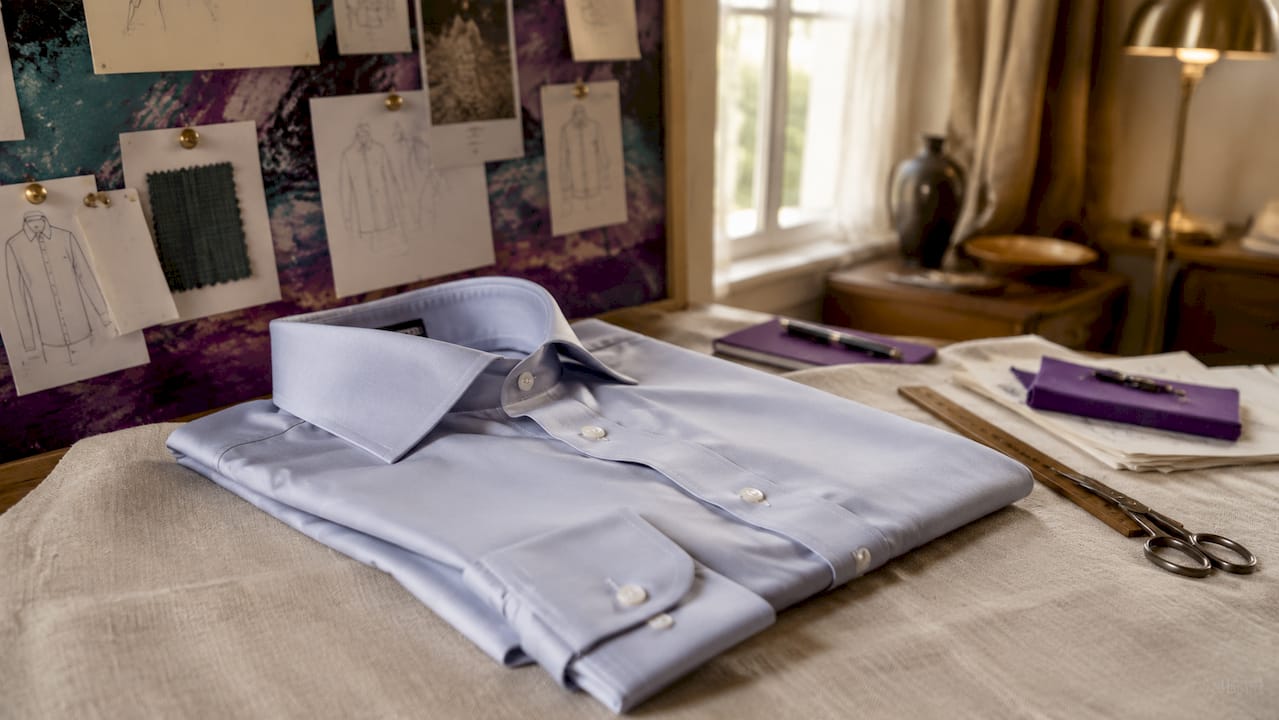
The standard placket is the most common type you will find in men’s dress shirts. A separate strip of fabric is sewn onto the shirt front, creating a visible band with topstitching along both edges. Standard plackets measure 1.5 to 2.0 inches wide. That width gives the shirt front a clean, structured look without feeling stiff. This style works across business casual and everyday office environments, making it the most versatile option in any wardrobe.
French (italian) placket
The French placket, sometimes called the Italian placket, uses the shirt’s own fabric folded inward rather than a separate applied strip. The result is a thinner, cleaner front with minimal or no visible topstitching. This construction reads as more refined and is the go-to choice for formal business settings and dress occasions. If you want a shirt that looks polished without the full commitment of black tie, the French placket is the right call.
Hidden (concealed) placket
The hidden placket covers the buttons entirely with a folded flap of fabric, leaving a smooth, uninterrupted front line. Hidden plackets are the default for modern black-tie events because they allow tuxedo jackets and lapels to stand out without competing textures. This style also works well with slim-fit shirts where a clean front silhouette matters. The trade-off is that it is harder to press and requires more care to keep flat.
Fly front and popover plackets
The fly front placket is a close cousin to the hidden placket, using a separate overlapping flap to conceal buttons. It appears frequently in outerwear and more structured dress shirts. The popover placket provides only a partial front opening without a full button closure, typically featured in casual or athletic shirts. Popovers are not suited for formal wear but add a relaxed, intentional look to weekend or resort dressing.
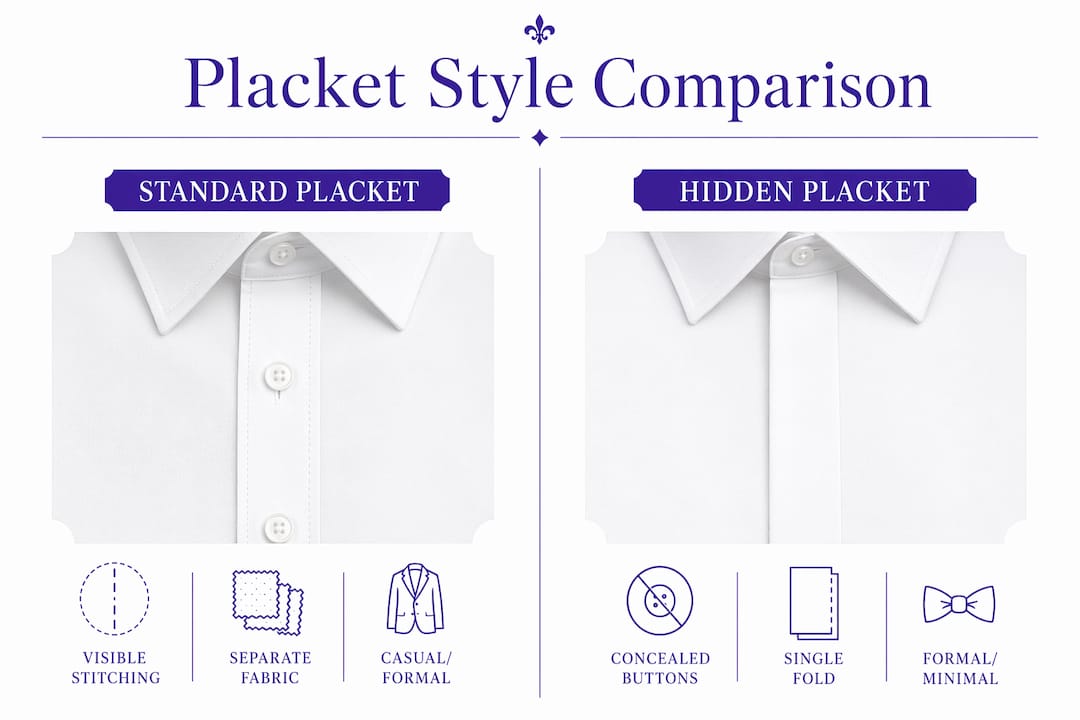
Comparison: placket styles at a glance
| Placket Style | Construction | Formality Level | Best Occasion |
|---|---|---|---|
| Standard | Separate applied strip, topstitching | Business casual | Office, everyday wear |
| French/Italian | Fabric folded inward, minimal stitching | Formal to business | Dress occasions, meetings |
| Hidden/Concealed | Buttons covered by fabric flap | Formal to black tie | Black tie, tuxedo shirts |
| Fly Front | Overlapping separate flap | Formal, outerwear | Structured dress shirts |
| Popover | Partial opening, no full closure | Casual | Weekend, resort wear |
How do placket styles signal formality?
The choice between standard and hidden plackets defines the shirt’s register, which is its level of formality and versatility in daily wear. This is not a subtle distinction. It is the difference between a shirt that works at a Friday meeting and one that belongs at a wedding.
Standard plackets carry visible stitching and structure that reads as approachable and professional without being stiff. They belong in business casual environments, paired with chinos or a blazer. French and hidden plackets shift the shirt into a higher register. Their clean fronts communicate intentionality and care, which is why they appear on shirts worn to formal dinners, galas, and corporate presentations.
Covered plackets create sleek minimal fronts favored in modern tuxedo shirts, contrasting with traditional bib front styles meant for ultra-formal white tie events. The bib front, with its pleated or piqué panel, belongs to white tie dress codes where every detail signals ceremony. Most men will never need a bib front shirt, but knowing the difference prevents a costly mistake at a formal event.
Here is how to match placket style to occasion:
- Standard placket: Office wear, business casual, client meetings, everyday dress shirts
- French/Italian placket: Formal business, cocktail attire, dinner parties
- Hidden/concealed placket: Black tie, tuxedo events, modern formal occasions
- Fly front: Structured dress shirts, outerwear, transitional formal looks
- Popover: Casual Fridays, resort wear, relaxed social settings
Pro Tip: If you are building a business casual wardrobe from scratch, start with two standard placket shirts and one French placket shirt. That combination covers 90% of professional situations without overcomplicating your closet.
What construction details separate quality plackets?
A placket’s quality shows up in three places: its interfacing, its width, and its button density. Most buyers never check these details, but they are the fastest way to judge a shirt’s craftsmanship before you buy.
Interfacing inside the placket is the structural layer that gives the strip its body and shape, preventing it from collapsing or curling and supporting the buttonholes under repeated use. Without proper interfacing, a placket will roll, wave, or go soft after a few washes. A well-made placket lies perfectly flat, keeps buttonholes intact, and shows no waviness along its edges. Wavy or soft edges indicate lower quality regardless of the shirt’s brand or price point.
Button density is the other key indicator. Seven-button plackets on dress shirts are preferred by insiders because they prevent gaping during movement and enhance the front tension. Most budget shirts use six buttons, which creates visible gaps when you sit, reach, or move your arms. The extra button is a small detail that separates a shirt that looks good in photos from one that holds up through a full day of wear.
Width matters too. Standard plackets at 1.5 to 2.0 inches provide enough structure to anchor buttons securely. French plackets, being thinner or non-existent as a separate strip, rely entirely on the quality of the fold and the interfacing beneath it. A French placket with weak interfacing will betray itself within a season.
Pro Tip: When shopping in person, press the placket flat between your fingers. A quality shirt will spring back firm and flat. A poorly constructed one will feel limp or uneven. This test works on premium shirts and budget options alike.
Only a true placket includes multiple fabric layers and structural interfacing, distinguishing it from a faced opening which lacks reinforcement and durability. That distinction matters when you are paying for quality. A faced opening looks similar from the outside but will not hold its shape over time.
How to choose the right placket for your wardrobe
Choosing the right placket style starts with being honest about where you actually wear dress shirts. Most men need versatility more than formality. A standard placket shirt in a solid white or light blue covers more ground than any other single piece in a dress shirt wardrobe.
Consider these factors when selecting a placket style:
- Your dress code: If your office is business casual, standard plackets are your workhorse. If you attend formal events regularly, invest in at least one hidden placket shirt.
- Your collar and cuff choices: A spread collar with French cuffs pairs naturally with a French or hidden placket. A button-down collar with barrel cuffs fits a standard placket. Mixing a hidden placket with a button-down collar sends a mixed signal.
- Your fit preference: Hidden plackets work best on slim or tailored fits where the clean front line is visible. On a relaxed fit, the effect is lost.
- Maintenance reality: Hidden and French plackets require proper ironing technique to look their best. If you do not iron your shirts regularly, a standard placket is more forgiving.
Modern style trends favor the hidden placket with slim fits for a minimal, European-influenced look. That combination works well for men who want their shirts to read as intentional without being overdressed. The key is consistency across the shirt’s details. A well-chosen placket style that matches the collar, cuff, and fit creates a shirt that looks considered rather than assembled.
Key takeaways
The placket style you choose defines your shirt’s formality, construction quality, and long-term wearability more than any other single detail.
| Point | Details |
|---|---|
| Standard placket is most versatile | Use it for business casual and everyday office wear across most dress codes. |
| Hidden placket signals black tie | Covered buttons create a clean front line required for modern tuxedo and formal shirts. |
| Interfacing determines quality | A flat, firm placket with no rolling or waviness indicates proper construction and durability. |
| Seven buttons prevent gaping | Higher button density maintains front tension during movement and signals shirt craftsmanship. |
| Match placket to collar and cuff | Cohesive shirt details across placket, collar, and cuff create a polished, intentional look. |
Why the placket is the most underrated detail in men’s dress shirts
Most men spend their shirt budget on fabric and brand name. The placket gets ignored. That is a mistake I have watched play out on men who own expensive shirts that still look cheap the moment they sit down.
The placket is where a shirt either holds together or falls apart. A rolling, wavy placket on a $200 shirt tells me the maker cut corners on interfacing. A crisp, flat placket on a $90 shirt tells me someone paid attention. Price does not guarantee construction quality. You have to look for it.
The biggest misconception I encounter is that hidden plackets are always more formal than standard ones. That is only true when the rest of the shirt supports the look. A hidden placket on a poorly fitted shirt with a button-down collar is not formal. It is confused. Formality is a system, not a single detail.
My advice is to own at least one shirt in each of the three core styles: standard, French, and hidden. That gives you a shirt for every register without overbuilding your wardrobe. When you find a shirt with a seven-button placket, firm interfacing, and a clean fold, buy two. Those shirts are harder to find than they should be, and they are worth every dollar.
— Giuseppe
Discover premium dress shirts at Moreciandco
Moreciandco was built on one idea: you should get what you pay for. That means shirts where the placket lies flat after 50 washes, where the interfacing holds its shape through a full day of wear, and where the button count actually prevents gaping.
The Complesso Collection brings together luxury dress shirts with expertly constructed plackets across standard, French, and hidden styles. Whether you are building a business wardrobe or need a shirt that holds up at a formal event, Moreciandco’s curated selection delivers the craftsmanship details that most brands skip. Explore the full collection at Moreciandco and invest in shirts that earn their place in your closet.
FAQ
What is a placket in a dress shirt?
A placket is the reinforced fabric strip on the front of a dress shirt that holds buttons and buttonholes. It includes multiple fabric layers and structural interfacing to maintain shape and support fasteners during wear.
What is the difference between a french and a standard placket?
A standard placket is a separate applied fabric strip with visible topstitching, measuring 1.5 to 2.0 inches wide. A French placket uses the shirt’s own fabric folded inward with minimal stitching, creating a cleaner and more formal front.
When should you wear a hidden placket shirt?
Hidden plackets are the default choice for modern black-tie events because their covered buttons create an uninterrupted front line that does not compete with tuxedo lapels or bow ties. They also work well for formal dinners and high-register business occasions.
How do you spot a well-made placket?
A quality placket lies completely flat with no rolling or waviness along its edges. It feels firm when pressed between your fingers, and the buttonholes stay intact without stretching. Poor interfacing is the most common cause of placket failure in otherwise decent shirts.
How many buttons should a dress shirt placket have?
Seven buttons are the preferred count among style insiders because they prevent front gaping during movement and maintain consistent aesthetic tension. Most budget shirts use six buttons, which creates visible gaps when you sit or reach.