


The fibers that actually deliver in athletic wear are engineered polyester and nylon blends, elastane-containing knits, polypropylene, merino wool, and coated or membrane fabrics. If a label shows a majority of technical fiber with moderate elastane, a medium GSM suitable for active layers, and a construction note like bi-component knit or flatlock seaming, you are looking at a garment built to perform rather than just marketed that way.
The one-sentence buying verdict: Ignore the marketing copy and read the label — fiber percentage, elastane content, GSM, and a named certification tell you more about real performance than any brand claim.
Quick in-store or product-page checklist:
- Check the fiber content label: look for polyester, nylon, or polypropylene as the dominant fiber, with elastane listed separately
- Confirm elastane percentage: lower percentages for light recovery, higher percentages for compression
- Feel for filament density: a smooth, almost silky hand with visible texture means high-filament yarn, not a rough single-jersey weave
- Look for flatlock or bonded seams, mesh ventilation panels, and a DWR or antimicrobial finish note
- Check GSM or fabric weight if listed: a lower GSM range for warm-weather active layers, and a higher range for mid-layers
- Spot at least one certification: OEKO-TEX, bluesign, or GRS (Global Recycle Standard)
Key Takeaways
High-performance sportswear materials are identifiable by fiber content, GSM, elastane percentage, knit construction, and verified certifications — not by marketing language.
| Point | Details |
|---|---|
| Read the fiber label first | Look for polyester, nylon, or polypropylene as the dominant fiber with elastane listed separately. |
| GSM signals the right layer | Active layers run 130–180 g/m²; mid-layers and insulation run 200–280 g/m². |
| Construction beats fiber alone | A bi-component knit in mid-grade polyester wicks better than a single-jersey knit in premium polyester. |
| Trust named certifications | OEKO-TEX, bluesign, and GRS each verify specific claims; a recycled-content percentage plus GRS beats any sustainability tagline. |
| Moreciandco Complesso Tee | A bamboo-cotton blend with verified construction and clear fiber specs for premium everyday active wear. |
Table of Contents
- What makes a fabric high-performance? The functional attributes that matter
- A breakdown of common high-performance materials and where each one excels
- How to spot high-performance materials in-store and online
- Which materials suit specific sports and conditions
- Care, durability, and expected lifespan of performance fabrics
- Sustainability trade-offs for performance materials
- What the research says about smart textiles and phase-change materials
- The case for comfort-first performance: where luxury blends fit in
- The Moreci Complesso Tee meets the practical checklist
- Standards, tests, and useful reading for deeper verification
- Sources
What makes a fabric high-performance? The functional attributes that matter
Performance is not a feeling — it is a set of measurable properties. When you learn to identify sportswear fabrics by these attributes, the difference between a $30 gym shirt and a $90 one becomes legible rather than just expensive.
Moisture management is the most misunderstood attribute. Wicking and absorption are opposites. A wicking fabric pulls sweat away from skin through capillary action and spreads it across the outer surface to evaporate. An absorbent fabric (cotton, standard bamboo terry) holds moisture against the body. For any sustained exercise, wicking wins. Bi-component knit constructions, like Polartec Power Dry, mechanically move moisture from the inner face to the outer surface, which is an engineering step beyond a simple polyester jersey that relies only on fiber hydrophobicity.
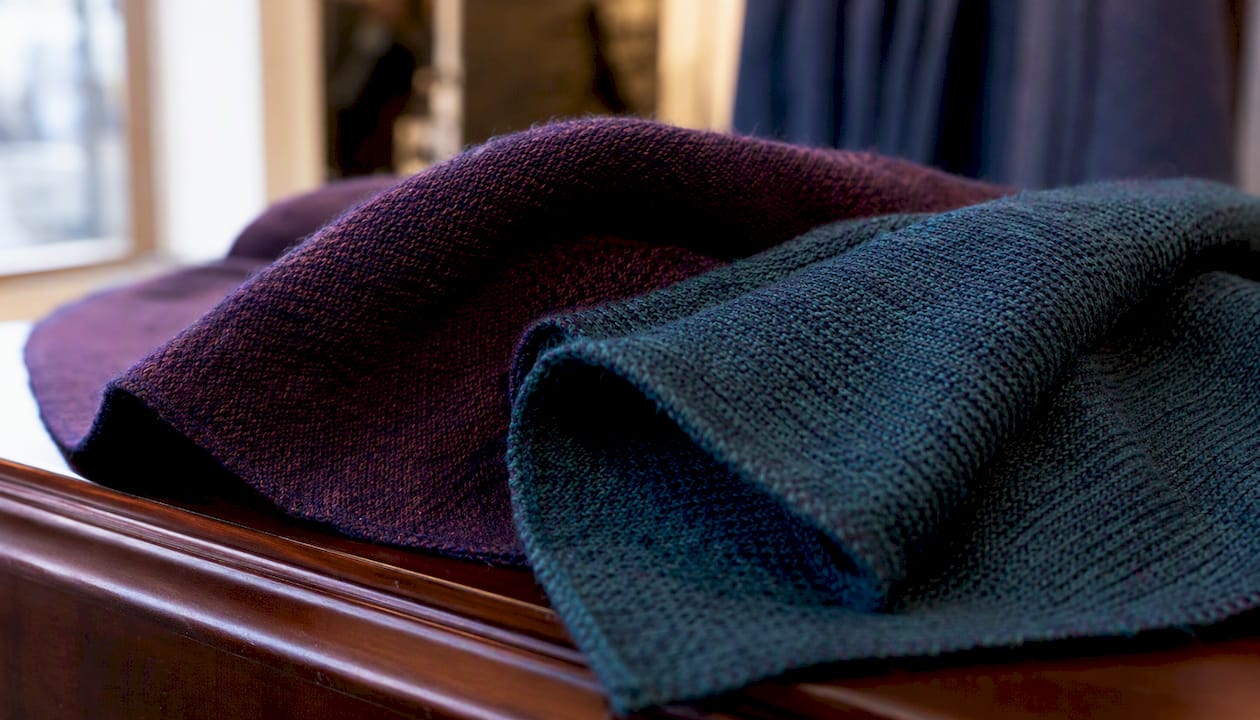
Breathability measures how much air passes through the fabric structure. A tightly woven shell blocks wind but traps heat; a loose-knit mesh breathes freely but offers no protection. The balance depends on the sport. ISO standards include test methods for air permeability that give you an objective number rather than a brand’s “ultra-breathable” claim.
Thermal regulation splits into two mechanisms. Insulation traps air to retain heat (fleece-back knits, hollow-core fibers). Phase-change materials (PCMs) absorb or release heat as they change state, buffering temperature swings. PCMs are genuinely useful for activities with alternating effort levels, though their durability across wash cycles is still a limitation worth noting.
Stretch and recovery depend almost entirely on elastane content and knit architecture. A fabric can stretch without recovering if the elastane percentage is too low or the yarn quality is poor. Recovery matters for compression garments especially, where the therapeutic or performance benefit disappears once the fabric loses its snap.
Abrasion resistance is the attribute most shoppers ignore until a garment fails. Denier (the weight of a single fiber per 9,000 meters of length) is the proxy: higher denier means a thicker, more durable filament. Nylon typically outperforms polyester here, which is why cycling shorts and trail-running tights use nylon-dominant fabrics at contact points.
Odor control comes from two sources: fiber chemistry (wool’s natural lanolin, silver-ion finishes on synthetics) and construction (open structures that dry fast and deny bacteria the moisture they need). Antimicrobial finishes vary widely in wash durability; look for brands that specify the number of wash cycles the treatment survives.
Water resistance ranges from a DWR (durable water repellent) coating on the outer face of a knit to a full waterproof/breathable membrane laminated between fabric layers. DWR beads water off the surface but is not waterproof; a membrane (bonded between face fabric and liner) blocks liquid water while allowing vapor to escape.
AATCC publishes standardized tests for pilling, moisture management, and colorfastness that brands can reference to back their claims. When a product page cites an AATCC or ASTM test number, that is a meaningful trust signal. When it says only “moisture-wicking technology,” it is not.
A breakdown of common high-performance materials and where each one excels
Understanding which fiber does what lets you choose performance workout gear with confidence rather than guessing from brand names.
Polyester and recycled polyester (rPET)
Polyester is the backbone of athletic wear. It is hydrophobic, so it does not absorb sweat; it is dimensionally stable across wash cycles; and it takes dye and finish treatments well. Active layers typically have a moderate GSM suitable for performance comfort. Recycled polyester (rPET) can match virgin polyester performance when processed correctly; certification such as GRS (Global Recycle Standard) helps confirm recycling claims.
Nylon
Nylon is stronger and more abrasion-resistant than polyester at equivalent weight, which makes it the preferred fiber for cycling shorts, trail tights, and any garment that takes friction. It is slightly heavier and more expensive. Denier matters here: 40D nylon is a light, packable shell fabric; 70D or higher signals a durable, reinforced construction.
Polypropylene
Polypropylene is the lightest common textile fiber and the most hydrophobic, which means it transfers moisture exceptionally fast. It is common in base layers for cold-weather endurance sports. The trade-off: it retains odor more than polyester and is heat-sensitive, so it cannot be tumble-dried on high heat.
Elastane / spandex
Elastane (sold under the brand name Lycra, among others) is never the dominant fiber but enables performance. A lower percentage adds two-way stretch, while higher percentages provide compression and muscle support. Fit and compression affect performance meaningfully, and the elastane percentage is the number that backs the claim.
Merino wool
Merino is the natural-fiber outlier that genuinely belongs in a performance conversation. It regulates temperature across a wide range, resists odor without chemical finishes, and feels soft against skin. The trade-off is durability: merino is prone to pilling and abrasion, and it costs more per gram than synthetics. It excels in base layers for hiking, trail running, and travel, where odor management over multiple days matters more than abrasion resistance.
Bamboo and cellulosic blends
Bamboo-derived fabrics (bamboo viscose, bamboo modal) are soft, breathable, and have a natural sheen. They are more absorbent than synthetics, which makes them less ideal for high-sweat sport but genuinely comfortable for yoga, low-intensity training, and everyday active wear. The environmental story depends heavily on processing: bamboo viscose uses a chemical process that varies in sustainability by manufacturer. Blending bamboo with cotton or elastane balances the softness of the cellulosic fiber with better recovery and shape retention.
Microfibers
Microfibers are not a fiber type but a construction: filaments finer than one denier, woven or knit into an extremely tight structure. The result is a fabric that is lightweight, wind-resistant, and very smooth. Microfiber polyester is common in cycling jerseys and swim-training suits.
Coated membranes and waterproof/breathable fabrics
A waterproof/breathable membrane (the category Gore-Tex pioneered) is a microporous film laminated between the outer fabric and a liner. It blocks liquid water while allowing water vapor to pass through. The performance metric is moisture vapor transmission rate (MVTR); higher MVTR means more breathable. DWR coatings on the outer face prevent the face fabric from wetting out, which would block vapor transmission even if the membrane is intact.
Advanced reinforcements: Dyneema®
Dyneema fiber can be added in small percentages to knits and wovens to significantly increase tear and abrasion resistance without adding meaningful weight. It is used in reinforced trail-running shoes, climbing harnesses, and high-wear panels on technical outerwear. It is not a mainstream base-layer material, but its presence in a garment’s spec sheet is a credible durability signal.
Construction matters as much as fiber. According to sourcing guides for custom sportswear buyers, blend composition, knit type, GSM, and finishes determine a garment’s real performance, not the fiber name alone. A bi-component knit in mid-grade polyester will wick better than a single-jersey knit in premium polyester.
How to spot high-performance materials in-store and online
Most shoppers spend thirty seconds on a label and move on. Spending two minutes more, using the right checks, separates a garment that performs from one that just looks the part.
Reading the label
The fiber content label is the most reliable data point on any garment. Look for:
- The dominant fiber listed first (polyester, nylon, or polypropylene for synthetics; wool or bamboo for naturals)
- Elastane listed as a separate percentage, not buried in “other”
- A finish or treatment note (“DWR finish,” “antimicrobial treatment,” “UPF 50+”)
- Country of origin and care symbols (high-heat sensitivity is a red flag for polypropylene and elastane-heavy fabrics)
Distrust labels that say only “performance fabric” or “moisture-wicking technology” without a fiber breakdown. That language is marketing, not specification.
Physical checks in-store
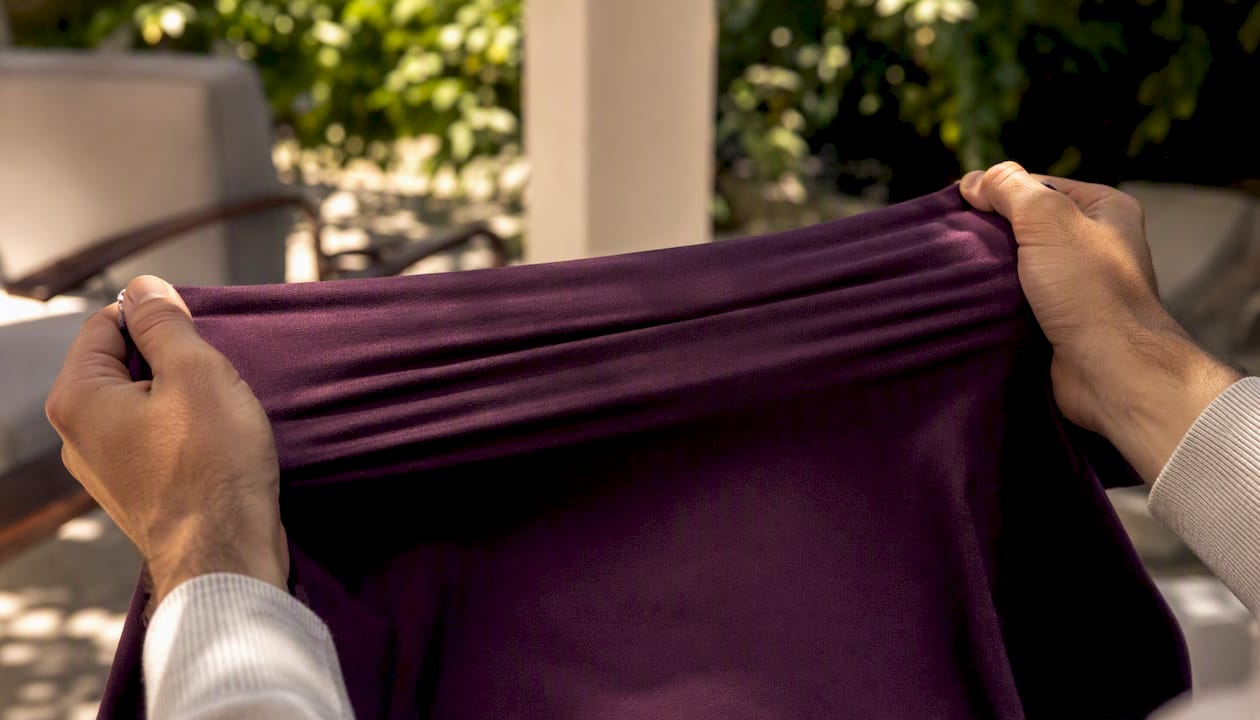
Stretch and recovery test: Stretch the fabric firmly in both directions and release. It should snap back immediately with no visible distortion. Slow recovery or a wrinkled return means low elastane content or poor yarn quality.
Filament density feel: Rub the fabric between your fingers. High-filament polyester or nylon feels smooth, almost silky, with a subtle texture. A rough, grainy hand usually means a lower-filament yarn that will pill faster and wick less efficiently.
Seam inspection: Flatlock seams lie flat against the skin with no raised ridge. Bonded or taped seams have no stitching at all. Both are construction signals that the manufacturer considered friction and comfort under load. A standard overlocked seam on a “performance” garment is a mismatch.
Mesh panels and ventilation zones: Lift the garment and look for mesh inserts at the underarm, back yoke, or inner thigh. Their placement should align with high-sweat zones, not just look decorative.
Weight check: A light garment is not automatically better. A 130 g/m² running tee and a 220 g/m² mid-layer serve different purposes. If the brand lists GSM, use it; if not, a noticeably heavy “performance” tee for warm weather is a flag.
Online checks
- Look for exact GSM or fabric weight in the product specs, not just “lightweight”
- Check for named test standards (AATCC, ASTM, ISO) or certifications (OEKO-TEX, bluesign, GRS)
- Zoom into seam and texture photos; a brand confident in its construction will show close-ups
- Read the care instructions: a garment that requires cold wash, no tumble dry, and no fabric softener has finishes worth protecting
Simple at-home micro-tests
- Drip/wicking test: Place a single water droplet on the wrong side of the fabric. On a true wicking fabric, the droplet spreads outward within seconds. On an absorbent fabric, it sits or soaks straight through without spreading.
- Stretch-recovery test: Stretch a panel of the fabric to its limit, hold for ten seconds, release. Measure or eyeball the recovery. A compression garment that does not fully recover after one stretch is already degraded.
- Initial wash check: Wash the garment once per care instructions and check for shrinkage, pilling, or color bleed. A high-quality performance fabric should show none of these after a single wash.
Pro Tip: Elastane percentage alone does not tell you compression level. Check both the elastane percentage and the knit construction description, or look for a stated compression rating (mmHg for medical-grade, or a brand’s own light/medium/firm scale for athletic garments).
Which materials suit specific sports and conditions
No single fabric wins across every activity. The right choice depends on the dominant physical demand of your sport and the environment you train in.
Running prioritizes moisture management and breathability above everything else. Engineered polyester with a bi-component knit construction handles sweat volume well. For trail running in variable weather, a merino blend adds odor resistance for multi-day efforts. For outdoor workout conditions, a DWR-treated shell layer over a wicking base handles light rain without overheating.
Cycling demands abrasion resistance at the seat and thigh, aerodynamic fit, and moisture management. Jersey fabrics are typically lighter polyester with mesh back panels.
Indoor training and HIIT generate high sweat volume in a controlled environment, so breathability and wicking are the priorities. Lighter GSM fabrics (130–160 g/m²) with open-knit structures and mesh zones work well. For high-intensity workout apparel, stretch and recovery matter too, since the movements are multi-directional.
Weightlifting needs durability and freedom of movement more than wicking. A heavier polyester or cotton-polyester blend at 180–220 g/m² holds up to bar contact and repeated washing. Compression tights for lifting use high-elastane nylon to support muscle groups.
Yoga favors soft hand, four-way stretch, and opacity. Bamboo-nylon blends are increasingly common for their softness and natural breathability.
Swimming requires chlorine resistance and shape retention. Polyester-elastane blends specifically engineered for aquatic use (often labeled “chlorine-resistant polyester”) outperform standard polyester, which degrades faster in pool water.
Cold-weather layering follows a three-layer logic: a wicking base (polypropylene or merino), an insulating mid-layer (fleece-back polyester or down), and a wind/waterproof shell (membrane fabric). Each layer has a distinct job; mixing them up undermines the system.
Rainy and outdoor conditions need a face fabric with DWR treatment at minimum, and a membrane layer for sustained rain. DWR alone fails once the face fabric wets out; a membrane holds longer but adds weight and reduces packability.
| Sport / condition | Priority attributes | Recommended material |
|---|---|---|
| Running (warm) | Wicking, breathability | Engineered polyester, bi-component knit |
| Running (trail/cold) | Odor control, thermal regulation | Merino blend, polypropylene base |
| Cycling | Abrasion resistance, aerodynamic fit | Nylon-elastane (high elastane percentage) |
| HIIT / indoor training | Wicking, stretch/recovery | Polyester-elastane, open-knit |
| Weightlifting | Durability, freedom of movement | Polyester or cotton-poly blend |
| Yoga | Softness, four-way stretch, opacity | Nylon-elastane, bamboo-nylon |
| Swimming | Chlorine resistance, shape retention | Chlorine-resistant polyester-elastane |
| Cold-weather layering | Thermal regulation, moisture transfer | Polypropylene base, fleece mid, membrane shell |
| Rain / outdoor | Water resistance, breathability | DWR-treated shell, waterproof/breathable membrane |
Care, durability, and expected lifespan of performance fabrics
A $120 technical garment washed wrong degrades faster than a $40 one washed correctly. The finish treatments and elastane content that make a fabric perform are also the elements most vulnerable to heat, harsh detergents, and fabric softener.
General care rules by material family:
- Synthetics (polyester, nylon, polypropylene): Cold or warm wash (30°C/86°F maximum), gentle cycle, no fabric softener (it coats fibers and blocks wicking), low or no heat in the dryer. Polypropylene is the most heat-sensitive; air dry only.
- Merino wool: Cold wash, wool-specific detergent, lay flat to dry. Machine washing on a wool cycle is acceptable for most modern merino blends, but heat is the enemy of both the fiber and the elastane content.
- Coated membranes and DWR fabrics: Wash more frequently than you think necessary (body oils degrade DWR faster than washing does). Tumble dry on low heat to reactivate DWR after washing. Re-treat with a spray-on DWR product every 10–15 washes or when water stops beading.
- Bamboo and cellulosic blends: Cold wash, gentle cycle, air dry or low heat. High heat causes shrinkage and breaks down the fiber structure faster than synthetics.
Maintenance steps that extend lifespan:
- Turn garments inside out before washing to protect outer finishes and reduce pilling on the face fabric.
- Use a sport-specific detergent (Nikwax Tech Wash, Granger’s Performance Wash) that removes odor-causing bacteria without stripping DWR or antimicrobial finishes.
- Wash compression garments after every use; elastane creep accelerates when sweat salts and oils are left in the fabric.
- Store technical garments unfolded or loosely rolled rather than tightly compressed, which stresses elastane fibers over time.
When to replace versus repair: Pilling on the face fabric is cosmetic and does not affect performance. Elastane creep (the garment no longer recovers its shape after washing) means the compression or recovery function is gone, and the garment should be replaced. Delamination on a membrane fabric (bubbling or peeling between layers) is irreparable. A DWR finish that no longer responds to reactivation after re-treatment is a signal to replace the outer layer.
Filament quality is the biggest driver of lifespan. A higher-denier, high-filament yarn in a well-constructed knit will outlast a cheaper single-jersey equivalent by a factor of two or three in wash cycles before pilling or structural failure.
Sustainability trade-offs for performance materials
The sustainability story in athletic wear is more complicated than a “made from recycled bottles” hang tag suggests.
Recycled polyester (rPET) is the most widely available sustainable option, and it genuinely performs on par with virgin polyester when processed correctly. The critical check is certification: GRS (Global Recycle Standard) from Textile Exchange verifies the recycled-content claim and the chain of custody. Without GRS, a “recycled” claim is unverifiable.
Natural fibers (merino, bamboo) carry their own trade-offs. Merino wool has a lower synthetic-microplastic footprint than polyester, but sheep farming has land and water impacts that vary by region and farming practice. Bamboo is fast-growing and requires fewer pesticides than cotton, but bamboo viscose processing uses chemicals that can be harmful if not managed under a closed-loop system. The Lyocell process (used for Tencel-branded bamboo and eucalyptus fibers) is significantly cleaner than standard viscose.
Certifications worth trusting:
- OEKO-TEX Standard 100: Tests the finished garment for harmful substances. It does not verify environmental production practices, only that the fabric is safe to wear.
- bluesign: Verifies responsible resource use, chemical management, and worker safety throughout the supply chain. A stronger environmental signal than OEKO-TEX alone.
- GRS (Global Recycle Standard): Verifies recycled-content percentage and chain of custody. The number to look for is the recycled-content percentage, not just the logo.
The practical buying rule: A specific recycled-content percentage plus a named certification beats any amount of sustainability copy. “Made with eco-friendly materials” means nothing.
One honest caveat: some high-performance finishes (DWR coatings, silver-ion antimicrobial treatments, fluorocarbon-based water repellents) carry their own environmental concerns. C6 and C8 fluorocarbon DWR chemistries are being phased out in favor of PFC-free alternatives; look for “PFC-free DWR” on technical outerwear if this matters to you.
What the research says about smart textiles and phase-change materials
The gap between what smart textiles promise in a press release and what they deliver in a washing machine is still significant.
Peer-reviewed research on functional smart and wearable textiles confirms that these fabrics can enable real-time physiological monitoring, adaptive thermoregulation, and performance tracking. The same research is equally clear about the barriers: durability across wash cycles, power supply for embedded electronics, and the complexity of integrating microelectronics with textile engineering remain active challenges that limit mainstream adoption.
What smart textiles currently do well:
- Embedded sensors can monitor heart rate, respiration, and muscle activity in real time during training
- Phase-change materials buffer temperature swings by absorbing heat when you warm up and releasing it when you cool down
- Nanotextile finishes (silver nanoparticles, graphene coatings) can improve antimicrobial performance and thermal conductivity
Where the limitations are real:
- Most embedded sensor systems degrade after repeated washing, which is a fundamental problem for everyday athletic wear
- PCM performance depends on the temperature range of the phase transition; a PCM calibrated for one climate may be ineffective in another
- Nanotextile finishes vary widely in wash durability; a finish that works after 10 washes may be gone after 30
- Power supply for active electronic components remains unsolved for garments that need to be washed and worn daily
The honest summary from the research: Smart textiles are a genuine frontier, but for most athletes buying gear today, the performance gains from a well-constructed bi-component knit in proven polyester or merino outweigh the speculative benefits of a sensor-embedded garment that may not survive a season of washing.
The most durable “advanced” materials in current mainstream sportswear are not electronic. Dyneema reinforcements, PFC-free DWR membranes, and high-filament bi-component knits are all proven, washable, and available now. Phase-change and sensor-embedded garments are worth watching, but verify wash-life claims and look for independent test data before paying a premium.
The case for comfort-first performance: where luxury blends fit in
Most guides on identifying sportswear fabrics treat performance as a binary: either you have technical sport gear or you have casual clothing. That framing misses a real category of garments that are not designed for elite sport but are genuinely built to perform in everyday active life.
The Moreci Complesso Bamboo-Cotton Tee sits in that space deliberately. It is not a compression base layer for a marathon. It is a premium everyday tee built with a bamboo-cotton blend that offers natural breathability, a soft hand that holds up across washes, and construction quality that most “performance” tees at the same price point do not match. The seam quality, the GSM, and the fiber blend are all verifiable on the label, which is exactly the standard this guide applies to any garment.
My honest view: the obsession with maximum-performance technical fabrics is appropriate for sport-specific gear, and you should apply every check in this guide when buying a running kit or a cycling jersey. But for the rest of your active wardrobe — the tee you wear to the gym, the polo you wear on the course, the shirt you wear traveling — comfort, durability, and verified construction matter more than moisture vapor transmission rates. A bamboo-cotton blend with honest specs and quality seaming beats a synthetic tee with vague “performance” marketing every time.
The single-sentence rule: choose technical sport-specific gear for your highest-output activities, and choose a premium natural-blend garment with verified construction for everything else.
The Moreci Complesso Tee meets the practical checklist
If you have read this far, you know what to look for: verified fiber content, honest GSM, quality seaming, and a fabric that earns its performance claims rather than just claiming them.
The Moreci Complesso Bamboo-Cotton Tee is built to pass those checks. The bamboo-cotton blend delivers natural breathability and a soft, durable hand. The construction uses quality seaming you can inspect on arrival. The fiber blend is listed clearly, not hidden behind vague marketing language. And it is made in Portugal, where textile manufacturing standards are among the most rigorous in the industry.
This is not a garment for race day. It is the premium everyday option for men who want their clothing to perform as well as it looks, without paying for technical features they do not need. The Complesso Collection covers the full range of Moreciandco’s luxury-blend pieces, each built on the same principle: clear specs, quality construction, and materials that hold up.
View the Complesso Tee on the Moreciandco store and check the product page for the full fiber breakdown, care instructions, and sizing. If the construction does not match what is described, return it. That is the standard the brand holds itself to.
Standards, tests, and useful reading for deeper verification
When a brand cites a test standard, these are the bodies and methods behind it.
Test bodies and standards:
- AATCC (American Association of Textile Chemists and Colorists): publishes standardized tests for moisture management (AATCC 195), pilling (AATCC 124), colorfastness, and antimicrobial performance. When a brand cites an AATCC test number, the result is independently verifiable.
- ISO (International Organization for Standardization): covers air permeability (ISO 9237), moisture measurement, and tensile strength for textiles. ISO test citations on a technical product page are a strong trust signal.
- ASTM International: publishes performance standards for water resistance (ASTM D3787), stretch and recovery (ASTM D2594), and UV protection (ASTM D6544). Common on American-market technical apparel.
Useful sources for deeper reading:
- Advancements in functional smart and wearable textiles: peer-reviewed review of smart textile capabilities and current limitations, including sensor integration, thermoregulation, and washability challenges.
- Polartec Power Dry construction overview: a clear manufacturer example of how bi-component knit construction delivers mechanical wicking.
- Dyneema design for sports and consumer products: explains how small percentages of high-strength fiber increase abrasion and tear resistance in technical garments.
- Fexwear sportswear sourcing guide: practical breakdown of how blend composition, knit type, and GSM determine real garment performance.
Sources
- Advancements in functional smart and wearable textiles for sportswear applications
- Power Dry™.
- AATCC
- International Organization for Standardization (ISO)
- What Type of Fabric Is This? A Sourcing Guide for Custom Sportswear Buyers - Fexwear
- Design for Sports and Consumer Products | Dyneema®