


Golf bag pockets exist to do three jobs: keep your tools organized, protect your valuables, and manage weight so the bag rides comfortably for 18 holes. The single rule that matters most: put whatever you touch most often (balls, tees, gloves) in front-facing pockets, and push heavier or rarely used items into lower or side compartments. Instructors have taught this frequency-based system for years, and it’s the difference between a smooth round and digging through your bag on every tee box. Insulated pockets typically hold 4 to 12 cans depending on whether they’re built in or detachable. Bags like the Moreci Lusso 14 Stand Bag are built around this same logic.
- Front-facing pockets: high-frequency items (balls, tees, gloves)
- Lower/side pockets: heavier or occasional items (rain gear, extra layers)
- Lined pocket: phone, wallet, keys
- Insulated pocket: drinks and snacks (4 to 9 cans typical)
Key Takeaways
Golf bag pockets work best when each one is assigned a single job based on how often you reach for what’s inside, with valuables locked in a lined pocket and heavier gear kept low.
| Point | Details |
|---|---|
| Frequency rule | Put balls, tees, and markers in front-facing pockets; save lower pockets for rain gear and extra layers. |
| Cooler capacity varies | Integrated coolers typically hold 4 to 6 cans, while removable pouches often fit 6 to 9 cans plus ice. |
| Match layout to bag type | Stand bags need low, centered weight; cart bags can prioritize larger front-facing storage. |
| Protect valuables | Use the fleece-lined or water-resistant pocket for phone, wallet, and keys, not a loose accessory pocket. |
| Moreci Lusso 14 Stand Bag | Built with a fleece-lined valuables pocket, insulated sleeve, and balanced straps that support this exact packing system. |
Table of Contents
- What Each Golf Bag Pocket Is Actually For
- Arranging Pockets For Stand Bags Vs. Cart Bags
- Your Pre-Round Pocket Checklist
- What Research Says About Coolers And Packing Habits
- Should You Remove The Driver Head Before Flying?
- Security Features And Locks On Golf Bag Pockets
- Customizing Your Pockets For Better Organization
- Why Pocket Design Isn’t An Afterthought
- How The Moreci Lusso 14 Stand Bag Solves These Pocket Problems
- Frequently Asked Questions
- Sources
What Each Golf Bag Pocket Is Actually For
Most golf bags come with six to nine distinct pockets, and each one has a job. Treat them as generic storage and you’ll end up patting down your entire bag looking for a ball marker on the 14th green.
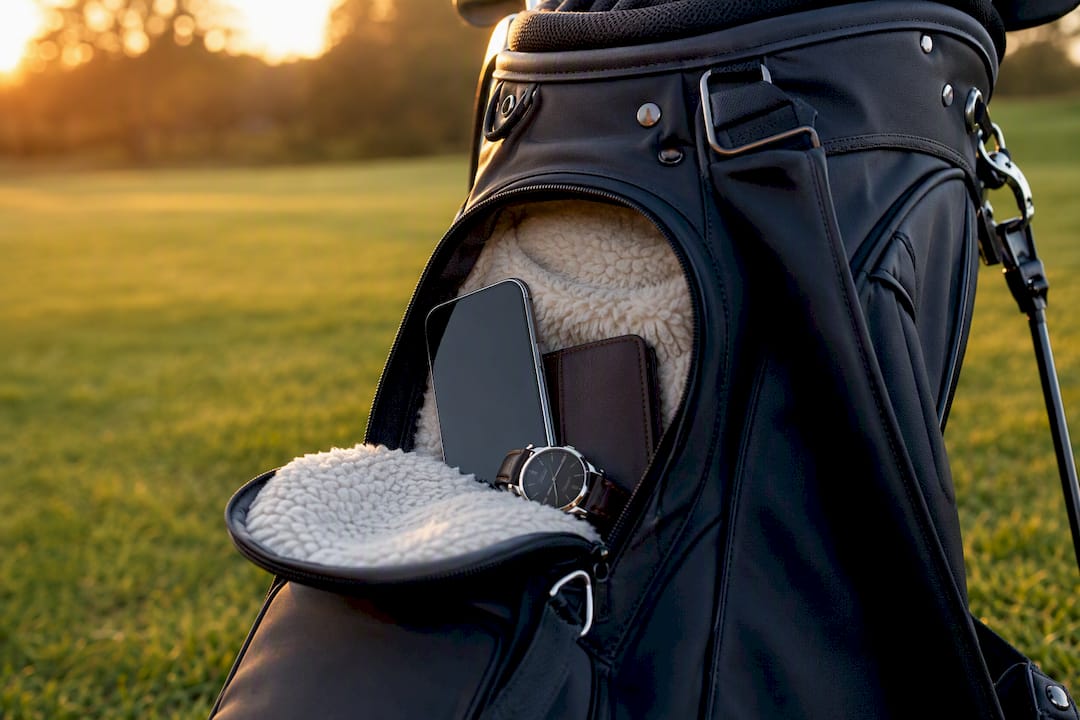
The ball pocket is usually a small, easy-reach compartment near the top. Carrying several balls is typical; carrying too many adds unnecessary weight, while too few may leave you unprepared for a tough hole. The valuables pocket, often fleece-lined or water-resistant, is where your phone, wallet, watch, and keys belong. Manufacturers line this pocket specifically to prevent scratches and keep moisture out, a detail confirmed across product design from major brands.
The apparel or full-length pocket runs the length of the bag and holds bulkier items: a rain jacket, an extra glove, a spare layer for a cold front nine. This is also where a hidden internal valuables pouch sometimes sits, tucked inside the main compartment so small items don’t sink beneath your jacket and get lost until you unpack at home.
Accessory pockets are for tees, ball markers, a divot tool, and a pencil. Keep these grouped in a small zip pouch inside the pocket rather than loose. Loose tees migrate to the bottom seam and hide there for months. A rangefinder or GPS pocket, when your bag has one, is padded and separate from the accessory pocket to prevent scratching the lens or screen.
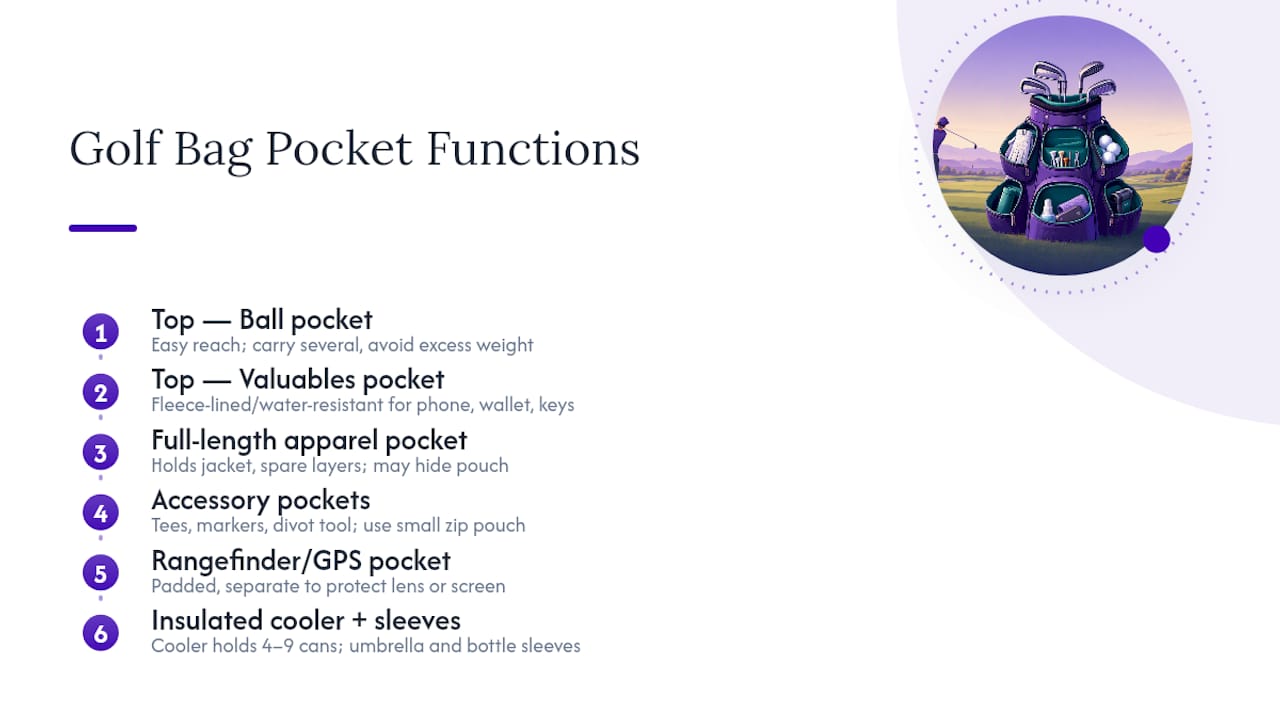
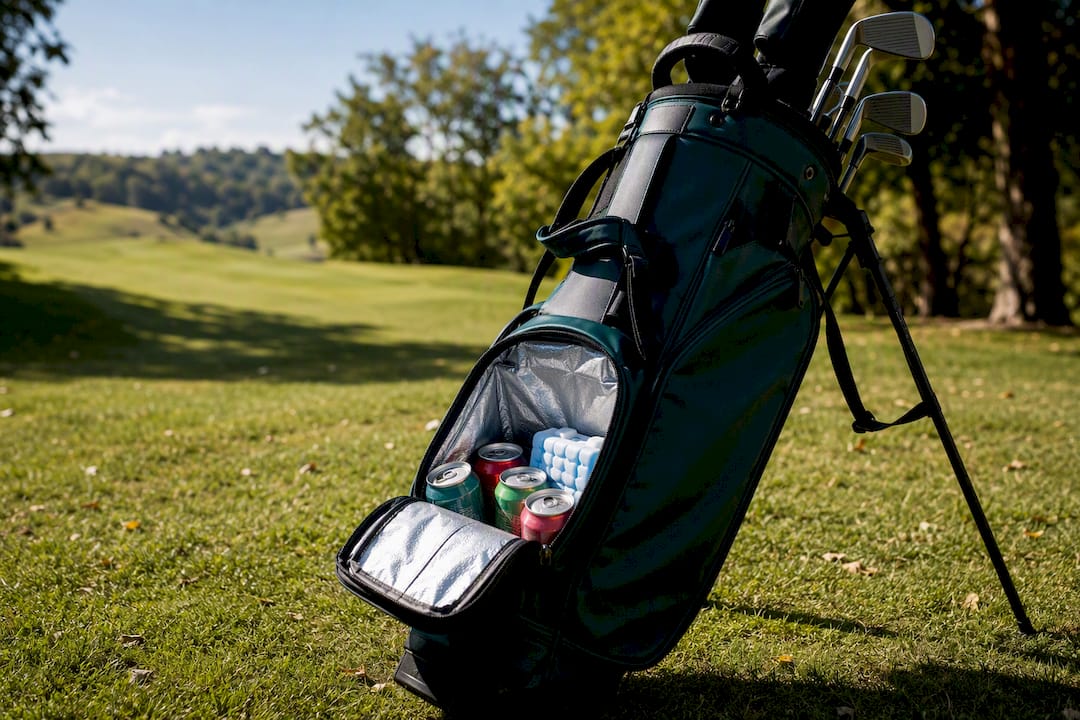
The insulated cooler pocket handles drinks and snacks, and capacity varies: integrated coolers typically hold 4 to 6 cans, while removable cooler pouches often fit 6 to 9 cans plus ice packs. Round out the layout with an umbrella sleeve on the outside, a water bottle sleeve on the side, and one or two small zip or fob pockets for a locker key or ball mark repair tool.
According to organization guidance from the College of Golf at Keiser University, assigning each pocket a single, consistent job is what prevents fumbling mid-round.
Pro Tip: Drop a small zip bag or mesh pouch into your accessories pocket before the season starts. It keeps tee shavings, sunscreen residue, and loose change from turning into a sticky mess that ruins your scorecard pencil.
Maintenance takes two minutes a month. Wipe out the insulated pocket after hot rounds so condensation doesn’t mildew the lining. Shake out the ball pocket to clear sand and grit, and check zippers and snaps for grit buildup that wears down the teeth over a season.
Arranging Pockets For Stand Bags Vs. Cart Bags
A stand bag and a cart bag ask for different packing logic because one rides on your shoulder and the other rides on wheels. Testing across dozens of bags shows stand bags reward balanced, low-profile pocket stacking, while cart bags lean on bigger, more specialized compartments since weight on your back isn’t a concern.
- Stand bag walkers: Load the bottom pockets with your heaviest items (rain gear, extra layer) to keep the center of gravity low. Front pockets get balls, tees, and your valuables pouch for one-motion access without unclipping the strap.
- Cart bag riders: Use the larger top pockets for coolers and apparel since weight distribution matters less. Keep accessory and rangefinder pockets front-facing anyway, since you’re still reaching for them between shots.
- Both types: Heavier items go low and centered; anything you touch more than twice a round goes front-facing, full stop.
Pro Tip: If you’re walking 18, cap your extra balls at six and skip the second rain jacket. Extra bulk in the apparel pocket shifts the bag’s balance and can nudge your swing path if the strap sits wrong on your shoulder.
Your Pre-Round Pocket Checklist
A round-ready bag takes 60 seconds to check before you leave the house or the cart barn.
- Ball pocket: 6 to 9 balls, no more (extra weight, no benefit).
- Valuables pocket: phone, wallet, keys, secured in the lined compartment.
- Insulated pocket: water or 4 to 6 cans, or one insulated bottle.
- Accessory pocket: tees, markers, and a divot tool grouped in one pouch.
- Apparel pocket: one rain layer, packed flat.
Overpacking any single pocket throws off the bag’s balance and makes zippers work harder than they should. The 60 second routine: check balls and tees, check valuables are zipped in, check you’ve got water or a snack for the back nine.
What Research Says About Coolers And Packing Habits
Cooler capacity is one of the more misunderstood specs on a golf bag. Integrated coolers typically run 4 to 12 cans depending on the model, and removable pouches usually land around 4 to 9 cans plus room for an ice pack. That range matters because a cart rider chasing all-day capacity wants a bigger built-in cooler, while a walker wants something lighter that can come off the bag entirely.
On the organization side, PGA-affiliated instructors consistently teach the same frequency rule: front pockets for anything you touch more than once a hole, everything else further back. It sounds obvious until you watch a golfer waste 45 seconds hunting for a ball marker while their group waits.
Pro Tip: Choose an integrated cooler if you primarily ride in a cart and want maximum capacity. Choose a detachable pouch if you walk or use a push cart, since you can pull it off entirely on cooler days and save the weight.
Should You Remove The Driver Head Before Flying?
Yes, when you’re checking your bag on a flight. Removing the driver head, or at minimum padding the clubhead heavily, protects it from the impact that airline baggage handling routinely delivers.
- Use a headcover on every club, not just the driver.
- Pack clubs in a hard-sided travel case if you’re flying regularly.
- Pad around the driver head with a towel or extra layer from your apparel pocket.
Pro Tip: A snug headcover plus one buffer layer beats an expensive travel case if you only fly with clubs once or twice a year.
Security Features And Locks On Golf Bag Pockets
Most golf bags don’t ship with actual locks, but the better-designed valuables pockets build in security through material and placement rather than hardware. A fleece-lined or water-resistant valuables pocket is usually positioned close to your body on a stand bag, tucked where it’s harder to access without you noticing, and zippered rather than snapped shut.
Some higher-end bags add a second layer of protection: a hidden internal pouch stitched inside the main apparel compartment. Because it’s buried under jackets and layers, it’s not the first thing a passerby would think to check, and it keeps small valuables from sinking to the bottom of a deep pocket where they’re easy to forget.
If security is a real concern, look for pockets with two-way zippers that can be pulled to meet in the middle and locked with a small travel padlock, a trick borrowed from luggage packing. Some cart bag models also include a zippered pocket specifically marketed for phones or wallets, positioned under the top cuff where it’s shielded from rain and from casual view when the bag sits unattended on a cart.
None of this replaces common sense. Don’t leave a bag unattended near a clubhouse entrance with a phone visible in a mesh pocket. The lined valuables pocket is a deterrent and a weather shield, not a vault.
Customizing Your Pockets For Better Organization
Stock pockets work fine out of the box, but a few cheap additions turn a decent bag into a genuinely organized one. Small zippered pouches, the kind sold for travel toiletries, drop straight into accessory pockets and keep tees, markers, and a divot tool from sliding to the bottom seam.
Elastic loop inserts, often sold separately or included with premium bags, hold tees upright and separated from ball markers so you’re not fishing around one-handed while your group waits. For the valuables pocket, a small drawstring bag adds a second layer of protection for a phone or car key without adding bulk.
If your accessory pocket lacks internal dividers, a stiff cardboard or plastic insert cut to size creates a makeshift wall between tees and snacks. It’s a five-minute fix that stops crumbs from working into your tee compartment. For the apparel pocket, rolling a rain jacket instead of folding it saves space and makes room for a second layer without forcing the zipper.
The goal with any of these additions is the same one behind the whole pocket-by-pocket system: reduce decisions during the round so your hands find things on autopilot. A well-organized bag also pairs well with the right accessories sized to fit smaller pockets instead of overstuffing them.
Why Pocket Design Isn’t An Afterthought
Pocket placement isn’t a minor spec buried at the bottom of a product page. It’s part of how a bag performs on the course, and it’s why premium bag makers design pocket placement with intention rather than treating pockets as an afterthought bolted on after the frame is finished. When we built the Moreci Lusso 14 Stand Bag, pocket placement got as much attention as the leather. A fleece-lined valuables pocket sits front and center, exactly where the frequency rule says it should.
How The Moreci Lusso 14 Stand Bag Solves These Pocket Problems
Everything covered above (frequency-based packing, weight distribution, a lined valuables pocket, a proper cooler sleeve) is easier when the bag is built around that system instead of forcing you to adapt to a generic layout.

The Moreci Lusso 14 Stand Bag puts a fleece-lined valuables pocket front and center, adds a dedicated insulated sleeve for drinks, and includes a separate rangefinder pocket so your GPS unit isn’t sharing space with loose tees. The strap system is balanced to keep weight low and centered, which matters most for walkers carrying 14 clubs over 18 holes. PU leather construction means the pockets hold their shape season after season instead of sagging where you load them heaviest.
If you’re a walker who wants the pocket-by-pocket system built into the bag from day one instead of retrofitted with pouches and inserts, the Lusso 14 is designed for exactly that. Browse the full lineup at the Moreci store and see which build fits your bag rotation.
Frequently Asked Questions
How many balls should I keep in my golf bag pocket? Six to nine balls covers a normal round without adding unnecessary weight to your bag.
What goes in the fleece-lined pocket on a golf bag? Your phone, wallet, keys, and anything else you’d rather not scratch or get wet during the round.
Do cart bags need different pocket organization than stand bags? Yes. Cart bags can use larger, less centralized pockets since weight distribution matters less than it does for a bag you’re carrying on your shoulder.
Should I remove my driver’s head before checking golf clubs on a flight? It’s smart practice. Removing or heavily padding the driver head protects it from the impact airline handling routinely causes.
How often should I clean out my golf bag pockets? Wipe down the insulated pocket monthly during the season and shake out the ball and accessory pockets to clear sand and grit before it wears down the zippers.
Sources
- Best golf bag cooler — Golf Monthly
- How to organize your golf bag like a pro | College of Golf (Keiser University)
- Top 15 best golf bags of 2026 — MyGolfSpy
- The best golf bag cooler for chilled course refreshments — CaddieWheel