


Nylon ripstop wins for walking golfers who count every ounce. High-denier Cordura or ballistic nylon wins for durability under real abuse. PU or genuine leather wins for buyers who want a bag that looks as good in the clubhouse as it performs on the fairway, and canvas covers heritage style. None of that matters, though, if the seams aren’t welded or taped and the zippers aren’t sealed. The Moreci Lusso 14 Stand Bag pairs PU leather accents with reinforced denier construction for buyers who want both.
TL;DR:
- Look for welded or sealed seams and waterproof zippers, as stitching alone cannot ensure waterproofing on a golf bag.
- Prioritize high-denier nylon (1000D+ Cordura or ballistic nylon) for durability in tour and travel bags, but remember construction quality matters more than fabric strength.
- Protect your bag with proper maintenance by reapplying fabric spray or re-waxing canvas, and avoid dryers that can warp materials or zippers.
- Inspect stress points such as strap attachments and base reinforcements to prevent quick wear and failure during regular use.
- When choosing materials, match the bag type with the right fabric (nylon for carry bags, ballistic nylon for travel, canvas for heritage styles) to ensure optimal durability and weight balance.
Table of Contents
- What Are the Main Golf Bag Materials?
- Does Fabric Alone Make a Golf Bag Waterproof?
- Which Hardware Components Fail First on a Golf Bag?
- Which Material Fits Your Bag Type?
- How Do You Spot a Durable Bag Before You Buy?
- How Should You Care for Different Golf Bag Materials?
- How Moreci Applies These Material Standards
- What Golfers Get Wrong About Bag Materials
- Ready to Upgrade Your Bag?
- Sources
What Are the Main Golf Bag Materials?
Every golf bag starts as a tradeoff between weight, abrasion resistance, and price, and the material tells you almost everything before you even touch the bag.
Nylon dominates the stand and carry bag category because it delivers the best strength-to-weight ratio of any common fabric, and manufacturers can dial that strength up or down through denier, the thickness measurement of the fiber thread. Denier, abbreviated “D,” measures the weight of yarn per 9,000 meters. Higher numbers mean thicker thread and tougher fabric, but also more weight. Fabric choice directly shapes a bag’s weight, durability, and weather resistance, and nylon’s flexibility across that spectrum is exactly why it shows up everywhere from $150 stand bags to $600 tour bags.
- 420D to 600D ripstop nylon covers most stand and carry bags. Ripstop weaves a reinforcing grid into the fabric, so a small puncture doesn’t spread into a tear.
- 1000D and higher (Cordura, ballistic nylon) targets tour and travel bags, where the bag gets thrown into cart wells, overhead bins, and trunks for years.
- Polyester costs less than nylon and holds up better against UV fading, which matters for cart bags that bake in a golf cart holder all afternoon. Recycled polyester now performs close to virgin material at a modest price premium, which is worth asking about if sustainability factors into your decision.
- Canvas and waxed canvas show up on heritage and Sunday bags. Waxed canvas adds a layer of paraffin or beeswax treatment that sheds light rain, but it’s heavier than nylon and needs periodic re-waxing.
- PU (polyurethane) leather mimics the look of genuine leather at a fraction of the weight and cost, and it doesn’t crack the way lower-grade genuine leather can after years of sun exposure.
- Genuine leather still wins on pure aesthetics and long-term character. It costs more, weighs more, and demands actual maintenance. Full-grain leather is the grade to look for if you’re paying leather prices.
Cordura 1000D and comparable ballistic nylons have become an industry standard for premium and tour bags because of how much abrasion they absorb before showing wear. Most premium bags today aren’t one material at all. They’re a Cordura or nylon body with PU leather accents on the base, handle, and trim, which balances weight, cost, and the visual upgrade leather provides.
Does Fabric Alone Make a Golf Bag Waterproof?
No, and this is where most buyers get misled. A bag can use genuinely waterproof fabric and still leak like a sieve if it’s sewn together with a needle and thread.
Water-repellent coatings (often labeled DWR) sit on top of a fabric and cause water to bead and roll off, but they wear down over time and never stop water under sustained pressure. True waterproof laminated fabrics, usually a TPU or PU film bonded to the base material, block water outright and get rated by hydrostatic head, a measurement of how many millimeters of water column the fabric can resist before leaking.
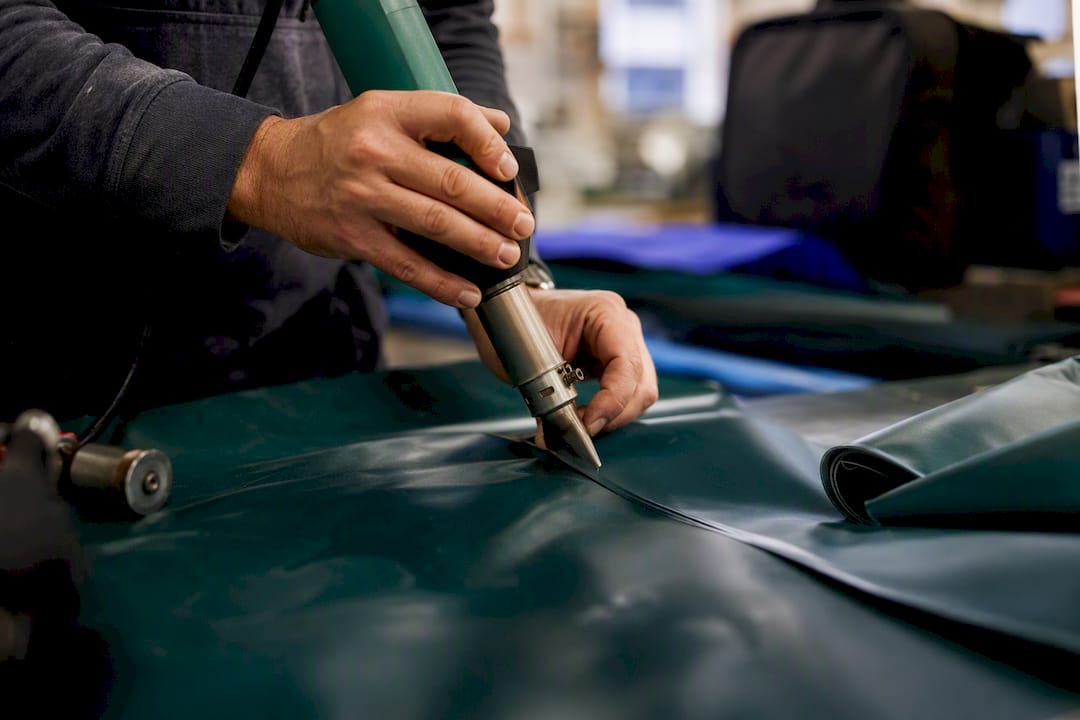
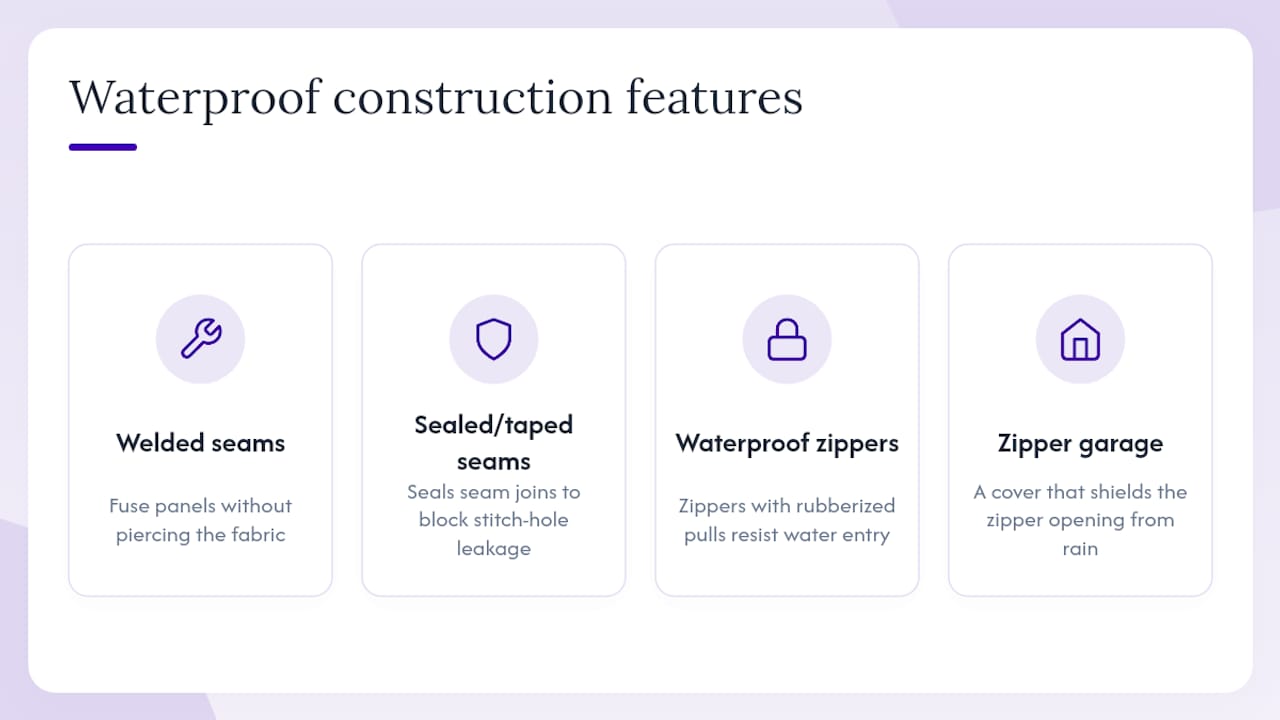
Here’s the part manufacturers rarely explain clearly: every stitch hole is a doorway for water. A stitched bag, even with fully waterproof fabric, still lets water seep in through the needle punctures at every seam. That’s why serious waterproof bags use heat-welded seams that fuse panels together without piercing the fabric, plus sealed or taped seam construction, plus waterproof zippers with rubberized pulls and zipper garages that shield the opening from rain.
Trust signal callout: When you’re comparing spec sheets, look for these exact phrases: “welded seams,” “sealed/taped seams,” “waterproof zippers,” and “zipper garage.” Vague marketing language like “weather resistant” without construction detail usually means coated fabric over stitched seams, not a fully sealed system.
Some manufacturers push this further with fully welded, non-stitched panel construction to eliminate stitch-hole leakage entirely, an approach you’ll see on premium waterproof-rated models built for tournament play in any weather. If you play in wet climates, rain golf strategy matters as much as gear, but a properly sealed bag means one less thing to manage mid-round. For a deeper breakdown of what “waterproof” actually requires, see how bag construction determines real waterproofing.
Which Hardware Components Fail First on a Golf Bag?
Fabric rarely tears first. It’s almost always the zippers, straps, or base that give out, because those parts absorb concentrated stress every single time you use the bag.
- Zippers: Look for oversized teeth and a recognizable brand name like YKK stamped on the pull. Waterproof variants use a rubberized coating over the zipper track, and a zipper garage (a flap that covers the top of the zipper) keeps rain from pooling right at the entry point.
- Straps: Padded webbing with dual-density foam spreads weight better than thin single-layer foam. Ventilated backing keeps your shirt from soaking through on hot rounds, and reinforced attachment plates stop the strap from tearing loose at the anchor point, which is the single most common carry-bag failure.
- Base: Reinforced molded plastic or a rubberized base resists the scraping and dropping that destroys cheaper bags within a season. Extra denier layered around the base seam is a sign the maker anticipated wear there.
- Stand and legs: Aluminum legs are cheaper and slightly heavier. Carbon fiber shaves weight but adds cost, which matters most if you’re walking 18 holes and feeling every ounce by hole 15.
Pro Tip: Unzip every pocket in the showroom and run your finger along the inside seam. If you can feel raw stitching with no tape or reinforcement, that pocket will be the first thing to fail once it’s loaded with balls, gloves, and a rain jacket.
Pocket layout and internal material quality matter just as much as the outer shell. How a bag’s pockets are built affects how fast you can find your gear and how long those internal zippers survive daily use.
Which Material Fits Your Bag Type?
Matching material to bag type is the fastest way to stop overthinking your purchase. The right fabric for a cart bag is often the wrong fabric for a carry bag, and vice versa.
- Stand and carry bags: Choose 420D to 600D ripstop nylon. You’re carrying this on your back for four hours, so every extra ounce of denier costs you comfort. Prioritize padded straps and reinforced stress points over raw fabric toughness.
- Cart and tour bags: Choose 1000D+ Cordura or 1200D to 1680D ballistic nylon. You’re not carrying it, so weight matters less than how it survives being tossed into a cart well round after round. Better weatherproofing pays off here too, since cart bags spend more time exposed and unattended.
- Travel bags: Choose 1680D ballistic nylon or equivalent, paired with reinforced wheels and a rigid internal frame. Airlines are brutal on golf travel cases, and this is the one bag type where under-building the material guarantees a cracked frame within a few flights.
- Sunday and heritage bags: Choose canvas or waxed canvas with leather accents. You’re trading weight and low-maintenance convenience for a classic look, so budget time for periodic care and expect a noticeably heavier carry than a nylon equivalent.
How Do You Spot a Durable Bag Before You Buy?
A few seconds of inspection tells you more than any spec sheet claim. Denier numbers only mean something when you can see and feel how they translate into the finished product.
- Check the denier tag or listing. Higher denier means better abrasion resistance but more weight. There’s no free upgrade, only tradeoffs.
- Inspect strap anchors. Pull gently on the strap where it meets the bag. Reinforced stitching or a metal plate should resist any flex.
- Examine seam type. Taped or welded seams on the rain hood and pockets signal genuine weatherproofing intent, not just a marketing line.
- Test the zipper action. Robust sliders move smoothly with no grinding, and corrosion-resistant finishes hold up in humid climates.
Testing callout: Manufacturers validate durability using abrasion tests like Martindale and Taber, plus tensile strength tests on straps and seams. Ask a retailer or check a product page for these specific test names rather than settling for a general “durable” claim with no method behind it.
How Should You Care for Different Golf Bag Materials?
Material-specific care is what actually separates a bag that lasts a decade from one that’s peeling by year three.
- Every material: Dry the bag fully after wet rounds, unzip all pockets, and pull out any damp towels or grips before storing it.
- Nylon and polyester: Reapply a fabric reproofing spray every season and clean with mild soap and water. Never use direct heat to dry it, since high heat can warp coatings and zipper components.
- Canvas and waxed canvas: Re-wax every 6 to 12 months depending on exposure, and store it fully dry to prevent mildew from setting into the fibers.
- PU and genuine leather: Wipe down with a damp cloth and condition leather every few months. Keep both away from prolonged heat and standing moisture, which cause cracking and warping over time.
Pro Tip: A loose seam or a sticking zipper slider is usually a five-minute fix with a heavy-duty needle and thread or a replacement slider, not a reason to replace the whole bag. Save the professional repair shop for structural damage to the frame or base.
How Moreci Applies These Material Standards
Moreci built the Lusso 14 Stand Bag around the same logic laid out above rather than chasing a trend. The body uses selected denier nylon for abrasion resistance, PU leather accents for the aesthetic upgrade buyers actually notice in daylight, and reinforced hardware at the exact stress points where cheaper bags fail first, the strap anchors and base seams.
Getting what you pay for starts with materials you can name and construction you can inspect, not marketing language you have to trust blindly. That’s the standard we designed the Lusso 14 around.
Buyers who want the visual weight of leather without carrying the weight of leather, or the durability of high-denier fabric without an amateur-hour zipper, will find that combination reflected directly in the Moreci Lusso 14 Stand Bag specs.
— Giuseppe
What Golfers Get Wrong About Bag Materials
Most buying guides treat denier as the whole story, and it isn’t. I’ve watched golfers spend up for 1000D Cordura and still end up with a bag that leaks at the first heavy rain, because the fabric was never the weak point. The seams were.
The conventional advice, “buy the toughest fabric you can afford,” misses that construction quality decides most real-world failures. A 420D bag with welded seams and a sealed zipper will outperform a 1000D bag stitched together with exposed needle holes in any wet round that matters. Fabric protects against abrasion. Construction protects against water and structural failure at the anchor points.
If you take one thing from this guide, prioritize the seams and hardware first, then let denier settle your weight versus toughness question second. That order gets buyers to the right bag faster than any spec sheet number alone ever will.
— Giuseppe
Ready to Upgrade Your Bag?
If you’ve read this far, you already know what separates a bag that lasts from one that falls apart after a wet season: real construction, not just a denier number on a tag. Moreci built the Lusso 14 Stand Bag around exactly that standard, mixing reinforced nylon with PU leather accents so you get the durability golfers demand and the look that belongs in a proper bag room.
If leather-look bags and reinforced hardware match what you’re shopping for, the Moreci Lusso 14 Stand Bag is built for exactly that buyer. Browse the full lineup and shipping and returns details at the Moreci store, where specs for each material and construction detail are listed on the product page. Check availability now and get your bag ordered before your next round.
Sources
- Best waterproof golf bags — Breaking Eighty
- What are golf bags made of — CaddieHQ
- Custom golf bag materials explained — KeepPerfectGolf
- How to test golf bag durability — KeepPerfectGolf